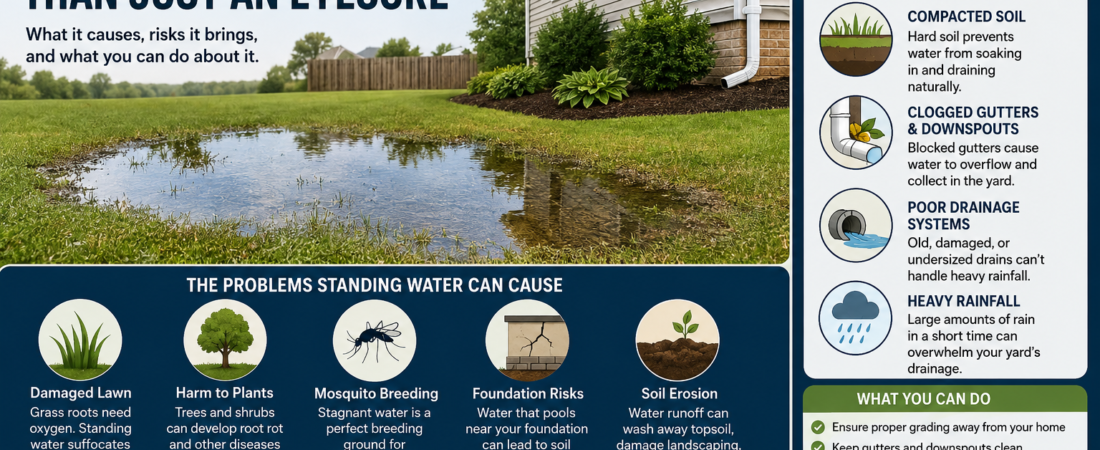
After a heavy rainstorm, it’s normal to see small puddles throughout your yard. Most of these disappear within a few hours as water drains into the soil or evaporates. However, if certain areas of your property continue holding water for days after every rainfall, you’re likely dealing with more than a simple inconvenience.
Standing water is one of the most overlooked landscaping problems homeowners face. While many people assume it’s simply an unattractive feature of the yard, poor drainage can slowly create expensive problems involving your lawn, trees, foundation, insects, and even your family’s ability to enjoy outdoor spaces.
Understanding why standing water develops and recognizing the warning signs early can help homeowners make informed decisions before minor drainage issues become major repairs.
Why Does Standing Water Form?
Water naturally follows the path of least resistance. Ideally, every residential property should be graded so rainwater gradually flows away from the home’s foundation before soaking into the surrounding soil or entering drainage systems.
When this process is interrupted, water begins collecting in low areas instead of draining properly.
Several common factors contribute to standing water:
- Low spots in the yard
- Improper grading
- Compacted soil
- Heavy clay soil
- Blocked drainage systems
- Clogged gutters or downspouts
- Landscaping changes
- New patios or sidewalks
- Neighboring construction projects
- Excessive rainfall over short periods
Sometimes homeowners notice puddles shortly after purchasing a home because the drainage issue existed long before they moved in. Other times, drainage problems gradually develop over many years as soil settles naturally.
How Soil Type Affects Drainage
Not every yard absorbs water equally.
One of the biggest factors influencing drainage is the type of soil beneath the surface.
Clay Soil
Clay contains extremely small particles that pack tightly together.
While clay holds moisture well for plants during dry periods, it drains much slower than other soil types. Homes built on clay-heavy lots often experience standing water after even moderate rainfall.
Sandy Soil
Sandy soil drains very quickly because water easily moves between larger soil particles.
Although standing water is less common, sandy soils may require more frequent watering during hot weather.
Loam Soil
Loam is generally considered ideal because it balances drainage and moisture retention. Many professionally landscaped yards attempt to mimic loam conditions around planting beds.
Knowing your property’s soil type helps explain why your yard behaves differently than your neighbor’s.
What Problems Can Standing Water Cause?
Many homeowners assume that if the grass eventually dries, everything is fine.
Unfortunately, standing water often causes problems that aren’t immediately visible.
Damage to Grass
Grass roots require oxygen.
When soil remains saturated for long periods, oxygen levels decrease dramatically, causing roots to weaken.
Common symptoms include:
- Yellow grass
- Brown patches
- Thin lawn growth
- Dead sections of turf
- Moss development
Over time, these damaged areas become more susceptible to weeds and disease.
Harm to Trees and Shrubs
Landscape plants vary widely in their tolerance for wet conditions.
While certain ornamental plants enjoy moist soils, many trees and shrubs struggle when roots remain underwater for extended periods.
Symptoms may include:
- Wilting despite plenty of water
- Yellow leaves
- Premature leaf drop
- Slow growth
- Root rot
- Declining overall health
Large mature trees can eventually become unstable if extensive root damage occurs.
Mosquito Breeding
One of the quickest consequences of standing water is increased mosquito activity.
Female mosquitoes lay eggs in stagnant water, and under warm summer conditions, larvae can develop surprisingly quickly.
Even relatively shallow puddles can become breeding sites.
Reducing standing water not only protects landscaping but also makes outdoor living spaces much more enjoyable.
Foundation Concerns
Perhaps the biggest long-term concern involves the home’s foundation.
When water repeatedly pools near the foundation, moisture can slowly penetrate surrounding soil.
Depending on soil conditions, this may contribute to:
- Soil expansion
- Soil shrinkage
- Uneven settling
- Minor foundation movement
- Crawlspace moisture
- Basement dampness
While standing water does not automatically mean foundation damage will occur, persistent drainage issues deserve attention before they become structural concerns.
Signs Your Yard Has a Drainage Problem
Homeowners should pay attention to recurring patterns rather than isolated rainstorms.
Potential warning signs include:
- Puddles lasting longer than 48 hours
- Grass dying in the same locations
- Mud that never fully dries
- Water collecting near the home’s foundation
- Erosion after heavy rain
- Mulch washing away
- Exposed tree roots
- Mushrooms appearing frequently
- Increased mosquito populations
- Water flowing toward the house instead of away from it
The earlier these issues are recognized, the easier they often are to address.
Can Landscaping Make Drainage Worse?
Yes.
Certain landscaping projects unintentionally redirect water.
Examples include:
- Installing patios without proper slope
- Building raised flower beds
- Adding retaining walls
- Placing decorative edging
- Installing sheds
- Expanding driveways
Every landscaping improvement changes how rainwater moves across a property.
This is why larger projects often include drainage planning as part of the overall design.
Seasonal Changes Can Affect Drainage
Drainage isn’t always consistent throughout the year.
During spring, saturated soil from repeated rainfall may remain wet much longer than during summer.
In autumn, fallen leaves frequently clog drainage systems.
During winter in colder climates, frozen ground prevents water from soaking into the soil, leading to temporary pooling during thaw cycles.
Understanding seasonal changes helps homeowners distinguish temporary conditions from ongoing drainage problems.
When Should You Call a Professional?
Small puddles that disappear within several hours are usually normal.
However, professional evaluation may be worthwhile if:
- Water stands for multiple days
- Flooding reaches your home’s foundation
- Erosion becomes noticeable
- Large sections of lawn continually die
- Drainage problems worsen each year
- You notice foundation cracks along with poor drainage
Landscape drainage specialists can evaluate grading, drainage systems, soil conditions, and water flow to recommend solutions appropriate for the property.
Final Thoughts
Standing water is often one of the earliest signs that something beneath the surface isn’t functioning as intended. While the puddle itself may seem harmless, repeated drainage problems can gradually affect lawns, landscaping, outdoor enjoyment, and even portions of the home over time.
By recognizing warning signs early and understanding what causes water to collect, homeowners can make informed decisions about maintaining both their landscape and their property’s long-term value.
Frequently Asked Questions
How long should water stay in my yard after it rains?
Most puddles should disappear within 24 hours. Water remaining for two or more days may indicate a drainage issue.
Can standing water kill grass?
Yes. Grass roots need oxygen to survive. Constantly saturated soil can weaken or kill turf over time.
Is standing water bad for trees?
Some tree species tolerate wet conditions better than others, but prolonged standing water can damage roots and reduce overall tree health.
Will standing water damage my home’s foundation?
Not always, but repeated pooling near the foundation can increase moisture around the home and should be monitored.
Can landscaping changes affect drainage?
Yes. Patios, retaining walls, flower beds, driveways, and grading changes can all alter how water flows across a property.