Flickering lights are one of the most common electrical issues homeowners experience. In some cases, the problem is as simple as a loose light bulb. In others, it may indicate an issue with your home’s electrical system that requires professional attention.
Knowing the difference can help you determine whether the issue is a minor inconvenience or a potential safety concern.
Is It Normal for Lights to Flicker?
Occasional flickering may not be a cause for concern, especially if it happens briefly after turning on a large appliance. However, lights that flicker frequently or throughout your home should not be ignored.
Persistent flickering may indicate an electrical issue that needs further evaluation.
Common Causes of Flickering Lights
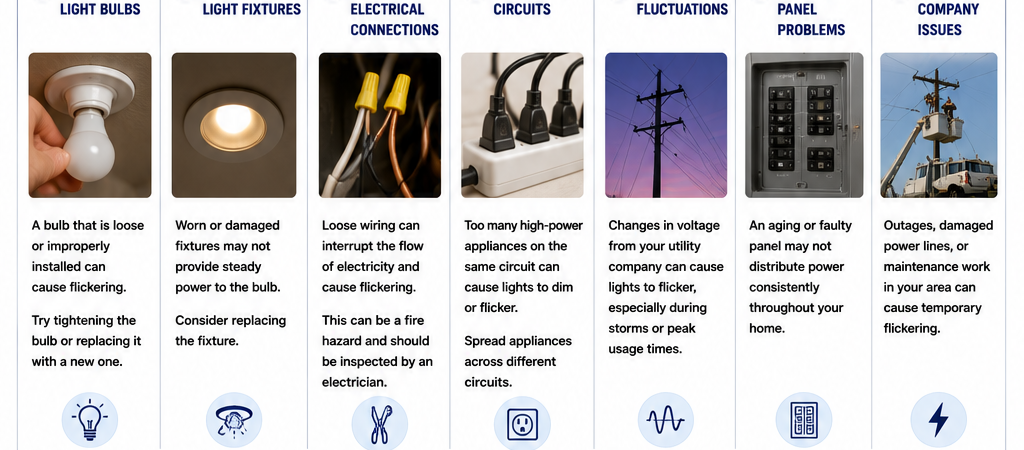
Several issues can cause lights to flicker, including:
- Loose light bulbs
- Failing light fixtures
- Loose electrical connections
- Overloaded electrical circuits
- Voltage fluctuations
- Problems with the electrical panel
- Utility company issues
Understanding these possibilities can help narrow down the cause.
Loose Light Bulbs
One of the simplest explanations is a bulb that is not fully tightened.
If only one light flickers, the bulb or fixture may be the source of the problem.
Replacing an older bulb with a new one can sometimes resolve the issue.
Loose Electrical Connections
Loose wiring can interrupt the flow of electricity, causing lights to flicker.
Warning signs may include:
- Flickering that comes and goes
- Buzzing sounds
- Warm switches or outlets
- Burning odors
Loose electrical connections should always be inspected by a licensed electrician because they can become a fire hazard.
Overloaded Circuits
When several high-power appliances operate on the same circuit, you may notice lights dim or flicker temporarily.
Common appliances include:
- Microwaves
- Space heaters
- Air conditioners
- Hair dryers
- Vacuum cleaners
Occasional dimming during appliance startup is often normal, but frequent flickering may indicate a larger issue.
Electrical Panel Problems
Your home’s electrical panel distributes electricity throughout the house.
As panels age, components can wear out or become damaged, leading to inconsistent power delivery.
If multiple rooms experience flickering lights, the electrical panel may need professional inspection.
Utility Company Issues
Sometimes the source of the problem is outside your home.
Storms, damaged power lines, or electrical work in your neighborhood can cause temporary voltage fluctuations.
If your neighbors are experiencing similar issues, your utility provider may already be aware of the problem.
When Should You Be Concerned?
You should take flickering lights seriously if you notice:
- Lights flickering throughout the house
- Burning smells
- Buzzing from outlets or switches
- Frequently tripping breakers
- Sparks
- Warm electrical outlets
These symptoms may indicate a more serious electrical issue.
When Should You Call an Electrician?
Consider contacting a licensed electrician if:
- Flickering happens regularly.
- Multiple lights are affected.
- You notice signs of overheating.
- Breakers are tripping frequently.
- The cause isn’t obvious.
Electrical problems should always be evaluated before they become larger safety concerns.
Frequently Asked Questions
Can LED lights flicker?
Yes. LED lights can flicker because of incompatible dimmer switches, poor-quality bulbs, loose connections, or voltage fluctuations.
Are flickering lights dangerous?
Sometimes. While a loose bulb is usually harmless, flickering caused by damaged wiring or loose electrical connections can present a fire hazard.
Should I ignore occasional flickering?
Occasional brief flickering may not be serious, but repeated or widespread flickering should be investigated.
Final Thoughts
Flickering lights can have many different causes, ranging from a simple loose bulb to more significant electrical problems. Paying attention to when and where the flickering occurs can help identify the source.
If the issue affects multiple lights, occurs frequently, or is accompanied by burning smells, buzzing, or tripping breakers, it’s important to have your electrical system inspected by a licensed electrician. Addressing electrical issues early can improve both the safety and reliability of your home’s electrical system.