When homeowners think about a roof, they usually picture shingles or metal panels. However, one of the most important parts of any roofing system is something many people never notice—roof flashing.
Flashing helps direct water away from vulnerable areas where different parts of the roof meet. Without properly installed flashing, even a roof with brand-new shingles can develop leaks over time.
Understanding the purpose of roof flashing can help homeowners recognize why it plays such a critical role in protecting a home from water damage.
What Is Roof Flashing?
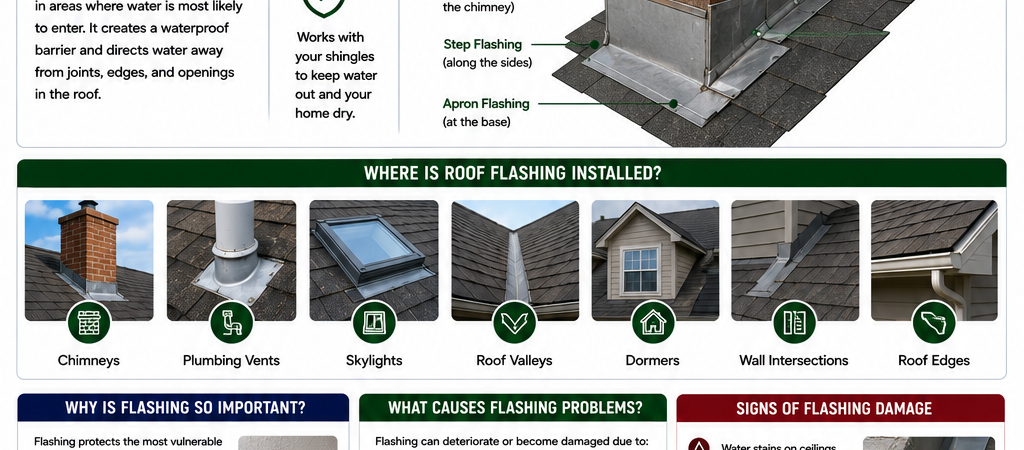
Roof flashing is a thin material, typically made from metal, that is installed in areas where water is most likely to enter.
Its primary purpose is to create a waterproof barrier by directing rainwater away from joints and openings in the roof.
Properly installed flashing works together with the roofing material to keep moisture outside the home.
Where Is Roof Flashing Installed?
Flashing is commonly found around:
- Chimneys
- Plumbing vents
- Skylights
- Roof valleys
- Dormers
- Wall intersections
- Roof edges
These locations experience increased water flow and require additional protection.
Why Is Flashing So Important?
While shingles shed most rainwater, flashing protects the small gaps where shingles alone cannot provide a complete seal.
Without flashing, water may enter areas that can lead to:
- Roof leaks
- Rotting wood
- Mold growth
- Damaged insulation
- Ceiling stains
- Interior water damage
Even a small flashing issue can allow moisture to enter over time.
What Causes Flashing Problems?
Like other roofing materials, flashing can deteriorate with age or become damaged by weather.
Common causes include:
- Severe storms
- High winds
- Corrosion
- Improper installation
- Aging sealants
- Roof movement over time
Regular inspections can help identify these issues before they become more serious.
Signs of Flashing Damage
Possible warning signs include:
- Water stains on ceilings
- Moisture around chimneys
- Leaks near skylights
- Loose metal pieces
- Rust or corrosion
- Damaged sealant
These symptoms may indicate flashing that should be professionally evaluated.
Why Regular Roof Inspections Matter
Because flashing is located in several different areas of the roof, problems may not be visible from the ground.
Routine inspections allow roofing professionals to examine flashing, shingles, vents, and other components before hidden leaks develop.
Early detection often reduces repair costs and helps protect the home’s structure.
Frequently Asked Questions
Is roof flashing only used around chimneys?
No. Flashing is installed in many areas where water is more likely to enter, including roof valleys, skylights, vents, and roof edges.
How long does roof flashing last?
The lifespan depends on the material, installation quality, local weather, and overall roof condition. In many cases, flashing can last for decades when properly installed and maintained.
Can damaged flashing cause roof leaks?
Yes. Flashing is one of the most common locations where roof leaks can begin because it protects openings and transitions in the roofing system.
Final Thoughts
Roof flashing may not be the most visible part of your roof, but it plays one of the most important roles in preventing water intrusion. By directing water away from vulnerable areas, flashing helps protect your roof, attic, insulation, and interior living spaces.
Understanding where flashing is installed and recognizing the warning signs of flashing problems can help homeowners identify potential issues early and keep their roofing system performing as intended.