From televisions and computers to kitchen appliances and gaming consoles, today’s homes rely on expensive electronic devices every day. While many people use power strips to add extra outlets, not all power strips provide protection against electrical surges.
Understanding what a surge protector does can help homeowners better protect their electronics and avoid unnecessary repair or replacement costs.
What Is an Electrical Surge?
An electrical surge is a sudden increase in voltage traveling through your home’s electrical system.
Most surges last only a fraction of a second, but they can still damage sensitive electronics.
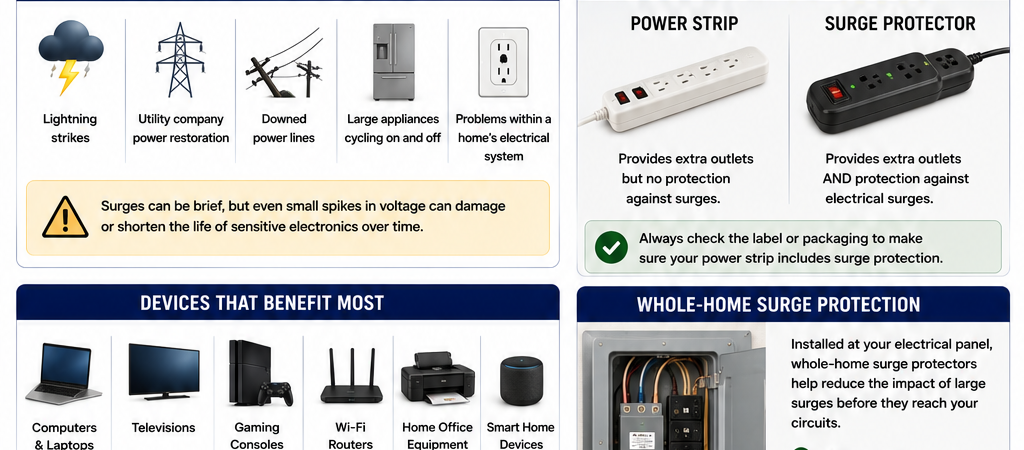
Surges may be caused by:
- Lightning strikes
- Utility company power restoration
- Downed power lines
- Large appliances cycling on and off
- Problems within a home’s electrical system
Even small surges that occur repeatedly can shorten the lifespan of electronic devices.
What Does a Surge Protector Do?
A surge protector is designed to help protect connected electronics by diverting excess voltage away from sensitive components.
While no surge protector can guarantee complete protection from every event, quality surge protection can significantly reduce the risk of damage from many common electrical surges.
Power Strip vs. Surge Protector
Many homeowners assume every power strip is a surge protector, but that’s not always true.
A standard power strip simply provides additional outlets.
A surge protector also includes components designed to help absorb or redirect excess electrical voltage.
Checking the product label is the easiest way to determine whether surge protection is included.
Which Devices Benefit Most?
Surge protection is especially valuable for:
- Computers and laptops
- Televisions
- Gaming consoles
- Wi-Fi routers and modems
- Home office equipment
- Smart home devices
- Audio systems
Replacing these devices after an electrical surge can be expensive.
Whole-Home Surge Protection
Some homeowners choose to install whole-home surge protection.
These systems are installed near the home’s electrical panel and are designed to help reduce the impact of larger surges before they reach individual circuits.
Many homeowners use both whole-home surge protection and individual surge protectors for additional protection.
Do Surge Protectors Last Forever?
No.
Most surge protectors gradually wear out as they absorb electrical surges over time.
Many manufacturers recommend replacing them periodically, especially after a major electrical event or if the unit’s protection indicator no longer shows that surge protection is active.
Choosing a Surge Protector
When shopping for a surge protector, consider features such as:
- Adequate joule rating
- Indicator lights showing protection status
- Number of outlets
- Warranty information
- UL certification or other recognized safety listings
Selecting a quality product can provide better long-term protection for valuable electronics.
Frequently Asked Questions
Can a surge protector stop lightning damage?
A surge protector may help reduce damage from certain surges, but no device can guarantee complete protection from a direct lightning strike.
Is every power strip a surge protector?
No. Some power strips only provide additional outlets and do not include surge protection.
How often should surge protectors be replaced?
Replacement recommendations vary by manufacturer, but surge protectors should be replaced if they show signs of damage, no longer indicate active protection, or after absorbing a significant electrical surge.
Final Thoughts
Electrical surges can occur more often than many homeowners realize, and even small voltage spikes may shorten the lifespan of expensive electronics over time.
Understanding the difference between a standard power strip and a surge protector—and knowing when surge protection may be beneficial—can help homeowners make informed decisions about protecting the devices they rely on every day.