Losing power unexpectedly can be frustrating, especially if you’re unsure whether the problem is affecting only your home or your entire neighborhood. While many outages are caused by severe weather or utility company issues, others may originate within your home’s electrical system.
Understanding the possible causes of a power outage can help homeowners respond appropriately while avoiding unnecessary risks.
What Is a Power Outage?
A power outage occurs when electricity stops flowing to part or all of a building.
Some outages last only a few seconds, while others may continue for several hours depending on the cause.
The source of the outage determines whether the problem is something the utility company must address or whether an electrician should inspect the home’s electrical system.
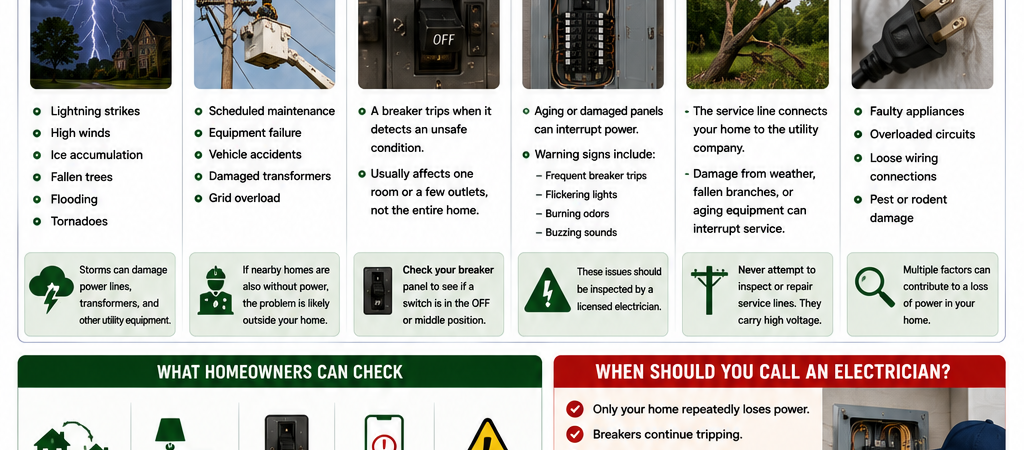
Severe Weather
Weather is one of the leading causes of residential power outages.
Storm-related causes include:
- Lightning strikes
- High winds
- Ice accumulation
- Fallen trees
- Flooding
- Tornadoes
These events can damage power lines, transformers, and other utility equipment.
Utility Company Problems
Sometimes the issue is entirely outside your home.
Power may be interrupted because of:
- Scheduled maintenance
- Equipment failure
- Vehicle accidents involving utility poles
- Damaged transformers
- Grid overload during periods of high demand
If nearby homes are also without power, the outage likely originates with the utility provider.
Tripped Circuit Breakers
Not every loss of power is a true outage.
Sometimes a single breaker trips because it detects an unsafe electrical condition.
When only one room or a few outlets lose power, the issue may be isolated to one circuit rather than the entire home.
Electrical Panel Problems
An aging or damaged electrical panel may interrupt power distribution inside the home.
Potential warning signs include:
- Frequent breaker trips
- Flickering lights
- Burning odors
- Buzzing sounds
- Breakers that won’t reset
These symptoms should be evaluated by a licensed electrician.
Problems With the Service Line
The electrical service line connects your home to the utility company’s power supply.
Damage caused by weather, fallen branches, or aging equipment can interrupt service.
Because these lines carry dangerous voltage, homeowners should never attempt to inspect or repair them.
What Should Homeowners Check?
If the power goes out, homeowners can safely:
- See whether neighboring homes also lost power.
- Check whether only one room is affected.
- Look for tripped circuit breakers.
- Verify whether the utility company has reported an outage.
- Avoid downed power lines and report them immediately.
These basic observations can help determine the likely source of the problem.
When Should You Call an Electrician?
Professional evaluation may be appropriate if:
- Only your home repeatedly loses power.
- Breakers continue tripping.
- You notice burning smells.
- Lights flicker regularly.
- You suspect problems with your electrical panel.
- Parts of your home remain without power after service is restored.
Frequently Asked Questions
How can I tell if the outage is just my house?
If neighboring homes still have electricity, the issue may be isolated to your home’s electrical system. If multiple homes are affected, the utility company is the more likely source.
Should I reset every breaker after an outage?
Not necessarily. If a breaker has tripped, it may indicate an underlying issue that should be evaluated before restoring power.
Are brief power outages harmful?
Short interruptions are usually not dangerous, but repeated outages or voltage fluctuations may affect sensitive electronics over time.
Final Thoughts
Power outages can occur for many different reasons, from severe weather and utility company equipment failures to issues within your home’s own electrical system. Understanding the possible causes can help homeowners respond safely while recognizing when professional assistance may be needed.
Whether the problem originates inside or outside the home, prioritizing electrical safety and avoiding unnecessary risks is always the best approach.