Walk through any home improvement store, and you’ll likely find rolls of landscape fabric marketed as an easy way to stop weeds and reduce yard maintenance. Many homeowners install it beneath mulch, decorative rock, and planting beds expecting it to eliminate weeds for years to come.
While landscape fabric can certainly be a useful landscaping material, it is often misunderstood. Some homeowners believe it creates a maintenance-free flower bed, while others avoid it altogether because they’ve heard negative experiences from friends or neighbors. The truth lies somewhere in the middle.
Landscape fabric can be an excellent tool when used in the right location and for the right purpose. However, it isn’t a universal solution for every landscaping project, and understanding both its advantages and limitations helps homeowners make better long-term decisions.
What Is Landscape Fabric?
Landscape fabric is a woven or non-woven synthetic material designed to separate soil from mulch, decorative rock, or other ground coverings while still allowing water and air to pass through.
Its primary purpose is to reduce weed growth by limiting sunlight from reaching weed seeds already present in the soil.
Unlike solid plastic sheeting, quality landscape fabric is permeable, meaning rainwater and irrigation can still reach the soil beneath it.
Landscape fabric comes in various thicknesses and grades, with some products designed for residential flower beds while heavier-duty versions are commonly used beneath gravel driveways, walkways, and commercial landscaping projects.
How Does Landscape Fabric Work?
Many weeds require sunlight to germinate and grow.
Landscape fabric blocks much of that sunlight while creating a physical barrier between the soil and the surface covering.
Existing weeds below the fabric often struggle to reach the surface, while mulch or decorative stone placed on top helps hold the fabric in place and provides additional protection from sunlight.
However, landscape fabric does not kill weeds already growing, nor does it permanently prevent new weeds from appearing.
Over time, wind carries dirt, leaves, pollen, and organic debris onto the surface of the mulch or rock. Eventually, this material begins forming a thin layer of soil above the fabric where new weed seeds can germinate.
For this reason, landscape fabric reduces weed growth—it does not eliminate it.
Common Places Landscape Fabric Is Used
Landscape fabric performs best in specific applications rather than throughout an entire yard.
Some of the most common uses include:
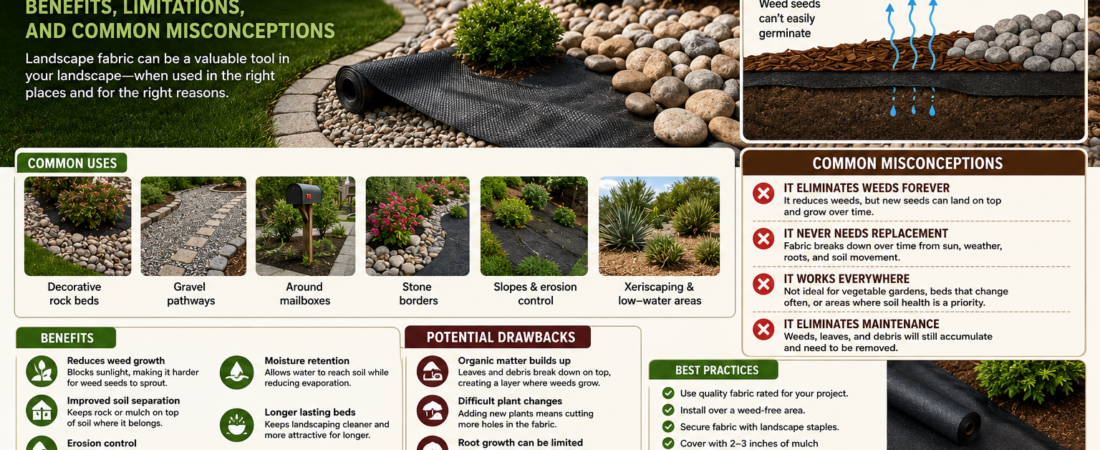
- Decorative rock landscaping
- Gravel pathways
- Stone borders
- Around mailboxes
- Beneath river rock
- Xeriscape or drought-tolerant landscapes
- Areas with minimal plant growth
- Hillsides where erosion control is needed
In these locations, landscape fabric can significantly reduce maintenance while helping keep decorative materials separated from the soil below.
Benefits of Landscape Fabric
When installed properly and used in appropriate locations, landscape fabric offers several advantages.
Weed Reduction
The biggest benefit is reducing the number of weeds that emerge from beneath landscaping materials.
Although occasional weeds will still appear, homeowners often spend less time pulling unwanted plants compared to untreated beds.
Improved Soil Separation
Without landscape fabric, decorative rock gradually sinks into the surrounding soil over time.
The fabric creates a barrier that helps keep rock above the soil, maintaining a cleaner appearance and making future maintenance easier.
Erosion Control
On slopes and hillsides, heavy rain can wash away loose soil.
Landscape fabric helps stabilize the ground while allowing water to penetrate instead of running directly across the surface.
Many erosion-control products used on construction sites operate using similar principles.
Longer Lasting Decorative Beds
Because soil and rock remain separated, decorative beds often stay neater for longer periods.
Mulch also tends to remain more evenly distributed after heavy rainfall.
Better Moisture Retention
Mulch installed over landscape fabric helps reduce evaporation.
The combination allows moisture to remain available around plant roots while still slowing weed growth.
Common Misconceptions About Landscape Fabric
Despite its popularity, several myths continue surrounding landscape fabric.
Myth: It Completely Eliminates Weeds
Perhaps the biggest misconception is that weeds disappear forever.
In reality, new weed seeds eventually land on top of mulch or decorative rock.
As organic material accumulates over the years, weeds begin growing above the fabric instead of below it.
Regular maintenance is still necessary.
Myth: It Never Needs Replacement
Landscape fabric slowly degrades over time.
Sunlight, shifting soil, root growth, weather, and gardening activities all contribute to gradual wear.
Depending on quality and conditions, some fabrics last only a few years while premium products may perform much longer.
Myth: It Works Everywhere
Landscape fabric is not ideal for every landscape.
Large flower gardens, vegetable gardens, and beds that change frequently often benefit more from healthy soil than permanent barriers.
Homeowners should consider the intended use before installing fabric throughout an entire yard.
Potential Drawbacks
Like any landscaping product, landscape fabric has limitations.
Organic Matter Builds Up
Leaves, grass clippings, dust, and mulch eventually decompose.
This creates a thin layer of soil on top of the fabric where weeds begin growing naturally.
This surprises many homeowners who expected permanent weed control.
Difficult Plant Changes
If homeowners decide to add new shrubs or flowers later, they often need to cut additional holes into the fabric.
Over time, numerous openings reduce its effectiveness.
Landscapes that frequently change may become harder to maintain.
Root Growth Can Be Limited
Although water and air pass through quality landscape fabric, some plants naturally spread roots close to the soil surface.
Certain perennials and ground covers may not perform as well if root expansion becomes restricted.
Maintenance Is Still Required
Landscape fabric reduces maintenance—it does not eliminate it.
Homeowners should still:
- Remove weeds that sprout above the fabric
- Replace decomposed mulch
- Remove leaves regularly
- Inspect exposed sections
- Repair damaged areas when necessary
Routine upkeep helps maximize its lifespan.
Landscape Fabric Under Mulch vs. Decorative Rock
The best application often depends on the surface material.
Under Decorative Rock
This is generally where landscape fabric performs best.
Rock does not decompose, allowing the barrier to remain relatively undisturbed for years.
It also prevents rocks from gradually sinking into the soil.
Under Mulch
Mulch naturally decomposes every year.
As it breaks down, it creates organic material above the fabric where weeds can eventually grow.
Although landscape fabric still provides benefits beneath mulch, homeowners should expect periodic maintenance and mulch replacement.
Is Landscape Fabric Right for Every Home?
Every landscape is different.
Some homeowners prioritize low maintenance, while others enjoy changing flower beds every season.
Climate, soil conditions, plant selection, and landscape design all influence whether landscape fabric makes sense for a particular property.
Instead of asking whether landscape fabric is “good” or “bad,” it’s more helpful to ask whether it fits the specific goals of the landscaping project.
Used appropriately, it can reduce maintenance and improve the appearance of certain areas. Used in the wrong location, it may create unnecessary work later.
Final Thoughts
Landscape fabric remains one of the most commonly used materials in residential landscaping, but it works best when homeowners understand exactly what it is designed to do. It can reduce weeds, improve erosion control, and help decorative landscaping stay organized for years. At the same time, it is not a permanent weed barrier or a replacement for routine maintenance.
Choosing the right landscaping materials depends on the design of your yard, your maintenance preferences, and the long-term goals for your outdoor space. Understanding both the strengths and limitations of landscape fabric allows homeowners to make informed decisions that keep their landscapes attractive and easier to maintain.
Frequently Asked Questions
Does landscape fabric stop all weeds?
No. It significantly reduces weeds growing from the soil below, but windblown weed seeds can still germinate on top of the fabric over time.
Can water pass through landscape fabric?
Yes. Quality landscape fabric is designed to allow water and air to penetrate while helping block sunlight.
How long does landscape fabric last?
Its lifespan varies depending on the product, installation quality, weather conditions, and how much traffic the area receives. Higher-quality fabrics generally last longer.
Should landscape fabric be used under decorative rock?
It is commonly used beneath decorative rock to help reduce weeds and keep the rock separated from the soil below.
Does landscape fabric eliminate maintenance?
No. Homeowners should still remove weeds, refresh mulch when needed, clear debris, and inspect the landscaping periodically to keep it looking its best.