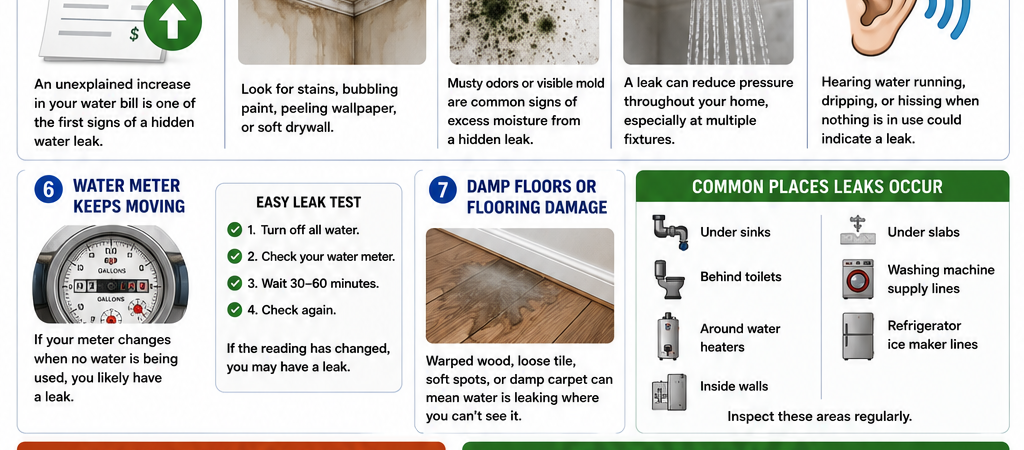
A hidden water leak can cause serious damage long before you notice a puddle on the floor. From higher utility bills to mold growth and structural damage, even a small leak can become an expensive problem if it’s ignored.
Learning the warning signs of a water leak can help you catch problems early and protect your home from costly repairs.
Why Water Leaks Matter
Water leaks don’t just waste water—they can also damage drywall, flooring, insulation, cabinets, and even your home’s foundation.
Finding and repairing leaks early is one of the best ways to avoid expensive repairs.
1. Higher Water Bills
One of the first signs of a hidden leak is an unexplained increase in your monthly water bill.
If your water usage habits haven’t changed but your bill continues to rise, a leak may be the cause.
2. Wet Spots on Walls or Ceilings
Water stains or damp areas often indicate a leaking pipe behind the wall or above the ceiling.
Look for:
- Brown or yellow stains
- Bubbling paint
- Peeling wallpaper
- Soft drywall
These signs should be investigated as soon as possible.
3. Mold or Mildew
Persistent moisture creates the perfect environment for mold growth.
Common warning signs include:
- Musty odors
- Black or green spots
- Increased allergy symptoms
- Mold around baseboards or ceilings
4. Low Water Pressure
Leaks reduce the amount of water reaching your fixtures.
If several faucets suddenly have lower pressure than normal, a plumbing leak may be responsible.
5. The Sound of Running Water
If you hear water running even when every faucet is turned off, it’s worth investigating.
Listen for:
- Hissing sounds
- Dripping inside walls
- Water running through pipes
6. Water Meter Keeps Moving
One of the easiest ways to check for a hidden leak is with your water meter.
Simple Leak Test
- Turn off every faucet and appliance that uses water.
- Locate your home’s water meter.
- Record the meter reading.
- Wait 30–60 minutes without using any water.
- Check the meter again.
If the reading changes, you may have a leak.
7. Damp Floors or Flooring Damage
Leaks beneath flooring can cause:
- Warped hardwood
- Loose tile
- Soft laminate
- Damp carpet
Ignoring these symptoms can lead to expensive structural damage.
Common Places Leaks Occur
Hidden leaks are often found:
- Under sinks
- Behind toilets
- Around water heaters
- Inside walls
- Under slabs
- Near washing machine supply lines
- Around refrigerators with ice makers
Inspect these areas regularly.
When Should You Call a Plumber?
Contact a plumber if:
- You cannot locate the leak.
- Water stains continue growing.
- Mold appears.
- Your water bill increases significantly.
- Your water meter indicates a leak.
- You suspect a slab leak.
Professional leak detection equipment can quickly identify hidden problems.
Tips to Prevent Water Leaks
Reduce the risk of future leaks by:
- Inspecting plumbing connections every few months.
- Replacing old supply hoses.
- Monitoring your water bill.
- Checking around appliances regularly.
- Knowing where your main water shut-off valve is located.
Preventive maintenance can save thousands of dollars over the life of your home.
Frequently Asked Questions
Can a small leak become a big problem?
Yes. Even a slow drip can cause mold, wood rot, and significant structural damage over time.
How can I tell if I have a hidden leak?
High water bills, musty odors, wet spots, and a moving water meter are common warning signs.
Is leak detection expensive?
The cost varies, but finding a leak early is usually far less expensive than repairing major water damage.
Final Thoughts
Hidden water leaks are one of the most common causes of expensive home repairs. By paying attention to rising water bills, unusual sounds, water stains, and mold growth, you can often catch leaks before they become major problems.
If you suspect a leak but can’t find the source, don’t wait. A licensed plumber can locate the problem and help prevent further damage to your home.