Introduction
A home warranty is often offered during the purchase of a home, especially for first-time buyers. While it may sound similar to homeowners insurance, the two cover very different things.
A home warranty is a service contract that may help pay for repairs or replacements of certain home systems and appliances after they fail due to normal wear and tear. Whether it’s worth the cost depends on your home’s age, condition, and your comfort with unexpected repair bills.
What Is a Home Warranty?
Unlike homeowners insurance, which protects against events like fires, storms, or theft, a home warranty focuses on major household systems and appliances that stop working over time.
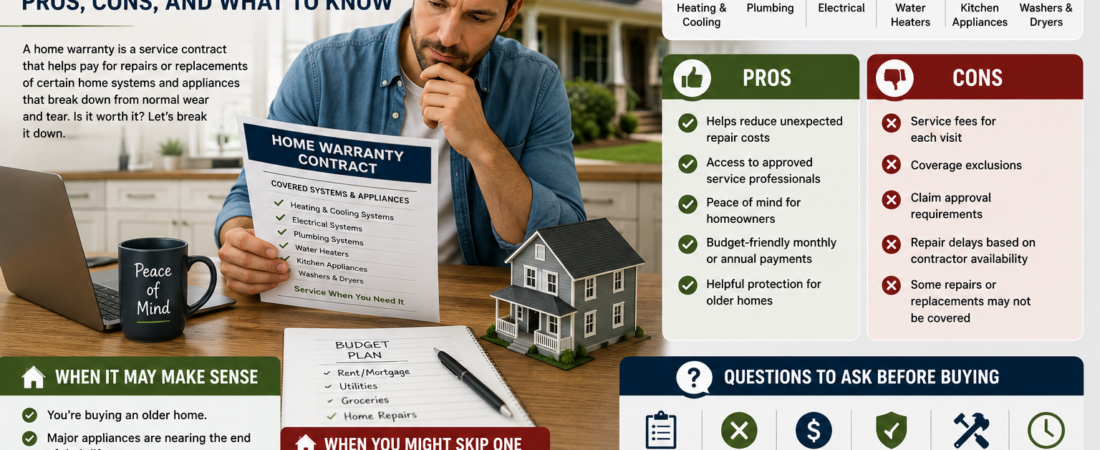
Depending on the plan, coverage may include:
- Heating and air conditioning systems
- Electrical systems
- Plumbing systems
- Water heaters
- Kitchen appliances
- Washers and dryers
Each provider offers different levels of coverage, so it’s important to understand exactly what is included before purchasing a policy.
Advantages of a Home Warranty
Many homeowners appreciate the financial predictability a warranty can provide.
Potential benefits include:
- Reduced repair costs for covered items
- Access to approved service technicians
- Peace of mind for first-time homeowners
- Budget-friendly monthly or annual payments
- Helpful protection for older homes
Possible Drawbacks
Home warranties also come with limitations.
Common concerns include:
- Service fees for each repair visit
- Coverage exclusions
- Claim approval requirements
- Repair delays depending on contractor availability
- Certain repairs or replacements may not qualify for coverage
Reading the contract carefully helps prevent surprises when filing a claim.
When a Home Warranty May Make Sense
A home warranty may be worth considering if:
- You’re purchasing an older home.
- Major appliances are approaching the end of their expected lifespan.
- You don’t have a large emergency repair fund.
- The seller includes the first year of coverage as part of the purchase.
When You Might Skip One
Some homeowners choose not to purchase a warranty if:
- The home is newly built.
- Most major systems are still under manufacturer warranties.
- You have sufficient savings for unexpected repairs.
- The policy’s coverage doesn’t match your needs.
Questions to Ask Before Buying
Before choosing a plan, consider asking:
- What systems and appliances are covered?
- What items are excluded?
- What is the service call fee?
- Are there annual payout limits?
- Can I choose my own contractor?
- How quickly are claims typically handled?
Final Thoughts
A home warranty can provide valuable protection for some homeowners, particularly those purchasing older homes or wanting additional peace of mind. However, every policy is different, making it important to compare coverage, exclusions, costs, and customer reviews before deciding. Understanding what a warranty can—and cannot—cover will help you determine whether it’s a worthwhile investment for your situation.