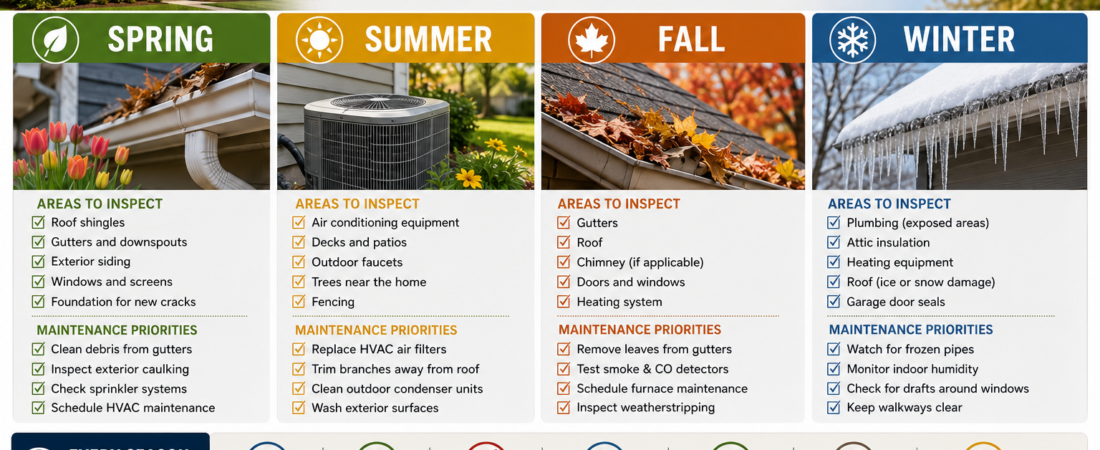
Every season brings different weather conditions that affect your home. Staying ahead of seasonal maintenance can help prevent damage, improve energy efficiency, and extend the life of your home’s major systems.
Instead of waiting until something breaks, use each season as an opportunity to inspect key areas around your property.
Spring
As temperatures warm up, winter damage often becomes visible.
Areas to Inspect
- Roof shingles after winter storms
- Gutters and downspouts
- Exterior siding
- Windows and screens
- Foundation for new cracks
Maintenance Priorities
- Clean debris from gutters.
- Inspect exterior caulking.
- Check sprinkler systems before regular use.
- Schedule HVAC maintenance before summer arrives.
Summer
Summer heat puts extra demand on cooling systems and outdoor spaces.
Areas to Inspect
- Air conditioning equipment
- Decks and patios
- Outdoor faucets
- Trees near the home
- Fencing
Maintenance Priorities
- Replace HVAC air filters if needed.
- Trim branches away from the roof.
- Clean outdoor condenser units.
- Wash exterior surfaces as necessary.
Fall
Fall is one of the most important seasons for preventative maintenance.
Areas to Inspect
- Gutters
- Roof
- Chimney (if applicable)
- Doors and windows
- Heating system
Maintenance Priorities
- Remove leaves from gutters.
- Test smoke and carbon monoxide detectors.
- Schedule furnace maintenance.
- Inspect weatherstripping around doors and windows.
Winter
Cold weather increases the risk of frozen pipes, drafts, and heating issues.
Areas to Inspect
- Plumbing exposed to cold temperatures
- Attic insulation
- Heating equipment
- Roof after snow or ice events
- Garage door seals
Maintenance Priorities
- Watch for frozen pipes.
- Monitor indoor humidity levels.
- Check for drafts around windows.
- Keep exterior walkways clear when necessary.
Maintenance Tasks Every Season
Some inspections should become regular habits regardless of the time of year.
These include:
- Looking for water leaks
- Testing GFCI outlets
- Checking fire extinguishers
- Monitoring water heater performance
- Replacing HVAC filters as needed
- Looking for pest activity
- Watching for unusual sounds from appliances
Why Seasonal Maintenance Matters
Breaking maintenance into four seasonal inspections makes the workload much more manageable.
Instead of trying to inspect your entire home at once, you can focus on the systems most affected by the current weather.
This approach also makes it easier to identify small issues before they become expensive repairs.
Final Thoughts
A well-maintained home doesn’t happen by accident. Seasonal inspections provide an organized way to care for your property throughout the year while helping prevent unexpected problems. Spending a little time each season can protect your home’s value, improve comfort, and reduce long-term maintenance costs.