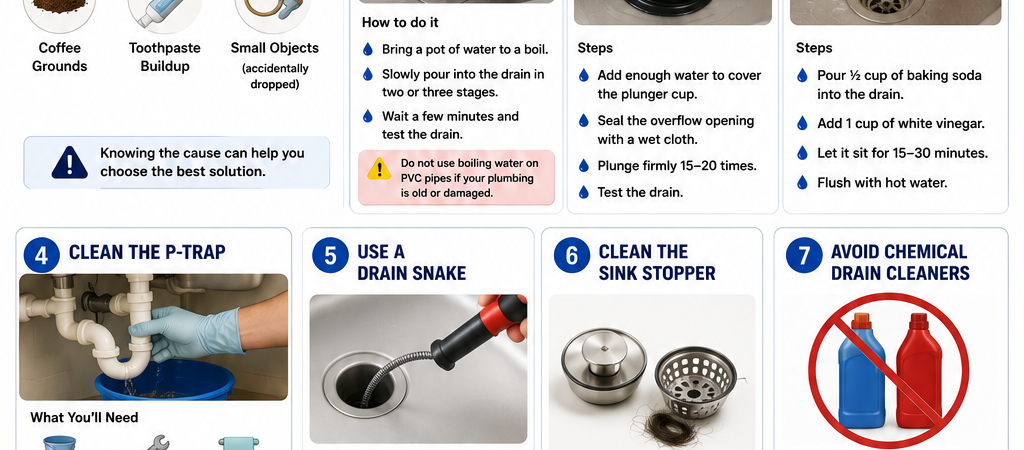
A slow or completely clogged sink drain is one of the most common plumbing problems homeowners face. Kitchen sinks often clog because of grease and food particles, while bathroom sinks usually become blocked with hair, soap scum, and toothpaste.
Before reaching for harsh chemical drain cleaners, there are several safe and effective methods you can try yourself.
What Causes a Sink Drain to Clog?
Understanding the cause of the clog can help you choose the best solution.
Common causes include:
- Hair
- Soap scum
- Grease
- Food scraps
- Coffee grounds
- Toothpaste buildup
- Small objects accidentally dropped into the drain
1. Pour Boiling Water Down the Drain
For minor clogs, boiling water can help dissolve soap residue and grease.
How to Do It
- Bring a pot of water to a boil.
- Slowly pour it into the drain in two or three stages.
- Wait a few minutes and test the drain.
Do not use boiling water on PVC pipes if you’re concerned about very old or damaged plumbing.
2. Use a Plunger
A sink plunger can loosen many clogs.
Steps
- Add enough water to cover the plunger cup.
- Seal the overflow opening with a wet cloth if your sink has one.
- Plunge firmly 15–20 times.
- Test the drain.
3. Try Baking Soda and Vinegar
This natural method can help loosen light buildup.
Steps
- Pour ½ cup of baking soda into the drain.
- Add 1 cup of white vinegar.
- Let the mixture sit for 15–30 minutes.
- Flush with hot water.
4. Clean the P-Trap
The P-trap is the curved pipe beneath your sink where many clogs collect.
What You’ll Need
- Bucket
- Adjustable wrench
- Towels
Place the bucket underneath, remove the trap carefully, clean out any debris, and reinstall it securely.
5. Use a Drain Snake
A drain snake can reach clogs farther inside the pipe.
Insert the snake slowly, rotate it while pushing forward, then pull it back to remove hair and debris.
6. Clean the Sink Stopper
Bathroom sink stoppers often collect hair and soap residue.
Remove the stopper, clean away buildup, and rinse it thoroughly before reinstalling.
7. Avoid Chemical Drain Cleaners
While chemical drain cleaners may seem like a quick solution, repeated use can damage pipes and may not fully remove the blockage.
Mechanical cleaning methods are generally safer for your plumbing.
When Should You Call a Plumber?
Contact a plumber if:
- The clog keeps returning.
- Multiple drains are backing up.
- Water backs up into other fixtures.
- DIY methods don’t restore drainage.
- You suspect a sewer line problem.
How to Prevent Future Clogs
Preventive maintenance can keep your drains flowing freely.
Helpful habits include:
- Avoid pouring grease down the sink.
- Use a drain strainer.
- Clean sink stoppers regularly.
- Flush drains with hot water each week.
- Never dispose of coffee grounds in the drain.
Frequently Asked Questions
Is baking soda and vinegar safe for pipes?
Yes. It’s generally safe for most household plumbing and can help loosen minor buildup.
Why does my sink keep clogging?
Recurring clogs may indicate buildup deeper in the plumbing or a larger issue that needs professional inspection.
Can I use a plunger on a kitchen sink?
Yes. A sink plunger works well for many kitchen sink clogs when used correctly.
Final Thoughts
Most sink clogs can be cleared using simple DIY methods like hot water, a plunger, baking soda and vinegar, or a drain snake. Acting quickly when you notice slow drainage can prevent a complete blockage.
If the clog continues returning or affects multiple drains, it’s best to contact a licensed plumber before the problem becomes more serious.