If an outlet in your bathroom, kitchen, garage, or outdoor area suddenly stops working, a tripped GFCI outlet may be the cause. Ground Fault Circuit Interrupter (GFCI) outlets are designed to protect you from electrical shock by shutting off power when they detect a problem.
Fortunately, many GFCI outlets can be reset in just a few seconds.
What Is a GFCI Outlet?
A GFCI outlet constantly monitors the flow of electricity.
If it detects electricity flowing somewhere it shouldn’t—such as through water or a person—it quickly cuts power to reduce the risk of serious injury.
These outlets are commonly installed in areas where moisture is present.
Where Are GFCI Outlets Found?
Most homes have GFCI outlets in:
- Bathrooms
- Kitchens
- Garages
- Laundry rooms
- Basements
- Outdoor receptacles
- Utility rooms
Some GFCI outlets also protect multiple outlets located farther down the same circuit.
Why Did My GFCI Outlet Trip?
Common causes include:
- Moisture inside the outlet
- A faulty appliance
- Electrical overload
- Ground fault
- Worn GFCI outlet
- Loose wiring
A single tripped outlet can sometimes shut off power to several nearby outlets.
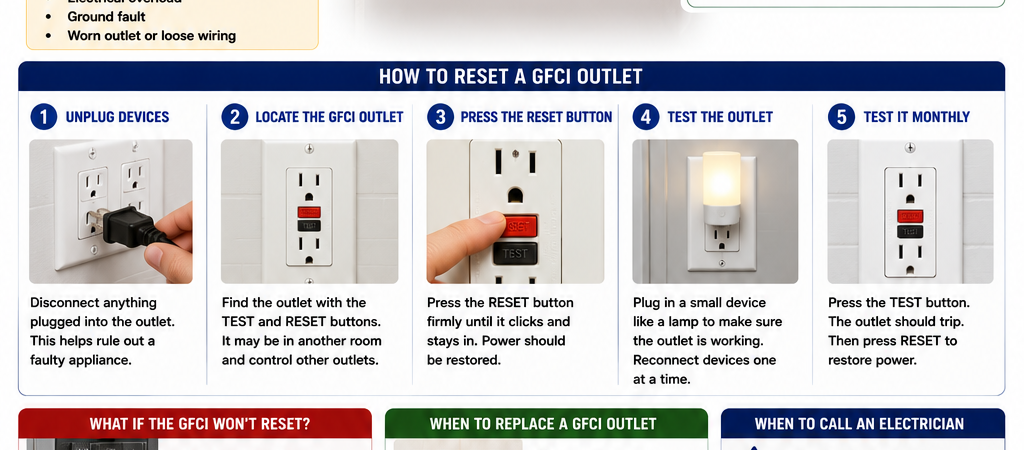
How to Reset a GFCI Outlet
Step 1: Unplug Devices
Disconnect anything plugged into the affected outlet.
This helps eliminate the possibility of a faulty appliance causing the trip.
Step 2: Locate the GFCI Outlet
Find the outlet with the TEST and RESET buttons.
Sometimes it’s located in another room that protects the outlets you’ve lost power to.
Step 3: Press the RESET Button
Firmly press the RESET button until it clicks.
If the outlet resets successfully, power should return.
Step 4: Test the Outlet
Plug in a small device, such as a lamp or phone charger, to verify the outlet is working.
Reconnect larger appliances one at a time.
What If the GFCI Won’t Reset?
If the outlet won’t reset, possible causes include:
- A tripped circuit breaker
- A faulty GFCI outlet
- Moisture inside the electrical box
- A wiring problem
- A connected appliance causing a fault
Check your electrical panel before assuming the outlet is defective.
When Should You Replace a GFCI Outlet?
Most GFCI outlets last 10–15 years.
Replacement may be necessary if:
- It won’t reset.
- The RESET button won’t stay engaged.
- It trips repeatedly without an obvious cause.
- The outlet is cracked or damaged.
- It feels warm or smells like burning.
When Should You Call an Electrician?
Contact a licensed electrician if:
- The outlet repeatedly trips.
- You notice burn marks.
- The outlet won’t reset after checking the breaker.
- Multiple outlets stop working.
- You suspect damaged wiring.
Electrical safety should always come first.
Tips to Prevent GFCI Problems
You can reduce future issues by:
- Keeping outdoor outlets covered.
- Avoiding overloaded circuits.
- Replacing damaged extension cords.
- Testing GFCI outlets every month using the TEST button.
- Replacing older GFCI outlets when needed.
Routine testing helps ensure your outlets will work properly when they’re needed most.
Frequently Asked Questions
Why does my GFCI keep tripping?
Moisture, faulty appliances, overloaded circuits, or electrical faults are the most common causes.
Can one GFCI outlet control others?
Yes. One GFCI outlet often protects several standard outlets located farther down the same circuit.
How often should I test my GFCI outlets?
Most electricians recommend testing them once each month using the built-in TEST and RESET buttons.
Final Thoughts
A GFCI outlet is one of the most important electrical safety devices in your home. Understanding how to reset it and recognizing when it may need replacement can help keep your family safe while preventing unnecessary service calls.
If a GFCI outlet repeatedly trips or refuses to reset, it’s best to have the circuit inspected by a licensed electrician to identify the underlying cause.