Introduction
Mold is a common problem in homes and can develop anywhere moisture is present. Bathrooms, kitchens, basements, laundry rooms, and even attics are especially vulnerable. While small amounts of mold may seem harmless, widespread mold growth can damage building materials, create unpleasant odors, and lead to expensive repairs if left unchecked.
The good news is that preventing mold usually comes down to controlling moisture and maintaining proper ventilation throughout the home.
Why Mold Grows
Mold needs three basic conditions:
- Moisture
- Organic material (wood, drywall, carpet, dust)
- Warm temperatures
Since most homes naturally provide the second and third conditions, reducing excess moisture is the best way to prevent mold.
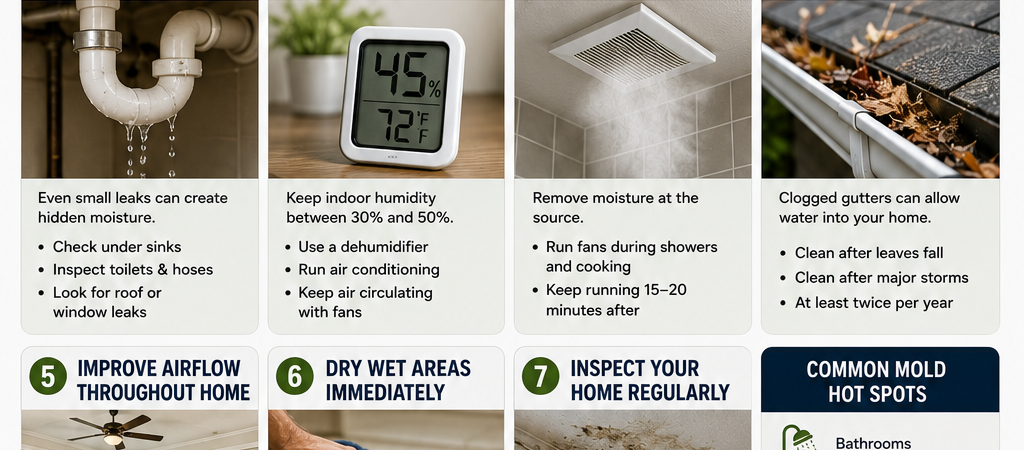
1. Fix Leaks Promptly
Even a slow plumbing leak can create ideal conditions for mold.
Areas to inspect include:
- Under sinks
- Around toilets
- Water heaters
- Washing machine hoses
- Roof leaks
- Windows
Repairing leaks early helps prevent hidden moisture damage behind walls and floors.
2. Control Indoor Humidity
High humidity allows mold to grow even without standing water.
Many experts recommend keeping indoor humidity between 30% and 50%.
You can help reduce humidity by:
- Running air conditioning during humid weather
- Using a dehumidifier in damp areas
- Keeping air circulating with ceiling or portable fans
3. Use Bathroom and Kitchen Exhaust Fans
Steam from showers and cooking adds moisture to the air.
Always run exhaust fans:
- During showers
- While cooking
- For 15–20 minutes afterward when possible
Proper ventilation helps remove moisture before it settles on walls and ceilings.
4. Clean Gutters Regularly
Overflowing gutters can allow water to enter your home’s walls or foundation.
Clean gutters:
- After leaves fall
- Following major storms
- At least twice per year
Keeping rainwater moving away from your home reduces the chance of hidden moisture problems.
5. Improve Airflow Throughout the House
Poor air circulation allows moisture to linger.
Simple ways to improve airflow include:
- Leaving space between furniture and exterior walls
- Opening interior doors periodically
- Using ceiling fans
- Keeping HVAC vents unobstructed
Better airflow helps surfaces dry more quickly.
6. Dry Wet Areas Immediately
Standing water should never remain indoors for long.
Examples include:
- Wet carpets
- Bathroom floors
- Laundry room spills
- Basement moisture
Drying affected areas as soon as possible greatly reduces the risk of mold growth.
7. Inspect Your Home Regularly
Routine inspections can catch moisture issues before mold develops.
Look for:
- Water stains
- Peeling paint
- Musty odors
- Condensation on windows
- Soft drywall
- Dark spots on ceilings or walls
Early detection often means easier and less expensive repairs.
When Mold Requires Professional Help
Small surface spots can sometimes be cleaned safely, but widespread mold or mold caused by significant water damage may require professional inspection and remediation.
If mold keeps returning after cleanup, it’s important to identify and correct the underlying moisture problem rather than repeatedly treating the visible growth.
Final Thoughts
Preventing mold is largely about keeping your home dry and well ventilated. Fixing leaks quickly, controlling humidity, improving airflow, and inspecting your home regularly can help reduce the chances of mold taking hold.
A little preventative maintenance today can help protect your home’s structure, improve indoor air quality, and prevent costly repairs in the future.