Frozen pipes are one of the most common causes of costly water damage during the winter months. When water freezes inside a pipe, it expands and creates pressure that can eventually cause the pipe to crack or burst.
Fortunately, there are several simple steps homeowners can take to reduce the risk of frozen pipes and protect their plumbing system.
Why Do Pipes Freeze?
Pipes are most likely to freeze when temperatures fall below 32°F (0°C), especially if they are exposed to cold air.
Common locations include:
- Crawl spaces
- Attics
- Garages
- Exterior walls
- Basements
- Outdoor hose bibs
Poor insulation makes these areas even more vulnerable.
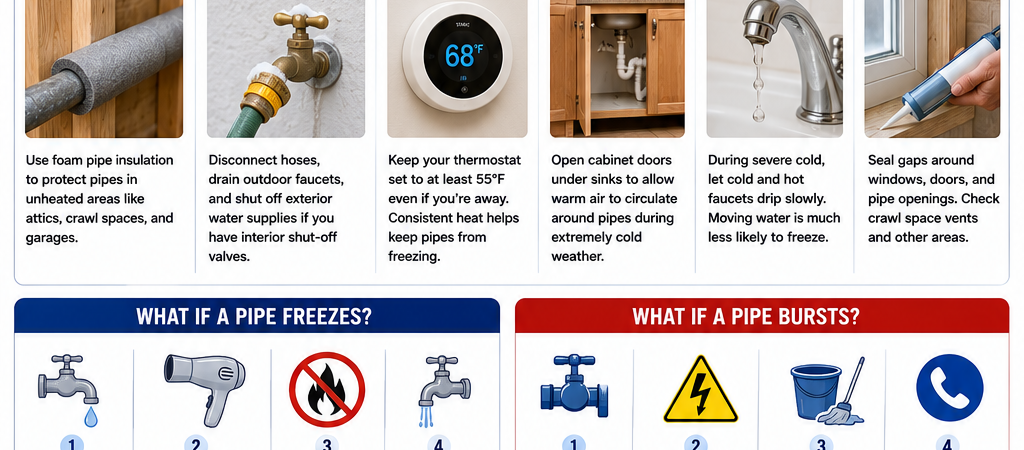
1. Insulate Exposed Pipes
One of the easiest ways to protect your plumbing is by insulating exposed pipes.
Foam pipe insulation is inexpensive and available at most home improvement stores.
Pay special attention to pipes located in unheated spaces.
2. Disconnect Garden Hoses
Before freezing weather arrives:
- Disconnect all garden hoses.
- Drain outdoor faucets.
- Shut off exterior water supplies if your home has interior shut-off valves.
Leaving hoses connected can trap water inside the pipe and increase the risk of freezing.
3. Keep Your Home Warm
Even if you’re away, keep your thermostat set to at least 55°F.
Maintaining indoor heat helps keep water pipes above freezing temperatures.
4. Open Cabinet Doors
Pipes beneath kitchen and bathroom sinks can benefit from warmer indoor air.
Open cabinet doors during extremely cold weather to improve air circulation around plumbing.
5. Let Faucets Drip
During severe cold, allowing a faucet to drip slowly keeps water moving through the pipes.
Moving water is much less likely to freeze than standing water.
6. Seal Air Leaks
Cold outdoor air entering your home can expose plumbing to freezing temperatures.
Inspect areas around:
- Windows
- Doors
- Utility pipe openings
- Crawl space vents
Seal gaps with weatherstripping or caulk where appropriate.
What If a Pipe Freezes?
If you suspect a frozen pipe:
- Turn on the affected faucet.
- Warm the pipe gradually using a hair dryer, heating pad, or warm towels.
- Never use an open flame.
- Continue warming the pipe until water flows normally.
If you cannot locate the frozen section, contact a plumber.
What If a Pipe Bursts?
If a pipe bursts:
- Shut off your home’s main water supply immediately.
- Turn off electricity if water is near electrical outlets or appliances.
- Remove standing water if it is safe to do so.
- Contact a licensed plumber as soon as possible.
Quick action can greatly reduce water damage.
Frequently Asked Questions
At what temperature do pipes freeze?
Pipes become increasingly vulnerable when temperatures drop below 32°F, especially if they are poorly insulated or exposed to cold air.
Should I let my faucets drip?
Yes. During extreme cold, allowing a slow drip can help prevent freezing by keeping water moving.
Can frozen pipes thaw on their own?
Sometimes, but waiting can increase the risk of a burst pipe. It’s generally better to thaw the pipe safely as soon as possible.
Final Thoughts
Frozen pipes can cause major damage, but a little preparation goes a long way. Insulating exposed plumbing, keeping your home warm, disconnecting garden hoses, and allowing faucets to drip during severe cold can help prevent expensive repairs.
By taking these simple steps before winter arrives, you’ll reduce the risk of burst pipes and keep your home’s plumbing system protected throughout the season.