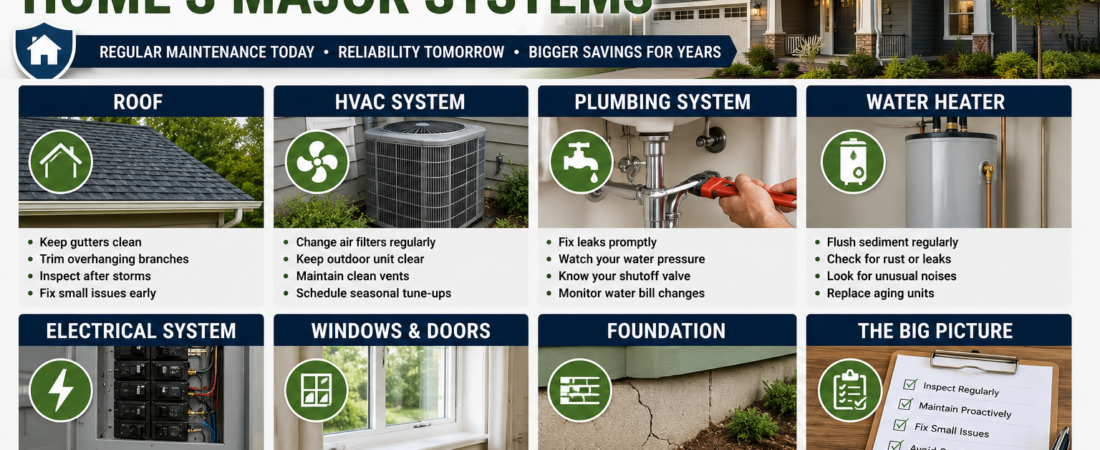
Every home is made up of major systems that work together to keep it safe, comfortable, and functional. While every component eventually reaches the end of its lifespan, proper maintenance can help many of them last significantly longer than expected.
Understanding what shortens the life of these systems—and what helps preserve them—can save homeowners thousands of dollars over time.
Roof
Your roof is your home’s first defense against weather. Even a high-quality roof requires periodic inspections and maintenance.
What Shortens Roof Life
- Clogged gutters
- Standing water
- Missing shingles
- Poor attic ventilation
- Storm damage left unrepaired
Ways to Help It Last Longer
- Keep gutters clean.
- Trim tree branches away from the roof.
- Schedule inspections after severe storms.
- Address small problems before they become leaks.
HVAC System
Heating and cooling equipment works hard throughout the year. Neglect often leads to reduced efficiency and expensive repairs.
Common Causes of Early Failure
- Dirty air filters
- Blocked outdoor units
- Lack of professional servicing
- Restricted airflow
Good Maintenance Habits
- Replace air filters regularly.
- Keep vegetation away from outdoor equipment.
- Maintain clean supply and return vents.
- Schedule seasonal inspections.
Plumbing System
Most plumbing issues begin as small leaks that gradually worsen over time.
What Causes Plumbing Wear
- High water pressure
- Corrosion
- Mineral buildup
- Undetected leaks
Protecting Your Plumbing
- Watch for slow leaks under sinks.
- Fix dripping faucets promptly.
- Know where your main water shutoff is located.
- Monitor your monthly water bill for unexpected increases.
Water Heater
Water heaters often provide reliable service for many years when maintained properly.
Factors That Reduce Lifespan
- Sediment accumulation
- Hard water
- Corrosion
- Neglected maintenance
Preventive Care
- Watch for rust-colored water.
- Check for moisture around the base.
- Have unusual noises inspected.
- Replace aging units before they fail unexpectedly.
Electrical System
Modern electrical systems require very little routine maintenance, but problems should never be ignored.
Warning Signs
- Frequently tripped breakers
- Flickering lights
- Warm outlets
- Burning odors
Keeping It Reliable
- Avoid overloading outlets.
- Replace damaged cords.
- Test GFCI outlets regularly.
- Have older homes evaluated when needed.
Windows and Doors
Properly sealed windows and doors improve comfort while reducing heating and cooling costs.
Signs They’re Wearing Out
- Drafts
- Moisture between glass panes
- Difficult operation
- Cracked caulking
Extend Their Life
- Keep tracks clean.
- Replace worn weatherstripping.
- Repair damaged seals promptly.
- Repaint exposed wood before moisture causes deterioration.
Foundation
Your home’s foundation supports everything above it.
Common Threats
- Poor drainage
- Large soil movement
- Plumbing leaks
- Tree roots growing too close
Long-Term Protection
- Maintain proper grading around the home.
- Keep gutters directing water away.
- Watch for new foundation cracks.
- Address drainage problems quickly.
Small Maintenance Adds Up
Many homeowners focus only on repairs after something breaks. However, routine maintenance often costs far less than emergency replacements.
Even simple habits like changing HVAC filters, cleaning gutters, inspecting caulk, and watching for leaks can significantly improve the lifespan of expensive home systems.
Final Thoughts
No home system lasts forever, but regular inspections and preventative maintenance can delay costly replacements and help your home perform more efficiently. Taking care of small issues today often prevents much larger expenses tomorrow, making maintenance one of the smartest long-term investments a homeowner can make.