Replacing a home’s heating and cooling system is one of the largest investments many homeowners make. While costs can vary significantly depending on the home and equipment selected, understanding the factors that influence pricing can help homeowners prepare for the project.
Because every home is different, HVAC replacement costs should be viewed as estimates rather than fixed prices.
Average HVAC Replacement Cost
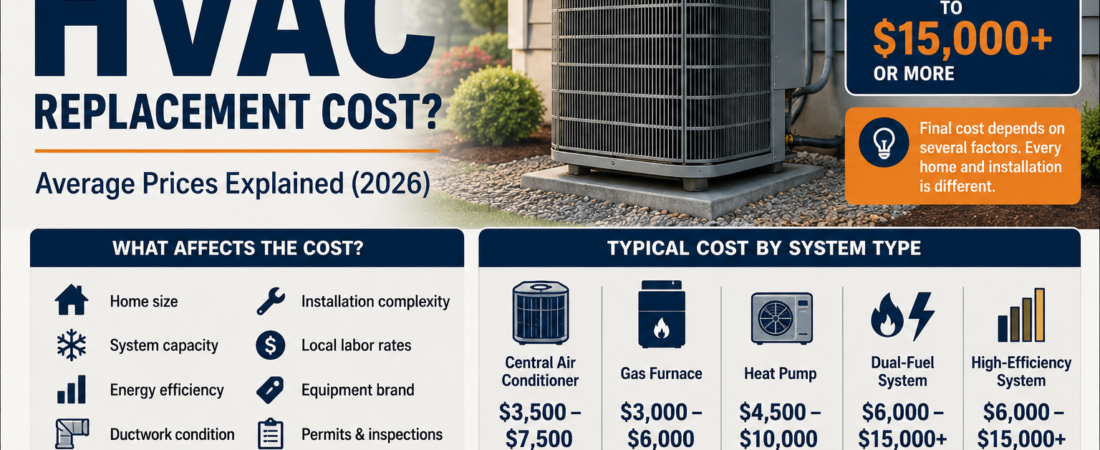
For many homes, replacing a complete central HVAC system typically falls within a broad range of approximately:
$5,000 to $15,000 or more
The final cost depends on several factors, including the size of the home, the type of equipment installed, labor costs, and local market conditions.
What Affects HVAC Replacement Cost?
Several factors influence the total project price.
These include:
- Home size
- System capacity
- Energy efficiency rating
- Existing ductwork condition
- Installation complexity
- Local labor costs
- Equipment brand
- Permit requirements
No two HVAC installations are exactly alike.
Equipment Type Matters
Different HVAC systems often have different price ranges.
Examples include:
- Central air conditioning systems
- Heat pumps
- Gas furnaces
- Electric furnaces
- Dual-fuel systems
- High-efficiency HVAC systems
The equipment selected is one of the largest factors affecting overall cost.
Can Installation Cost More Than the Equipment?
In some situations, yes.
Professional installation may include:
- Removing old equipment
- Installing new components
- Modifying ductwork
- Electrical work
- Refrigerant line replacement
- System testing
- Permit and inspection requirements
Labor can represent a significant portion of the overall project cost.
Is a High-Efficiency System Worth It?
Higher-efficiency systems generally cost more upfront but may reduce long-term energy consumption.
Homeowners often consider:
- Utility savings
- Climate
- Length of home ownership
- Available rebates
- Maintenance costs
The best choice depends on each homeowner’s individual priorities.
Questions to Ask Before Replacing an HVAC System
Before making a decision, homeowners often ask:
- Does the entire system need replacement?
- Is the existing ductwork in good condition?
- What warranty is included?
- What efficiency rating is recommended?
- Are rebates available?
- What maintenance will be required?
Understanding these factors can help homeowners compare estimates more effectively.
Frequently Asked Questions
Why do HVAC replacement estimates vary so much?
Every home has different heating and cooling needs. Equipment selection, labor, home size, and regional pricing all influence the final estimate.
Does replacing both the furnace and air conditioner cost more?
Yes. Replacing multiple components generally increases the total project cost, although replacing a complete matched system may provide performance and efficiency benefits.
Are financing options commonly available?
Many HVAC contractors offer financing programs, though availability and terms vary by company and lender.
Final Thoughts
HVAC replacement is a significant investment, but understanding what influences pricing can help homeowners make informed decisions. Factors such as system size, equipment efficiency, installation complexity, and local labor rates all contribute to the final cost.
Obtaining multiple estimates from qualified HVAC professionals can provide a clearer picture of pricing in your local area and help homeowners choose the solution that best fits their home and budget.