Your home’s electrical panel is the central hub of its electrical system, distributing power safely to every room and appliance. Although electrical panels are built to last for decades, they do not last forever. Age, increased electrical demand, and normal wear can eventually make replacement necessary.
Understanding the expected lifespan of an electrical panel can help homeowners recognize potential issues before they become serious safety concerns.
What Is an Electrical Panel?
An electrical panel, sometimes called a breaker panel or service panel, receives electricity from your utility provider and distributes it throughout your home using individual circuit breakers.
Each breaker protects a specific circuit by shutting off power if it detects an unsafe electrical condition.
Average Lifespan of an Electrical Panel
Most modern residential electrical panels last between 25 and 40 years.
However, lifespan depends on several factors, including:
- Quality of the original installation
- Electrical usage
- Environmental conditions
- Maintenance
- Panel manufacturer
Older homes may have panels that no longer meet today’s electrical demands.
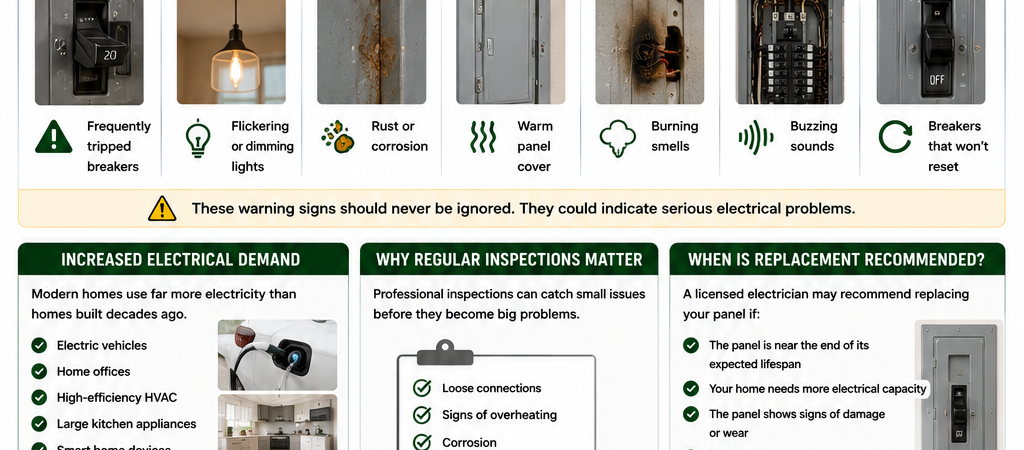
Signs Your Electrical Panel May Be Aging
As an electrical panel gets older, it may begin showing warning signs.
Common indicators include:
- Frequently tripped breakers
- Flickering lights
- Rust or corrosion
- Warm panel cover
- Burning odors
- Buzzing sounds
- Breakers that won’t reset
These symptoms should never be ignored.
Increased Electrical Demand
Modern homes use significantly more electricity than homes built decades ago.
Today’s households often rely on:
- Electric vehicles
- Home offices
- High-efficiency HVAC systems
- Large kitchen appliances
- Smart home devices
- Multiple televisions and computers
An older electrical panel may struggle to safely support these increased power demands.
Why Regular Inspections Matter
Although homeowners rarely interact with their electrical panel, periodic inspections can identify potential problems before they become expensive repairs.
An inspection may reveal:
- Loose connections
- Signs of overheating
- Corrosion
- Improper breaker sizing
- Outdated equipment
Early detection can improve both safety and reliability.
When Is Replacement Recommended?
Replacement may be recommended if:
- The panel is approaching the end of its expected lifespan.
- Your home requires additional electrical capacity.
- The panel shows signs of physical damage.
- Replacement parts are difficult to obtain.
- A licensed electrician identifies safety concerns.
Replacing an aging panel may also be necessary during major home renovations or additions.
Can an Old Panel Be Dangerous?
While many older panels continue operating safely, age alone does not guarantee reliability.
Potential concerns include:
- Increased risk of overheating
- Reduced capacity for modern electrical loads
- Worn internal components
- Difficulty finding replacement parts
A professional inspection can help determine whether continued use is appropriate.
Frequently Asked Questions
Do electrical panels need regular maintenance?
Electrical panels generally require little routine maintenance, but periodic inspections by a qualified electrician can help identify developing problems.
Should I replace my panel just because it’s old?
Not necessarily. Many panels continue operating safely for decades. Age is only one factor, and replacement decisions should be based on the panel’s condition, capacity, and inspection results.
Can a new electrical panel increase home value?
A modern electrical panel may improve a home’s appeal to buyers by supporting today’s electrical needs and demonstrating that the electrical system has been updated.
Final Thoughts
An electrical panel is one of the most important safety components in any home. While most panels last 25 to 40 years, factors such as increased electrical demand, wear, and environmental conditions can affect their lifespan.
Knowing the warning signs of an aging panel and scheduling professional inspections when concerns arise can help homeowners maintain a safe, reliable electrical system for years to come.