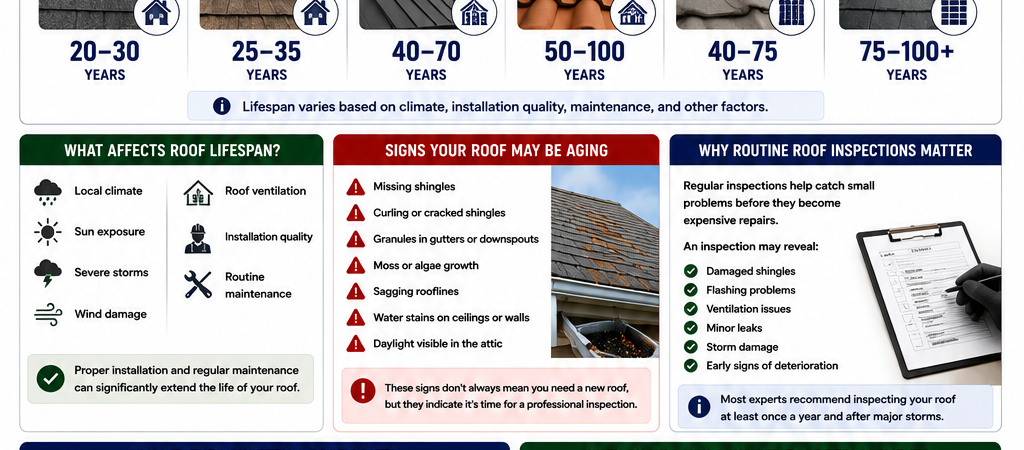
Your roof is one of the most important parts of your home, protecting everything beneath it from rain, wind, sunlight, and changing weather. Although every roof eventually reaches the end of its lifespan, the amount of time it lasts depends on several factors, including the roofing material, climate, installation quality, and maintenance.
Understanding the expected lifespan of your roof can help you plan ahead and recognize when professional evaluation may be appropriate.
Average Lifespans of Common Roofing Materials
Different roofing materials have different life expectancies.
Typical averages include:
- Asphalt shingles: 20–30 years
- Architectural shingles: 25–35 years
- Metal roofing: 40–70 years
- Clay tile: 50–100 years
- Concrete tile: 40–75 years
- Slate roofing: 75–100+ years
Actual lifespan may vary depending on weather conditions and maintenance.
What Affects Roof Lifespan?
Several factors influence how long a roof lasts.
These include:
- Local climate
- Sun exposure
- Severe storms
- Wind damage
- Roof ventilation
- Installation quality
- Routine maintenance
Homes located in areas with frequent hailstorms or hurricanes may experience faster roof wear.
Signs Your Roof May Be Aging
As roofs grow older, homeowners may notice warning signs such as:
- Missing shingles
- Curling or cracked shingles
- Granules collecting in gutters
- Moss or algae growth
- Sagging rooflines
- Water stains on ceilings
- Daylight visible in the attic
These signs do not always mean replacement is necessary, but they often indicate that further evaluation is warranted.
Why Routine Roof Inspections Matter
Regular roof inspections can help identify small issues before they become larger problems.
An inspection may reveal:
- Damaged shingles
- Flashing problems
- Ventilation issues
- Minor leaks
- Storm damage
- Early signs of deterioration
Addressing issues early may help extend the roof’s service life.
Can Weather Shorten a Roof’s Life?
Yes.
Extreme weather can significantly affect roofing materials.
Examples include:
- Hail damage
- High winds
- Heavy snowfall
- Ice dams
- Intense sunlight
- Falling tree limbs
After major storms, many homeowners choose to have their roof inspected for damage.
When Should You Consider Roof Replacement?
Replacement may become necessary if:
- The roof has reached the end of its expected lifespan.
- Repairs become increasingly frequent.
- Leaks continue to develop.
- Storm damage is extensive.
- A roofing professional identifies structural concerns.
Every home is different, so replacement decisions should be based on the roof’s overall condition rather than age alone.
Frequently Asked Questions
How can I find out how old my roof is?
Homeowners may find this information in home purchase documents, building permits, inspection reports, or by contacting the previous owner or roofing contractor if records are available.
Can a roof last longer than expected?
Yes. Proper installation, favorable weather conditions, and regular maintenance may help some roofs exceed their average lifespan.
Does homeowners insurance replace an old roof?
Insurance policies generally cover sudden damage caused by covered events, such as certain storms, rather than normal aging or wear and tear.
Final Thoughts
A roof is a long-term investment that protects every part of your home. Knowing the typical lifespan of your roofing material and recognizing the warning signs of aging can help homeowners make informed decisions before small issues become major repairs.
Regular inspections and timely maintenance can often improve the longevity of a roof while helping preserve the value and safety of the home.