Owning a home means staying ahead of routine maintenance before small issues become major problems. While every house requires ongoing care, certain maintenance tasks deserve immediate attention because delaying them can lead to costly repairs, safety concerns, or permanent damage.
Knowing which jobs should always stay at the top of your list can save both time and money.
Water Leaks
Water is one of the most damaging forces inside a home.
Even a small leak can slowly damage flooring, drywall, insulation, and structural framing before obvious signs appear.
Watch For
- Water stains
- Damp drywall
- Musty odors
- Dripping pipes
- Unexpected increases in your water bill
Promptly investigating moisture helps reduce the risk of larger repairs.
Roof Damage
Your roof protects nearly every part of your home.
Loose shingles, damaged flashing, or storm damage may allow water inside long before leaks become visible indoors.
Inspect For
- Missing shingles
- Lifted flashing
- Fallen tree limbs
- Sagging roof areas
- Debris buildup
Regular visual inspections from the ground can help identify problems early.
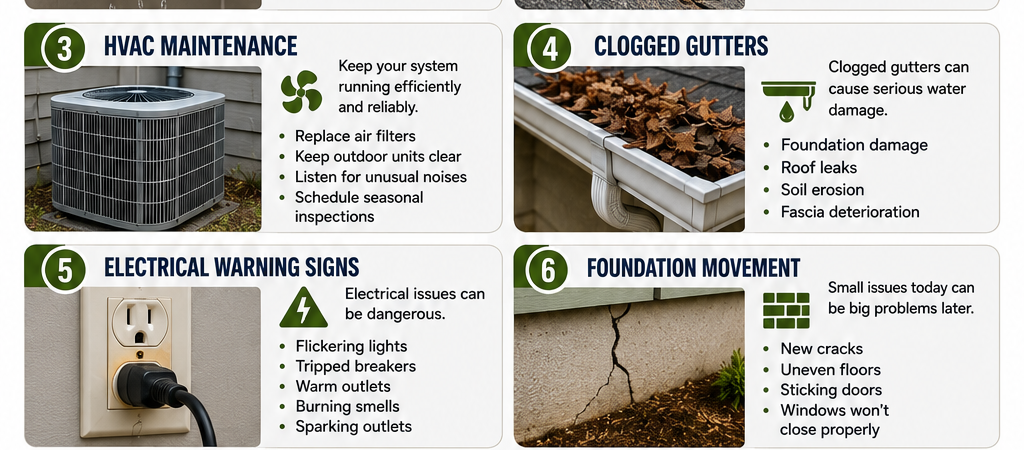
HVAC Maintenance
Heating and cooling systems operate throughout much of the year.
Ignoring routine maintenance may reduce efficiency and shorten equipment lifespan.
Important Habits
- Replace air filters regularly.
- Keep outdoor units free of debris.
- Listen for unusual noises.
- Schedule seasonal inspections.
Clogged Gutters
Gutters protect your roof, siding, and foundation by directing rainwater away from your home.
When clogged, water may overflow into places it shouldn’t.
Potential problems include:
- Foundation damage
- Roof leaks
- Soil erosion
- Fascia deterioration
Electrical Warning Signs
Electrical issues should never be ignored.
Warning Signs Include
- Flickering lights
- Frequently tripped breakers
- Warm outlets
- Burning smells
- Sparking outlets
These symptoms may indicate problems that require professional evaluation.
Foundation Movement
Small foundation issues often become larger if water drainage problems continue.
Pay attention to:
- New cracks
- Uneven floors
- Doors that suddenly stick
- Windows that no longer close properly
Monitoring changes over time helps determine whether further evaluation is needed.
Exterior Caulking
Caulk around windows, doors, and siding eventually deteriorates from weather exposure.
Damaged caulking allows moisture and outside air to enter your home.
Replacing worn caulk is a relatively simple maintenance task that helps improve energy efficiency and moisture protection.
Smoke and Carbon Monoxide Detectors
These safety devices should remain operational year-round.
Test detectors regularly and replace batteries when necessary according to the manufacturer’s recommendations.
Plumbing Fixtures
Small plumbing issues often become expensive when ignored.
Look for:
- Slow drains
- Dripping faucets
- Running toilets
- Corrosion
- Loose connections
Routine inspections can catch these problems before water damage develops.
Trees Near the Home
Trees add beauty and shade, but branches growing too close to the roof may increase the risk of damage during storms.
Keeping trees properly maintained also helps reduce debris accumulation in gutters.
A Little Maintenance Prevents Big Repairs
Preventative maintenance isn’t about constantly fixing things—it’s about catching problems while they’re still small.
Creating a simple inspection routine throughout the year can dramatically reduce the likelihood of unexpected repairs and emergency expenses.
Final Thoughts
Home maintenance doesn’t have to be overwhelming. By focusing on the most important systems and addressing concerns early, homeowners can protect their investment, improve safety, and avoid many of the expensive repairs that result from neglect. Consistent attention to small maintenance tasks is one of the smartest ways to preserve the long-term value of any home.