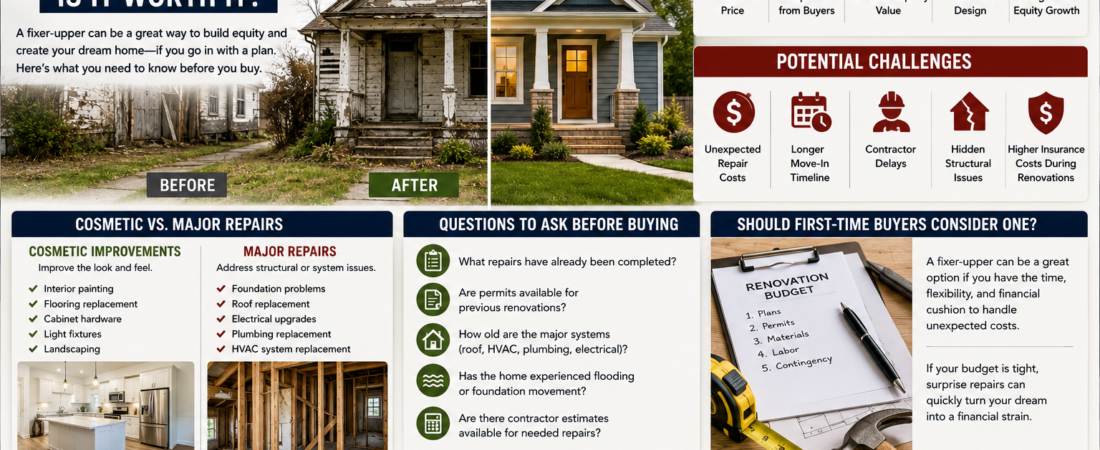
Introduction
For many buyers, fixer-uppers offer the opportunity to purchase a home at a lower price while building equity over time. However, homes that need repairs also come with additional costs, unexpected challenges, and careful planning.
Before purchasing a fixer-upper, it’s important to understand both the advantages and potential risks.
What Is a Fixer-Upper?
A fixer-upper is a home that requires repairs, updates, or renovations before reaching its full potential. The needed work may range from cosmetic improvements to major structural repairs.
Some homes only need fresh paint and flooring, while others may require new roofing, plumbing, electrical work, or foundation repairs.
Advantages of Buying a Fixer-Upper
Buying a home that needs work may provide several benefits.
Potential advantages include:
- Lower purchase price
- Less competition from buyers
- Opportunity to increase property value
- Ability to customize finishes and design
- Potential for long-term equity growth
Many homeowners enjoy creating a space that matches their personal style.
Potential Challenges
Not every fixer-upper becomes a great investment.
Common risks include:
- Unexpected repair costs
- Longer move-in timeline
- Contractor delays
- Hidden structural issues
- Higher insurance costs during renovations
Unexpected problems discovered after purchase can significantly increase the total investment.
Cosmetic vs. Major Repairs
Understanding the difference is essential.
Cosmetic improvements often include:
- Interior painting
- Flooring replacement
- Cabinet hardware
- Light fixtures
- Landscaping
Major repairs may involve:
- Foundation problems
- Roof replacement
- Electrical upgrades
- Plumbing replacement
- HVAC system replacement
Major repairs generally require much larger budgets and professional evaluations.
Questions to Ask Before Buying
Before making an offer, consider asking:
- What repairs have already been completed?
- Are permits available for previous renovations?
- How old are the major systems?
- Has the home experienced flooding or foundation movement?
- Are there contractor estimates available?
Gathering this information can help buyers better estimate future expenses.
Should First-Time Buyers Consider One?
A fixer-upper may be a good option for buyers with flexible budgets and realistic expectations. However, those with limited savings may find unexpected repair costs difficult to manage.
Choosing a home that fits both your financial situation and comfort level is often more important than finding the lowest purchase price.
Final Thoughts
A fixer-upper can become a rewarding investment when approached with careful planning and realistic expectations. Understanding the home’s condition, budgeting for repairs, and preparing for unexpected expenses will help buyers make confident decisions. Every property is different, so taking time to evaluate the risks and opportunities is one of the smartest steps in the home-buying process.