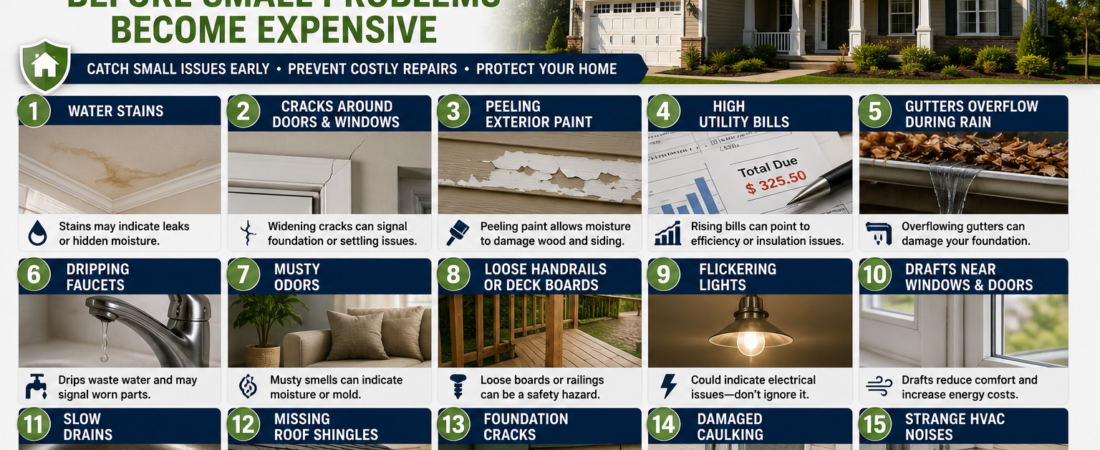
Most expensive home repairs don’t happen overnight. They usually begin as small warning signs that homeowners overlook until the damage becomes much larger.
Learning what to watch for allows you to address issues earlier, helping protect both your home and your budget.
1. Water Stains on Ceilings or Walls
Brown or yellow stains often indicate moisture entering from a roof leak, plumbing issue, or condensation problem.
Even if the stain appears dry, it’s worth investigating before hidden damage spreads.
2. Cracks Around Doors and Windows
Small hairline cracks are common as homes settle, but widening cracks or doors that suddenly become difficult to open may indicate movement that deserves attention.
3. Peeling Exterior Paint
Exterior paint helps protect siding and trim from moisture.
When paint begins peeling or bubbling, exposed wood becomes more vulnerable to weather damage.
4. High Utility Bills
An unexplained increase in energy costs may point to:
- Aging HVAC equipment
- Poor insulation
- Air leaks
- Inefficient windows
- Dirty air filters
5. Gutters Overflow During Rain
Overflowing gutters can send water toward your foundation instead of away from it.
Regular cleaning helps prevent water damage around the home.
6. Dripping Faucets
A slow drip may seem minor, but over time it wastes water and can signal worn plumbing components.
7. Musty Odors
Persistent musty smells often indicate excess moisture somewhere inside the home.
Moisture problems should never be ignored because they can contribute to mold growth and material deterioration.
8. Loose Handrails or Deck Boards
Outdoor structures naturally wear over time.
Checking stairs, railings, decks, and porches helps identify safety concerns before they become hazardous.
9. Flickering Lights
Occasional flickering may have a simple explanation, but repeated electrical issues should be evaluated, especially if multiple rooms are affected.
10. Drafts Near Windows and Doors
Drafts can reduce comfort and increase heating and cooling costs.
Replacing worn weatherstripping or damaged seals may improve energy efficiency.
11. Slow Drains
A single slow drain might be a localized clog.
Multiple slow drains throughout the home may indicate a larger plumbing issue that requires attention.
12. Missing Roof Shingles
Even one missing shingle leaves part of the roof exposed to rain and wind.
Routine visual inspections after storms can help identify damage early.
13. Foundation Cracks
Small surface cracks may be harmless, but growing cracks or uneven floors should be monitored carefully.
Water drainage around the foundation also plays an important role in preventing future problems.
14. Damaged Caulking
Caulk around tubs, showers, windows, and exterior trim eventually wears out.
Replacing deteriorated caulk helps keep moisture from entering areas where it doesn’t belong.
15. Strange HVAC Noises
Grinding, rattling, banging, or squealing sounds are not normal.
Unusual noises often indicate components that should be inspected before they fail completely.
Why Preventative Maintenance Matters
Many homeowners wait until something stops working before taking action.
Unfortunately, repairs become significantly more expensive after damage has spread. Catching small warning signs early often leads to faster, less costly solutions and helps preserve the long-term value of your home.
Final Thoughts
Every home shows signs of wear over time, but paying attention to small changes can make a big difference. Regular inspections and prompt maintenance help reduce unexpected repair bills, improve safety, and extend the life of your home’s major systems. A few minutes spent looking for problems today can help prevent major expenses tomorrow.