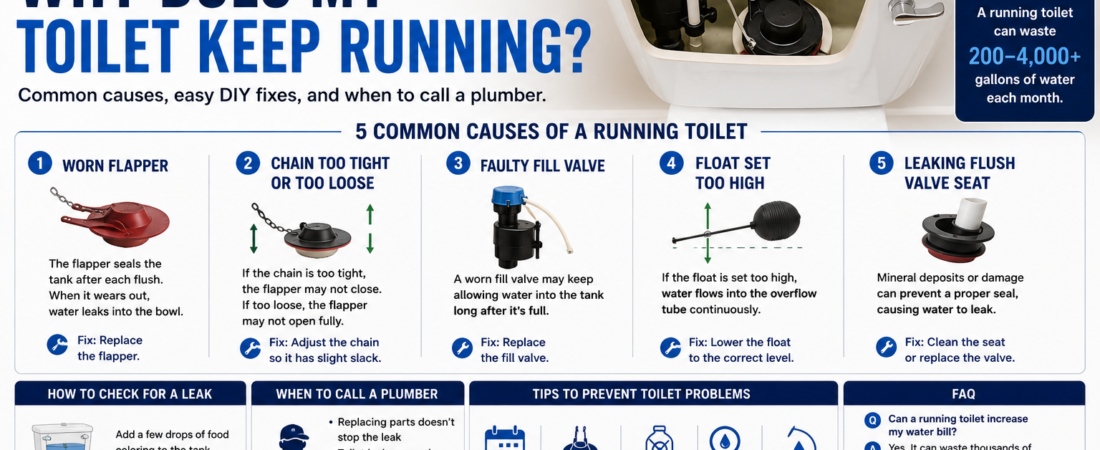
A running toilet is one of the most common plumbing problems homeowners experience. While it may seem like a minor annoyance, a toilet that continuously runs can waste hundreds of gallons of water each day and significantly increase your water bill.
Fortunately, many running toilet problems are inexpensive and easy to fix.
Common Causes of a Running Toilet
Most toilets continue running because one or more parts inside the tank aren’t working correctly.
The most common causes include:
- Worn flapper
- Improper chain adjustment
- Faulty fill valve
- Incorrect float height
- Leaking flush valve
Let’s take a closer look at each problem.
1. Worn Toilet Flapper
The rubber flapper seals the bottom of the toilet tank after each flush.
Over time, the rubber can wear out, crack, or become warped.
When this happens, water slowly leaks into the bowl, causing the fill valve to keep adding water.
What You Can Do
- Turn off the water supply.
- Remove the old flapper.
- Install a matching replacement.
- Turn the water back on and test the toilet.
Replacing a flapper usually takes less than 10 minutes.
2. Chain Is Too Tight or Too Loose
The chain connects the flush handle to the flapper.
If it’s too tight, the flapper may never fully close.
If it’s too loose, the flapper may not lift properly.
Adjusting the chain so it has a small amount of slack often solves the problem.
3. Faulty Fill Valve
The fill valve controls how much water enters the tank after flushing.
A worn or damaged fill valve may continue allowing water to flow long after the tank is full.
Common signs include:
- Constant hissing sounds
- Water continuously entering the tank
- Slow tank filling
Replacing a fill valve is a common DIY repair.
4. Float Set Too High
The float tells the fill valve when to stop adding water.
If it’s adjusted too high, water will continue flowing into the overflow tube.
Lowering the float usually fixes the issue.
Most modern toilets allow easy float adjustments using a small adjustment screw or clip.
5. Leaking Flush Valve
If replacing the flapper doesn’t solve the problem, the flush valve seat may be damaged or covered with mineral deposits.
Cleaning the sealing surface or replacing the flush valve may be necessary.
How Much Water Can a Running Toilet Waste?
A running toilet can waste anywhere from 200 to more than 4,000 gallons of water each month, depending on how severe the leak is.
Fixing the problem quickly can save both water and money.
When Should You Call a Plumber?
You may need professional help if:
- Replacing the flapper doesn’t stop the leak.
- The toilet leaks around its base.
- The tank won’t fill properly.
- Multiple plumbing fixtures have low water pressure.
- You suspect a cracked toilet.
Tips to Prevent Toilet Problems
Simple maintenance can help prevent future issues.
Helpful tips include:
- Inspect toilet parts once a year.
- Replace worn flappers before they fail.
- Avoid using harsh chemical tank cleaners.
- Check for leaks by adding food coloring to the tank.
If color appears in the bowl without flushing, you likely have a leak.
Frequently Asked Questions
Can a running toilet increase my water bill?
Yes. A continuously running toilet can waste thousands of gallons of water over time.
Is replacing a toilet flapper difficult?
No. Most homeowners can replace a toilet flapper in less than 10 minutes using basic tools.
How long do toilet flappers last?
Most rubber flappers last between 3 and 5 years, depending on water quality and usage.
Final Thoughts
A running toilet is usually caused by a worn flapper, faulty fill valve, or an incorrectly adjusted float. Fortunately, many of these repairs are inexpensive and can be completed in just a few minutes.
Fixing the problem quickly not only saves water but can also lower your monthly utility bill and help prevent more costly plumbing repairs in the future.