When your heating or cooling system starts having problems, one of the biggest questions homeowners face is whether it’s worth repairing or replacing it. While repairs are often less expensive upfront, replacing an aging HVAC system may save money in the long run through lower energy bills and fewer breakdowns.
Understanding the age, condition, and repair history of your system can help you make the right decision.
Consider the Age of Your HVAC System
One of the biggest factors is how old your equipment is.
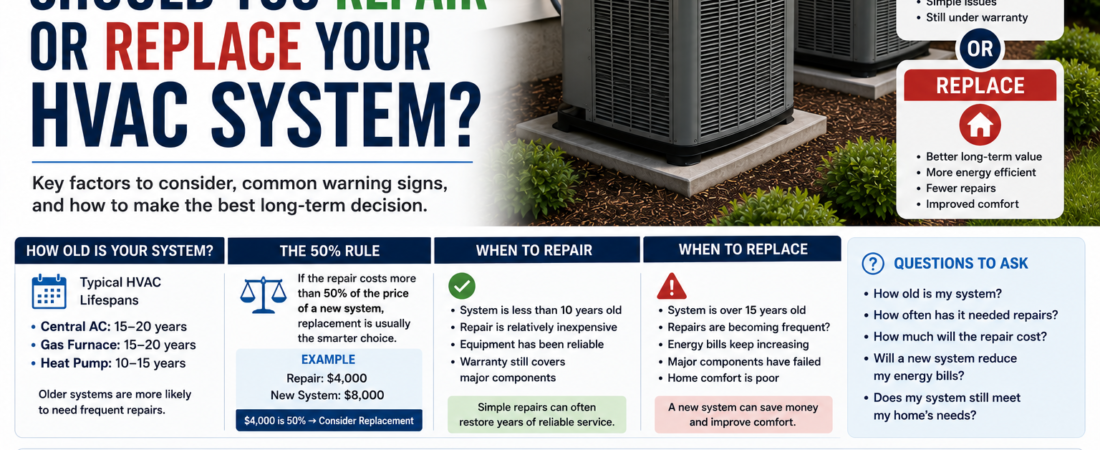
Typical HVAC lifespans include:
- Central Air Conditioner: 15–20 years
- Gas Furnace: 15–20 years
- Heat Pump: 10–15 years
If your system is approaching the end of its expected lifespan, replacement may be the better long-term investment.
When Repair Makes Sense
Repairing your HVAC system is often the right choice when:
- The system is less than 10 years old.
- The repair is relatively inexpensive.
- The equipment has been reliable.
- The warranty still covers major components.
Simple repairs can often restore years of reliable service.
When Replacement Is the Better Option
Replacing your HVAC system may be the smarter financial decision if:
- The system is over 15 years old.
- Repairs are becoming more frequent.
- Your energy bills continue to increase.
- Major components have failed.
- Your home is no longer comfortable.
A new system can improve efficiency while reducing future repair costs.
The 50% Rule
Many HVAC professionals recommend using the “50% Rule.”
If the repair costs more than 50% of the price of a new system, replacement is often the better long-term investment.
For example:
- Repair: $4,000
- New System: $8,000
In this situation, replacement may provide better long-term value.
Benefits of Installing a New HVAC System
Modern systems offer several advantages.
Benefits include:
- Lower monthly utility bills
- Better indoor comfort
- More consistent temperatures
- Quieter operation
- Improved indoor air quality
- Smart thermostat compatibility
- Manufacturer warranties
Many homeowners also notice their home feels more comfortable throughout every room.
Questions to Ask Before Deciding
Before making your decision, consider:
- How old is my HVAC system?
- How often has it needed repairs?
- How much will the repair cost?
- Will a new system reduce my energy bills?
- Does my current system still meet my home’s needs?
Answering these questions can help you choose the option that offers the best long-term value.
How to Extend the Life of Your HVAC System
Whether you repair or replace your equipment, regular maintenance is essential.
Helpful maintenance includes:
- Replace air filters every 1–3 months.
- Schedule annual professional inspections.
- Keep the outdoor condenser clean.
- Keep vents open.
- Address small repairs early.
Routine maintenance can add years to the life of your HVAC system.
Frequently Asked Questions
How long should an HVAC system last?
Most central HVAC systems last between 15 and 20 years with proper maintenance.
Is replacing an HVAC system worth it?
If your system is older, inefficient, or requiring frequent repairs, replacement can often lower energy bills and improve comfort.
Should I replace both the furnace and air conditioner together?
In many cases, yes. Matching systems are generally more efficient and often come with better warranty coverage.
Final Thoughts
Deciding whether to repair or replace your HVAC system depends on its age, repair history, and overall condition. While repairs can often solve minor issues, an older system that requires frequent service may end up costing more over time.
If you’re unsure, ask a licensed HVAC professional for a full system evaluation. Comparing repair costs with the benefits of a modern, energy-efficient system can help you make a confident decision that fits both your home and your budget.