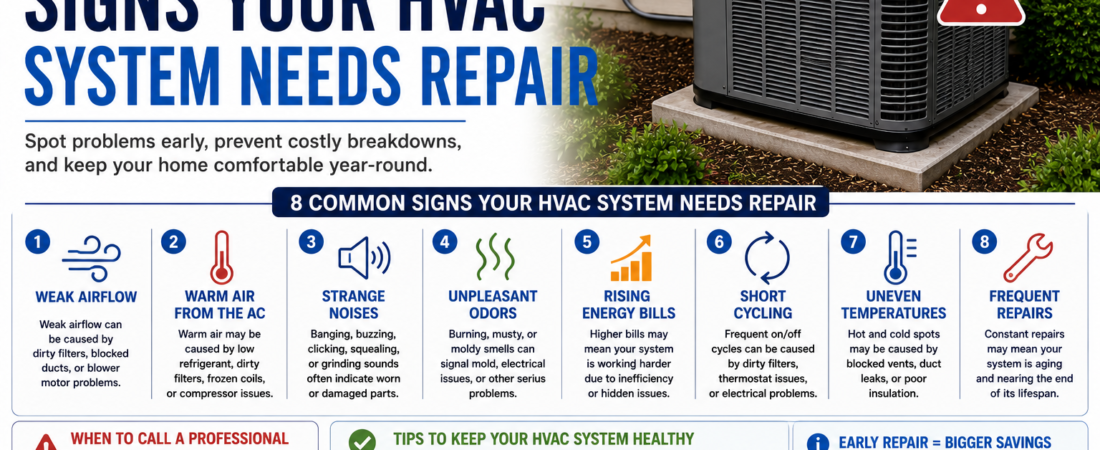
Your HVAC system works hard to keep your home comfortable throughout the year. Like any mechanical system, it can develop problems over time. Catching those problems early can often prevent expensive breakdowns and extend the life of your heating and cooling equipment.
In this guide, we’ll cover the most common warning signs that your HVAC system may need professional repair.
1. Weak Airflow
If little air is coming from your vents, your HVAC system may have an airflow problem.
Possible causes include:
- Dirty air filter
- Blocked ductwork
- Failing blower motor
- Closed or blocked vents
Weak airflow forces your system to work harder and can reduce comfort throughout your home.
2. Warm Air from the AC
If your air conditioner is blowing warm air during the summer, several issues could be to blame.
Common causes include:
- Low refrigerant
- Dirty air filter
- Frozen evaporator coil
- Thermostat problems
- Compressor issues
If replacing the air filter doesn’t solve the problem, it’s time to schedule service.
3. Strange Noises
Your HVAC system should run relatively quietly.
Watch for sounds like:
- Banging
- Buzzing
- Clicking
- Squealing
- Grinding
- Hissing
Unusual noises often indicate worn or damaged components.
4. Unpleasant Odors
Strange smells coming from your vents should never be ignored.
You may notice:
- Burning smell
- Musty odor
- Mold smell
- Rotten egg smell (leave the home immediately if you suspect a gas leak)
Persistent odors should be inspected by a qualified technician.
5. Rising Energy Bills
A sudden increase in your utility bill may indicate your HVAC system is working harder than normal.
This can happen because of:
- Dirty filters
- Aging equipment
- Refrigerant issues
- Mechanical wear
- Dirty coils
6. Short Cycling
Short cycling occurs when your HVAC system turns on and off frequently without completing a full heating or cooling cycle.
Possible causes include:
- Dirty air filter
- Oversized system
- Thermostat problems
- Electrical issues
Short cycling reduces efficiency and increases wear on your equipment.
7. Uneven Temperatures
If some rooms are hot while others stay cool, your system may not be distributing air properly.
Possible causes include:
- Blocked vents
- Duct leaks
- Poor insulation
- HVAC system sizing issues
8. Frequent Repairs
Needing repairs every few months is often a sign that your HVAC system is nearing the end of its lifespan.
If repair costs continue to add up, replacing the system may be the more cost-effective long-term solution.
When Should You Call an HVAC Professional?
Schedule an inspection if:
- Your AC or furnace stops working.
- You hear loud or unusual noises.
- The system won’t maintain the desired temperature.
- You smell burning or musty odors.
- Your energy bills increase significantly.
- The breaker trips repeatedly.
Prompt repairs can prevent additional damage and help keep your home comfortable.
Tips to Keep Your HVAC System Healthy
Regular maintenance is the best way to reduce unexpected repairs.
Helpful habits include:
- Replace air filters every 1–3 months.
- Schedule annual professional maintenance.
- Keep outdoor units clean.
- Keep vents open and unobstructed.
- Check your thermostat regularly.
Simple maintenance can extend the life of your HVAC system and improve energy efficiency.
Frequently Asked Questions
How often should my HVAC system be serviced?
Most HVAC professionals recommend one maintenance visit in the spring for your air conditioner and another in the fall for your furnace.
Is it okay to keep running my HVAC if it isn’t working correctly?
It’s generally best to turn the system off if it’s making loud noises, producing burning smells, or not heating or cooling properly. Continuing to run it may cause additional damage.
Can replacing the air filter solve HVAC problems?
Yes. A dirty air filter can reduce airflow, increase energy bills, and contribute to poor heating or cooling performance.
Final Thoughts
Your HVAC system usually provides warning signs before a major breakdown occurs. Paying attention to weak airflow, unusual noises, rising energy bills, or inconsistent temperatures can help you address small issues before they become expensive repairs.
Regular maintenance and timely repairs will help keep your heating and cooling system operating efficiently for years to come.