Replacing an HVAC system is one of the largest home improvement expenses most homeowners will face. While the cost can seem overwhelming, a new heating and cooling system can improve comfort, lower monthly energy bills, and increase your home’s value.
The total cost depends on several factors, including the size of your home, the type of equipment you choose, and whether additional work such as duct replacement is needed.
Average HVAC Replacement Cost
For most homeowners, a complete HVAC system replacement costs between:
$7,000 and $15,000
This estimate usually includes:
- New air conditioner
- New furnace or air handler
- Installation
- Removal of old equipment
- Basic materials and labor
Higher-end systems or larger homes may cost significantly more.
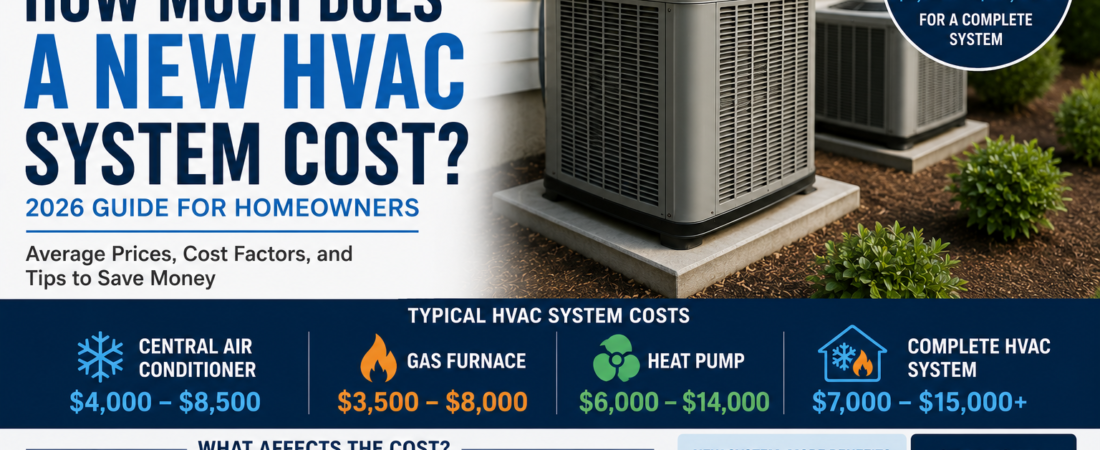
HVAC Cost by System Type
Typical installation costs include:
Central Air Conditioner
$4,000–$8,500
Gas Furnace
$3,500–$8,000
Heat Pump
$6,000–$14,000
Complete HVAC System
$7,000–$15,000+
What Affects the Cost?
Several factors influence the final price.
Home Size
Larger homes require larger HVAC systems that cost more to install.
System Efficiency
High-efficiency systems generally cost more upfront but can reduce monthly energy bills.
Ductwork
If your ductwork needs repair or replacement, installation costs will increase.
Labor Costs
Installation prices vary depending on where you live and the complexity of the project.
Brand
Premium brands often cost more but may include longer warranties or additional features.
Repair or Replace?
A repair may make sense if:
- Your system is under 10 years old.
- Repair costs are relatively low.
- The unit has been reliable.
Replacement may be the better choice if:
- Your HVAC system is over 15 years old.
- Repairs are becoming frequent.
- Energy bills continue increasing.
- Major components have failed.
Many HVAC professionals recommend considering replacement if a repair costs more than 50% of the price of a new system.
Can a New HVAC System Save Money?
Yes.
New systems are typically much more energy efficient than older equipment.
Benefits include:
- Lower utility bills
- More consistent temperatures
- Quieter operation
- Better indoor air quality
- Increased home value
Many homeowners recover part of the installation cost through lower monthly energy expenses.
Ways to Reduce Installation Costs
You may be able to lower your costs by:
- Comparing multiple contractor estimates.
- Asking about manufacturer rebates.
- Looking for utility company incentives.
- Financing through the installer.
- Replacing your system before it completely fails.
Planning ahead often provides more options than making an emergency replacement.
Frequently Asked Questions
How long does an HVAC system last?
Most central HVAC systems last between 15 and 20 years with proper maintenance.
Is financing available?
Many HVAC contractors offer financing options that allow homeowners to spread payments over several years.
Should I replace both the furnace and air conditioner together?
In many cases, yes. Matching systems often operate more efficiently and may provide better warranty coverage.
Final Thoughts
Installing a new HVAC system is a major investment, but it can also improve comfort, lower energy bills, and provide reliable heating and cooling for years to come.
Before making a decision, compare estimates from multiple licensed HVAC contractors and ask questions about warranties, efficiency ratings, and available rebates.
Choosing the right system today can help save money and reduce future repair costs.