Your HVAC system is one of the biggest investments in your home. Whether you’re buying a new house or maintaining your current heating and cooling system, it’s helpful to know how long an HVAC system typically lasts and what you can do to maximize its lifespan.
While every system is different, proper maintenance can often add several years to your equipment’s life.
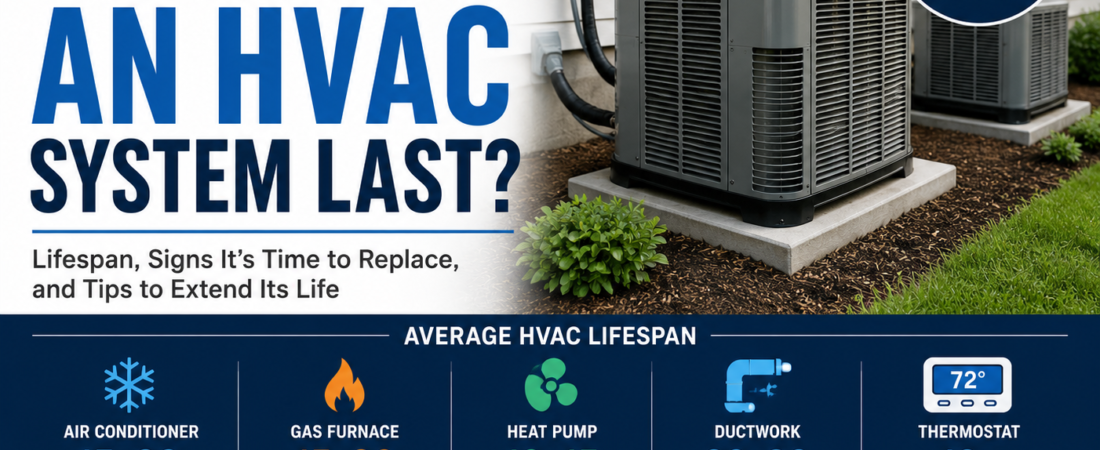
Average HVAC Lifespan
The lifespan of an HVAC system depends on the type of equipment and how well it has been maintained.
Typical life expectancies include:
- Central air conditioner: 15–20 years
- Gas furnace: 15–20 years
- Heat pump: 10–15 years
- Ductwork: 20–30 years
- Thermostat: 10 years or more
Homes in areas with extremely hot summers or harsh winters may experience shorter equipment lifespans because their systems run more frequently.
Factors That Affect HVAC Lifespan
Several factors determine how long your system will last.
Regular Maintenance
Annual maintenance helps identify small problems before they become expensive repairs.
Professional inspections can improve efficiency and extend the life of your equipment.
Air Filter Changes
Dirty air filters reduce airflow and force your HVAC system to work harder.
Replacing your filter every one to three months is one of the easiest ways to protect your equipment.
Climate
Homes in warmer climates often use their air conditioners for much longer periods each year.
The more your system runs, the faster components naturally wear out.
Installation Quality
Even the highest-quality HVAC system can experience problems if it wasn’t installed correctly.
Proper sizing and professional installation play a major role in long-term reliability.
Signs Your HVAC System Is Nearing the End of Its Life
Older systems often show warning signs before they fail.
Watch for:
- Frequent repairs
- Rising energy bills
- Uneven temperatures
- Strange noises
- Weak airflow
- Difficulty maintaining comfortable temperatures
If your system is more than 15 years old and several of these symptoms appear, replacement may be worth considering.
Should You Repair or Replace Your HVAC System?
A simple repair often makes sense if:
- The unit is less than 10 years old.
- Repair costs are relatively low.
- The system has been well maintained.
Replacement may be the better option if:
- The system is over 15 years old.
- Repairs become frequent.
- Energy bills continue increasing.
- Major components like the compressor or heat exchanger fail.
A newer system can improve comfort while reducing monthly utility costs.
How to Extend the Life of Your HVAC System
Simple maintenance goes a long way.
Helpful tips include:
- Replace air filters regularly.
- Schedule annual professional maintenance.
- Keep outdoor units clean.
- Keep vents open and unobstructed.
- Seal air leaks around windows and doors.
- Install a programmable or smart thermostat.
These habits can improve efficiency while reducing wear on the system.
Frequently Asked Questions
Is 20 years old too old for an HVAC system?
Many HVAC systems can last around 20 years with excellent maintenance, but efficiency and reliability often decline as they age.
How do I know if I need a new HVAC system?
Frequent breakdowns, rising energy bills, poor comfort, and expensive repairs are all signs that replacement may be the better long-term investment.
Is annual HVAC maintenance worth it?
Yes. Annual inspections help improve efficiency, identify small problems early, and may extend the life of your equipment.
Final Thoughts
Most HVAC systems last between 15 and 20 years, but proper maintenance plays a major role in determining how long your equipment will continue operating efficiently.
Regular filter changes, annual inspections, and prompt repairs can help maximize your investment while keeping your home comfortable year-round.
If your HVAC system is approaching the end of its expected lifespan, speaking with a qualified HVAC professional can help you determine whether repair or replacement is the best option.