Many homeowners wonder what the “perfect” thermostat temperature is. While there’s no single answer that works for everyone, choosing the right temperature can improve your comfort, lower your utility bills, and reduce wear on your HVAC system.
Whether you’re home, asleep, or away on vacation, adjusting your thermostat appropriately can make a noticeable difference in both comfort and energy efficiency.
Best Thermostat Setting for Summer
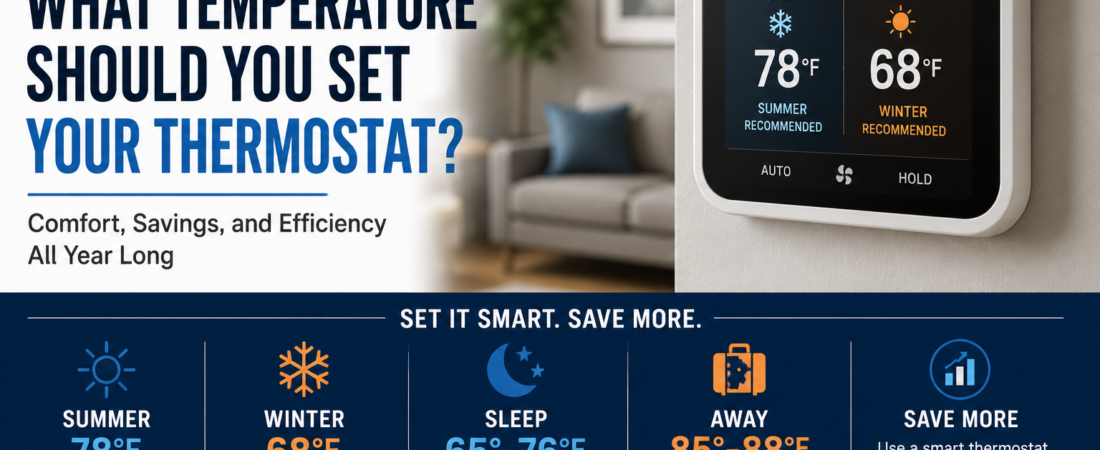
During the summer months, the U.S. Department of Energy recommends setting your thermostat to 78°F (26°C) while you’re home and awake.
This temperature provides a balance between comfort and energy savings.
If your home feels too warm, ceiling fans can help you feel cooler without lowering the thermostat.
Best Thermostat Setting for Winter
During the winter, many experts recommend setting your thermostat to 68°F (20°C) while you’re home.
This temperature helps keep your home comfortable while reducing heating costs.
Wearing warm clothing indoors can also help you stay comfortable without increasing your energy bill.
Best Temperature While Sleeping
Many people sleep better in a cooler room.
Recommended sleeping temperatures include:
- Summer: 74–76°F
- Winter: 65–68°F
Experiment with different settings to find what feels most comfortable for you.
Best Temperature When You’re Away
If you’ll be away from home for several hours, adjusting the thermostat can help reduce energy usage.
Summer
Set your thermostat between 85–88°F.
Winter
Set your thermostat between 55–60°F to help protect your home from freezing temperatures while still conserving energy.
Does Lowering the Thermostat Cool Your Home Faster?
No.
Many people believe setting the thermostat to 60°F will cool the house faster than setting it to 72°F.
In reality, your air conditioner cools at the same rate regardless of the temperature you select.
Setting an extremely low temperature simply causes the system to run longer.
Can a Smart Thermostat Save Money?
Yes.
Smart thermostats automatically adjust temperatures based on your schedule.
Benefits include:
- Lower energy bills
- Remote control from your phone
- Automatic scheduling
- Energy usage reports
- Increased convenience
Many homeowners recover the cost of a smart thermostat through energy savings over time.
Tips for Lower Energy Bills
You can improve your HVAC efficiency by:
- Changing your air filter regularly.
- Keeping vents open.
- Using ceiling fans.
- Closing blinds during hot afternoons.
- Scheduling annual HVAC maintenance.
- Sealing air leaks around doors and windows.
Small improvements can make a noticeable difference in monthly utility costs.
Frequently Asked Questions
Is 72°F a good thermostat setting?
Yes. Many homeowners find 72°F comfortable, although it may increase cooling costs compared to 78°F during the summer.
Should I turn my AC off when I leave?
Generally, it’s better to raise the thermostat a few degrees rather than turning the system completely off.
Does a programmable thermostat save money?
Yes. Automatically adjusting temperatures while you’re sleeping or away can reduce energy consumption without sacrificing comfort.
Final Thoughts
Choosing the right thermostat setting is one of the easiest ways to improve comfort while lowering your monthly energy bills.
Most homeowners will benefit from keeping their thermostat around 78°F during the summer and 68°F during the winter, making adjustments based on occupancy and personal comfort.
Combining smart thermostat settings with routine HVAC maintenance can help extend the life of your heating and cooling system while improving energy efficiency year-round.