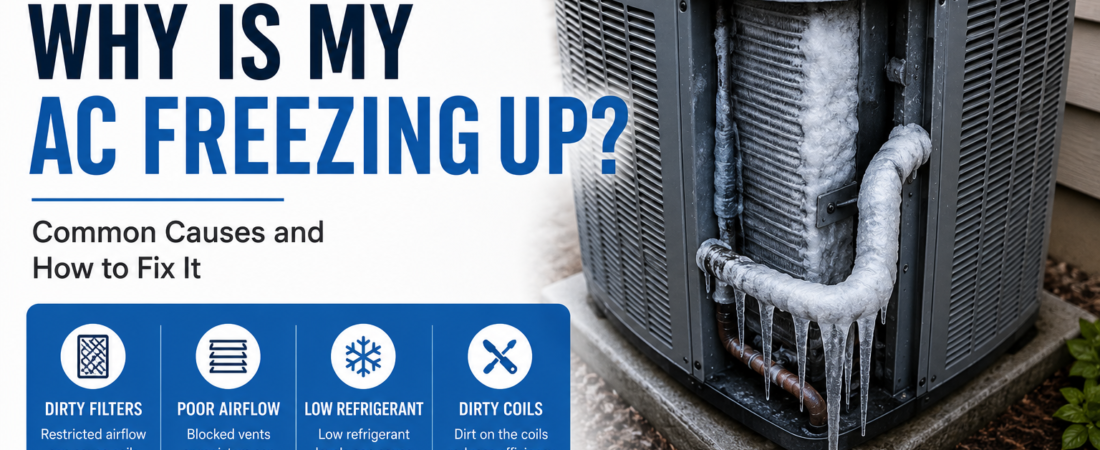
A frozen air conditioner is a common problem that can leave your home feeling warm and uncomfortable. While seeing ice on your AC unit may seem unusual, it usually points to an airflow or refrigerant issue that needs attention.
The good news is that many frozen AC problems can be identified early, helping you avoid more expensive repairs down the road.
Why Does an Air Conditioner Freeze?
Your air conditioner relies on proper airflow and refrigerant pressure to remove heat from your home. When either of these is disrupted, the evaporator coil can become too cold, causing moisture in the air to freeze into ice.
1. Dirty Air Filter
The most common cause of a frozen AC is a dirty air filter.
When the filter becomes clogged, less warm air passes over the evaporator coil. Without enough airflow, the coil gets too cold and begins to freeze.
What You Can Do
- Turn off your HVAC system.
- Remove the air filter.
- Replace it if it looks dirty.
- Allow the ice to melt completely before restarting the system.
2. Blocked Air Vents
Closing too many supply vents or blocking return vents with furniture can reduce airflow throughout your home.
Walk through your house and make sure:
- All supply vents are open.
- Return vents are clear.
- Furniture is not blocking airflow.
3. Low Refrigerant
Low refrigerant is another common cause of frozen coils.
Unlike fuel, refrigerant isn’t used up. If levels are low, your system likely has a leak that should be repaired by a licensed HVAC technician.
Signs include:
- Ice on refrigerant lines
- Warm air from vents
- Hissing sounds
- Longer cooling cycles
4. Dirty Evaporator Coil
Dust and dirt can build up on the evaporator coil over time, reducing its ability to absorb heat.
Regular maintenance helps keep the coil clean and operating efficiently.
5. Blower Fan Problems
If the blower motor isn’t moving enough air across the evaporator coil, freezing can occur.
Possible causes include:
- Worn blower motor
- Loose fan belt (older systems)
- Electrical problems
- Dirty blower wheel
These issues usually require professional service.
How to Safely Thaw a Frozen AC
If your system has frozen:
Step 1
Turn the thermostat Off.
Step 2
Set the fan to On to help circulate warm air.
Step 3
Allow the ice to melt completely. This may take several hours.
Step 4
Replace the air filter if needed.
Step 5
Restart the system and monitor its performance.
If the system freezes again, schedule an HVAC inspection.
Can You Keep Running a Frozen AC?
No.
Running an air conditioner with frozen coils can damage the compressor, one of the most expensive components in the system.
Turning the system off promptly can help prevent additional damage.
When Should You Call an HVAC Professional?
Contact an HVAC technician if:
- The unit freezes repeatedly.
- Ice returns after replacing the filter.
- You suspect a refrigerant leak.
- The blower fan isn’t working properly.
- Your home still won’t cool after the ice melts.
Tips to Prevent Your AC From Freezing
- Replace air filters every 1–3 months.
- Keep supply and return vents open.
- Schedule annual HVAC maintenance.
- Keep the outdoor condenser clean.
- Don’t ignore weak airflow.
Simple maintenance can help prevent most freezing problems.
Frequently Asked Questions
Why is my AC freezing in the summer?
Most frozen AC units are caused by restricted airflow or low refrigerant, even during hot weather.
How long does it take for a frozen AC to thaw?
Depending on the amount of ice, thawing can take anywhere from two to twenty-four hours.
Can I pour hot water on the ice?
No. Allow the system to thaw naturally using the fan setting. Hot water can damage HVAC components.
Final Thoughts
A frozen air conditioner is usually a warning sign that something isn’t working correctly. In many cases, replacing a dirty air filter or improving airflow can solve the problem. However, repeated freezing often points to a more serious issue that should be inspected by a qualified HVAC technician.
Regular maintenance, clean filters, and annual inspections are the best ways to keep your air conditioner running efficiently throughout the cooling season.