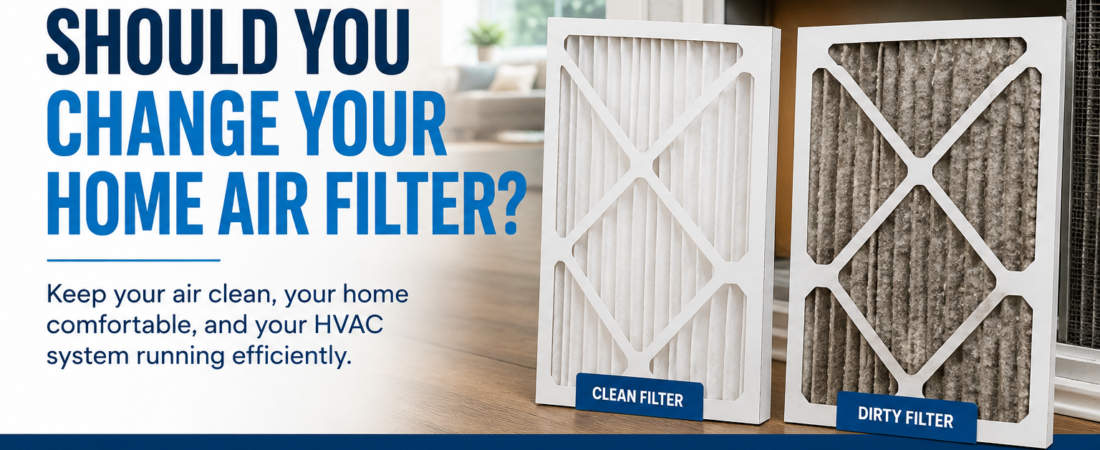
One of the easiest and most important maintenance tasks for any homeowner is replacing the HVAC air filter. A clean air filter helps your heating and cooling system run efficiently, improves indoor air quality, and can even lower your energy bills. Ignoring a dirty filter can restrict airflow, force your HVAC system to work harder, and even shorten the lifespan of your heating and cooling equipment.
For most homes, the general recommendation is to replace your air filter every 1 to 3 months. However, the ideal replacement schedule depends on the type of filter you use, whether you have pets, if anyone in your home has allergies, and how often your HVAC system runs throughout the year.
How Often Should You Replace Your Air Filter?
As a general guideline:
- Fiberglass filters: Every 30 days
- Pleated filters: Every 60–90 days
- Homes with pets: Every 30–60 days
- Homes with allergy sufferers: Every 20–45 days
- Vacation homes or rarely used systems: Every 6–12 months, depending on system use
These are recommendations, not strict rules. The best habit is to check your filter once a month and replace it when it appears dirty.
Why Changing Your Air Filter Is Important
Your HVAC system constantly pulls air through the filter before heating or cooling your home. Over time, the filter collects dust, pollen, pet hair, lint, and other airborne particles.
A clogged air filter can cause:
- Higher energy bills
- Poor airflow from vents
- Reduced indoor air quality
- Uneven temperatures throughout the house
- Frozen air conditioner coils
- Extra wear on your HVAC system
- Shortened equipment lifespan
Replacing your filter regularly is one of the simplest ways to protect your HVAC system and avoid unnecessary repair costs.
Signs It’s Time to Replace Your Air Filter
Even if you don’t remember when the filter was last changed, there are several signs that it may be time for a replacement.
Look for these warning signs:
- The filter appears gray, brown, or covered in dust.
- Airflow from your vents feels weaker than normal.
- Your home seems dustier than usual.
- Your HVAC system runs longer than it used to.
- Allergy symptoms become worse indoors.
- Your heating or cooling bills suddenly increase.
If you’re unsure, remove the filter and hold it up to a light. If very little light passes through, it’s probably time for a new one.
How to Change Your Home Air Filter
Replacing an air filter usually takes less than five minutes.
Step 1
Turn off your HVAC system.
Step 2
Locate the air filter. It’s usually found inside the return air vent, next to the furnace, or inside the air handler.
Step 3
Slide out the old filter and note the airflow arrow printed on the side.
Step 4
Insert the new filter with the airflow arrow pointing toward the HVAC system.
Step 5
Close the compartment and turn your HVAC system back on.
Choosing the Right Air Filter
Not every home needs the highest-rated filter. In fact, using a filter that’s too restrictive can reduce airflow in some HVAC systems.
Most homeowners should consider these options:
- MERV 6–8: Basic protection for most homes.
- MERV 8–11: Excellent balance of filtration and airflow.
- MERV 11–13: Great for homes with pets or allergy sufferers.
Always check your HVAC manufacturer’s recommendations before installing a high-MERV filter.
Frequently Asked Questions
Can I clean a disposable air filter?
No. Disposable filters are designed to be replaced. Only reusable filters should be washed according to the manufacturer’s instructions.
What happens if I never change my air filter?
A neglected filter can reduce airflow, increase energy costs, lower indoor air quality, and place unnecessary strain on your HVAC system. In some cases, it can even cause your air conditioner to freeze up.
Is a more expensive filter always better?
Not necessarily. The best filter is one that provides adequate filtration while allowing your HVAC system to maintain proper airflow.
Final Thoughts
Replacing your home’s air filter is one of the easiest and most cost-effective ways to keep your HVAC system running efficiently. Taking a few minutes every month to inspect your filter can help improve indoor air quality, reduce energy costs, and extend the life of your heating and cooling equipment.
For most homeowners, replacing the filter every 60 to 90 days is a good rule of thumb. However, homes with pets, allergies, or heavy HVAC use may benefit from more frequent replacements.
A clean air filter is a small investment that can make a big difference in your home’s comfort and the long-term health of your HVAC system.