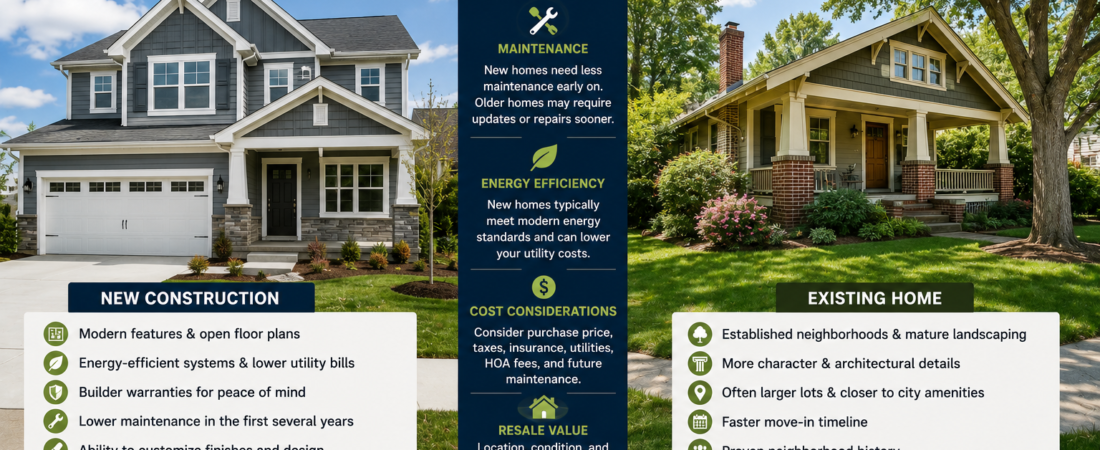
Two Great Options—But Which Is Right for You?
One of the biggest decisions buyers face is choosing between a newly built home and an existing property. Both options offer unique advantages and potential drawbacks depending on your budget, lifestyle, and long-term goals.
Understanding the differences can help you make a more informed decision before purchasing your next home.
Advantages of Buying a New Construction Home
New homes often feature modern layouts, updated building materials, and energy-efficient systems.
Common benefits include:
- Brand-new appliances
- Modern electrical and plumbing systems
- Better insulation
- Energy-efficient windows
- Lower maintenance during the first several years
- Builder warranties on many components
Many buyers also appreciate being able to personalize finishes and design features before construction is completed.
Advantages of Buying an Existing Home
Existing homes offer benefits that new construction sometimes cannot.
These may include:
- Mature landscaping
- Established neighborhoods
- Larger lots
- More architectural character
- Faster move-in timeline
- Proven neighborhood history
Older homes may also be located closer to city centers where new developments are limited.
Maintenance Expectations
New construction generally requires fewer repairs during the first several years because most systems are brand new.
Existing homes, depending on age and maintenance history, may require updates to roofing, HVAC equipment, plumbing, flooring, or appliances sooner.
A professional inspection helps buyers better understand a home’s condition before purchasing.
Energy Efficiency
Modern building codes often require higher energy efficiency than older homes were originally designed to meet.
New homes frequently include:
- Better insulation
- High-efficiency HVAC systems
- Low-E windows
- LED lighting
- Water-saving fixtures
These features may reduce monthly utility costs over time.
Cost Considerations
The purchase price is only one part of the decision.
Buyers should also consider:
- Property taxes
- HOA fees
- Insurance costs
- Maintenance expenses
- Utility costs
- Future renovation needs
Sometimes an existing home has a lower purchase price, while a new home may offer lower maintenance costs during the early years.
Neighborhood Differences
Established communities often provide mature trees, nearby businesses, and schools that have served the area for years.
New developments may offer:
- Community amenities
- Walking trails
- Parks
- Clubhouses
- New infrastructure
The best choice depends on the buyer’s lifestyle and priorities.
Resale Value
Both new and existing homes can appreciate over time.
Factors that generally influence resale value include:
- Location
- Home condition
- Local housing demand
- School districts
- Nearby development
- Overall market conditions
Proper maintenance plays a major role regardless of the home’s age.
Which One Is Right for You?
A new construction home may appeal to buyers looking for modern features, lower maintenance, and energy efficiency.
An existing home may be a better fit for buyers seeking established neighborhoods, larger lots, unique architecture, or potentially lower purchase prices.
There is no universal answer—the best choice depends on your budget, priorities, and long-term plans.
Final Thoughts
Both new construction and existing homes offer excellent opportunities for buyers. Taking time to compare costs, maintenance expectations, neighborhood features, and future goals can help you choose a home that meets your needs for years to come.
A well-informed decision today can lead to greater satisfaction and financial confidence throughout your homeownership journey.