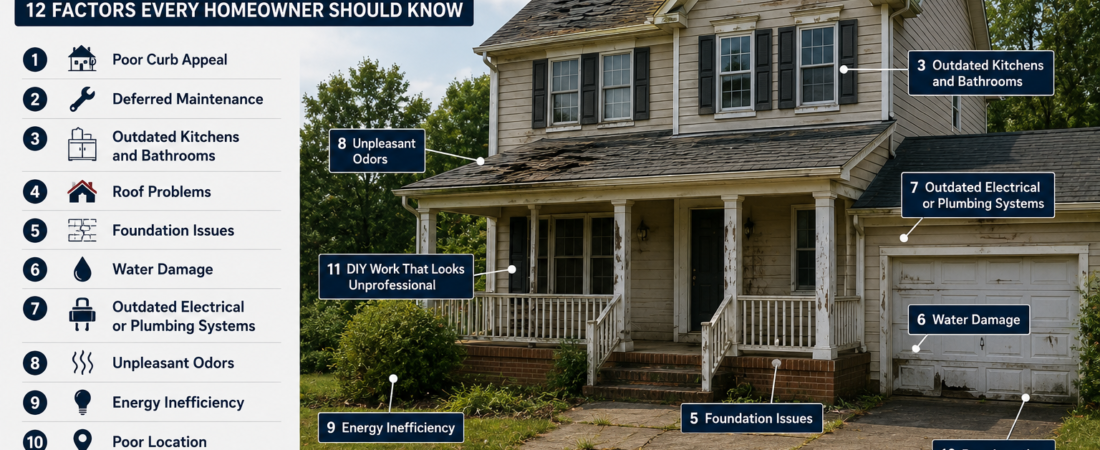
Understanding What Affects Home Value
Whether you’re planning to sell next year or stay in your home for decades, understanding what impacts property value is important. While the real estate market changes over time, certain factors consistently influence how much buyers are willing to pay.
Knowing these factors can help homeowners make smarter decisions and protect one of their biggest investments.
1. Poor Curb Appeal
First impressions matter.
An overgrown lawn, peeling paint, damaged siding, or a cluttered yard can immediately discourage buyers before they even step inside.
Simple exterior maintenance often makes a significant difference.
2. Deferred Maintenance
Homes that show obvious signs of neglect often raise concerns about hidden problems.
Examples include:
- Leaking roofs
- Broken gutters
- Cracked driveways
- Damaged flooring
- Water stains
- Peeling paint
Regular maintenance helps preserve both appearance and value.
3. Outdated Kitchens and Bathrooms
These rooms are among the first areas many buyers evaluate.
While not every home needs luxury upgrades, outdated cabinets, worn countertops, or aging fixtures can make a home feel older than it is.
Modern, functional spaces tend to attract more interest.
4. Roof Problems
A roof nearing the end of its life may cause buyers to negotiate for a lower price or walk away entirely.
Visible damage, missing shingles, or signs of leaks often raise concerns during inspections.
5. Foundation Issues
Foundation problems can be expensive to repair and may affect the entire structure.
Warning signs include:
- Large wall cracks
- Uneven floors
- Doors that won’t close properly
- Window alignment issues
Professional evaluation is recommended whenever structural concerns arise.
6. Water Damage
Water damage often signals larger issues involving plumbing, roofing, or drainage.
Buyers frequently worry about mold, hidden rot, and future repair costs.
Addressing moisture problems early helps protect both the home and its value.
7. Outdated Electrical or Plumbing Systems
Older systems aren’t always a dealbreaker, but they may concern buyers if they no longer meet modern expectations or require major updates.
Many buyers consider these systems when estimating future maintenance expenses.
8. Unpleasant Odors
Persistent odors from pets, smoke, moisture, or mold can negatively affect a buyer’s impression.
A clean, fresh-smelling home generally creates a more welcoming environment during showings.
9. Energy Inefficiency
Many buyers appreciate homes with lower utility costs.
Older windows, poor insulation, inefficient HVAC systems, and outdated appliances may make a property less attractive compared to similar homes.
10. Poor Location
Even a well-maintained home may have lower value if it’s located near:
- Busy highways
- Industrial facilities
- High noise areas
- Flood-prone locations
Location remains one of the most important factors in real estate.
11. DIY Work That Looks Unprofessional
Home improvement projects completed without proper planning or workmanship may concern buyers.
Uneven flooring, poorly installed fixtures, or visible shortcuts can reduce buyer confidence.
12. Lack of Regular Upkeep
Small maintenance tasks often become larger problems when ignored.
Cleaning gutters, servicing HVAC systems, repairing leaks, and maintaining landscaping all contribute to preserving long-term property value.
Final Thoughts
Every home naturally experiences wear over time, but regular maintenance and thoughtful improvements can help preserve its value. While homeowners can’t control the housing market or location, they can control how well their property is maintained.
Protecting your home’s condition today can make it more appealing to buyers and help maximize its value whenever it’s time to sell.