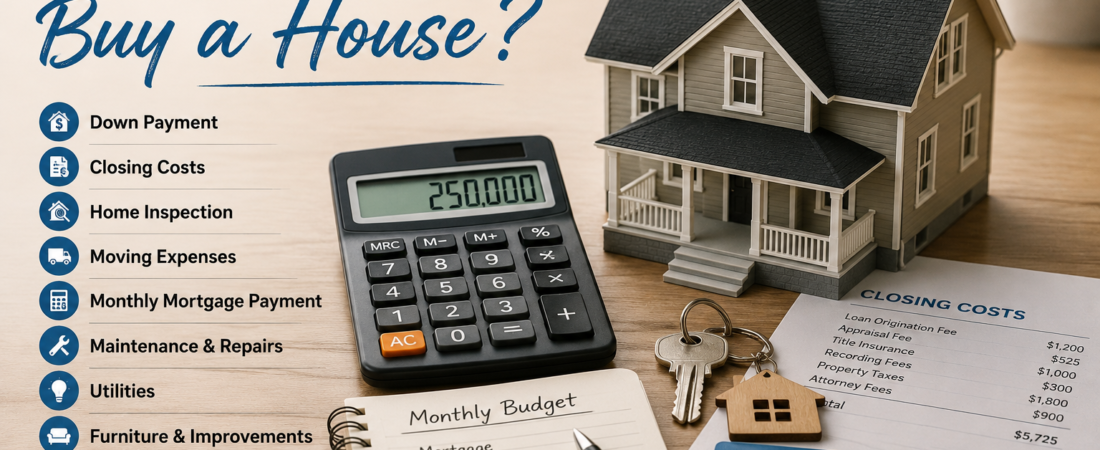
Understanding the True Cost of Homeownership
Many people focus only on the purchase price of a home, but buying a house involves several additional expenses that first-time buyers often overlook. From the down payment to monthly maintenance, understanding these costs can help you prepare financially and avoid unexpected surprises.
Knowing the full picture before you begin shopping can make the buying process much less stressful.
Down Payment
The down payment is usually the largest upfront expense when purchasing a home.
Depending on the loan type, buyers may put down anywhere from a small percentage to a much larger amount. A larger down payment can reduce monthly mortgage payments, but it isn’t the only expense buyers should plan for.
Closing Costs
Closing costs are paid when the purchase is finalized and often include:
- Loan origination fees
- Home appraisal
- Title search and title insurance
- Recording fees
- Attorney or escrow services (where applicable)
- Prepaid property taxes
- Homeowners insurance
These costs are separate from the down payment and should be included in your budget.
Home Inspection
A professional home inspection provides valuable information about the condition of the property before you complete the purchase.
An inspection can uncover issues involving:
- Roofing
- Plumbing
- Electrical systems
- HVAC equipment
- Foundation concerns
- Moisture damage
While inspections add to the initial cost, they often help buyers avoid much larger repair expenses later.
Moving Expenses
The cost of moving can vary depending on distance and the amount of furniture being transported.
Possible expenses include:
- Moving company fees
- Truck rentals
- Packing supplies
- Utility deposits
- Storage costs
Planning for these expenses can make moving day much smoother.
Monthly Mortgage Payment
Your monthly payment may include several components:
- Principal
- Interest
- Property taxes
- Homeowners insurance
- Mortgage insurance (if required)
Understanding what is included helps buyers estimate their true monthly housing cost.
Maintenance and Repairs
Owning a home means taking responsibility for repairs and regular maintenance.
Common expenses include:
- HVAC servicing
- Roof repairs
- Plumbing repairs
- Landscaping
- Appliance replacement
- Exterior maintenance
Setting aside money each month for future repairs can help reduce financial stress.
Utilities
Monthly utility costs may include:
- Electricity
- Water
- Sewer
- Natural gas
- Trash service
- Internet
Utility expenses often change depending on the size, age, and efficiency of the home.
Furniture and Home Improvements
Many buyers also spend money after moving in.
Common purchases include:
- Furniture
- Window coverings
- Lawn equipment
- Paint
- Storage solutions
- Kitchen accessories
These costs may not seem significant individually but can quickly add up during the first year.
Emergency Savings
Unexpected repairs can happen at any time.
Whether it’s a water heater that fails or storm damage that requires immediate attention, having an emergency fund helps homeowners respond without relying on debt.
Final Thoughts
Buying a home involves much more than the purchase price alone. Understanding every cost involved—from closing expenses to long-term maintenance—allows buyers to make informed financial decisions and enjoy homeownership with greater confidence.
Planning ahead today can help prevent costly surprises tomorrow.