Introduction
Your water heater is one of the hardest-working appliances in your home, providing hot water for showers, laundry, dishes, and cleaning every day. While regular maintenance can help extend its lifespan, every water heater eventually reaches a point where replacement is the safer and more cost-effective option.
Knowing the warning signs early can help you avoid sudden breakdowns, expensive water damage, and the inconvenience of losing hot water when you need it most.
How Long Does a Water Heater Last?
The average lifespan depends on the type of unit:
- Traditional tank water heaters: 8–12 years
- Tankless water heaters: 15–20 years with proper maintenance
As your system gets older, it’s worth paying closer attention to changes in performance.
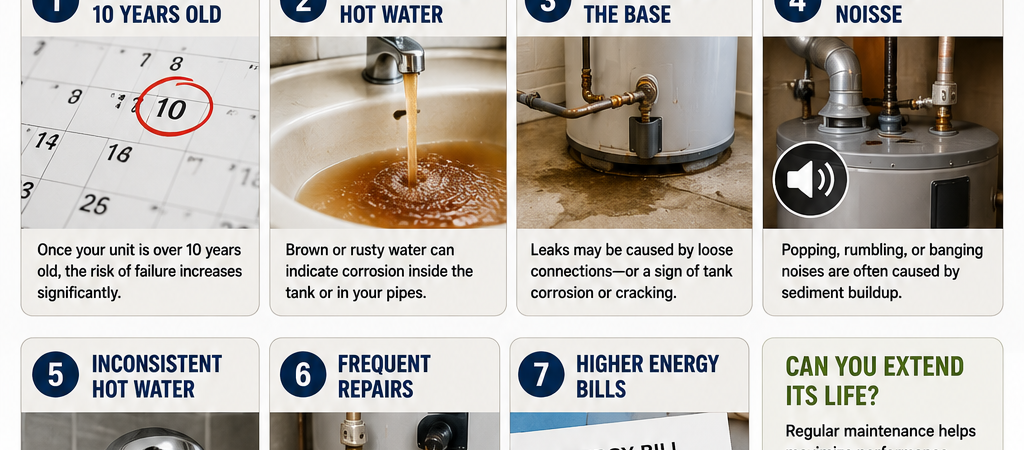
1. Your Water Heater Is More Than 10 Years Old
Age alone doesn’t mean your water heater must be replaced, but once it reaches the 10-year mark, the risk of failure begins to increase significantly.
If your unit is over a decade old and showing additional problems, replacement is often the smarter long-term investment.
2. Rust-Colored Hot Water
Brown, orange, or rusty-looking hot water can indicate corrosion inside the water heater tank.
Possible causes include:
- Rust inside the tank
- Corroded plumbing pipes
- Failing anode rod
If corrosion is occurring inside the tank itself, replacement may be necessary.
3. Water Around the Base of the Tank
Even small puddles around your water heater deserve attention.
Water may result from:
- Loose plumbing connections
- Pressure relief valve issues
- Tank corrosion
- Internal cracks
A cracked storage tank cannot usually be repaired and typically requires replacement.
4. Strange Noises
As minerals build up inside the tank, sediment hardens over time.
Common sounds include:
- Popping
- Rumbling
- Banging
- Crackling
These noises often indicate heavy sediment buildup, which forces the heater to work harder and shortens its lifespan.
5. Inconsistent Hot Water
If your hot water doesn’t last as long as it used to or temperatures constantly fluctuate, the system may be struggling.
Common symptoms include:
- Water turns cold too quickly
- Water never gets fully hot
- Uneven temperatures
- Long waits for hot water
These issues often become more common as the heater ages.
6. Frequent Repairs
Occasional maintenance is normal, but repeated repair calls can become expensive.
If you’re replacing components every few months, compare the repair costs against the price of a newer, more efficient water heater.
7. Higher Energy Bills
Older water heaters become less efficient over time.
Signs include:
- Longer heating cycles
- Higher utility bills
- Increased gas or electricity usage
Modern water heaters often provide better insulation and improved efficiency, reducing long-term operating costs.
Can You Extend Your Water Heater’s Life?
Regular maintenance can help maximize service life.
Helpful maintenance includes:
- Flushing sediment periodically
- Inspecting the pressure relief valve
- Checking for leaks
- Replacing the anode rod when necessary
- Scheduling professional inspections
Routine care helps improve efficiency and may delay replacement.
Final Thoughts
A failing water heater rarely stops working without warning. Rust-colored water, unusual noises, leaks, inconsistent temperatures, and increasing repair costs are all signs that your system may be nearing the end of its useful life.
Recognizing these warning signs early allows homeowners to plan for replacement before an unexpected failure causes water damage or leaves the home without reliable hot water.