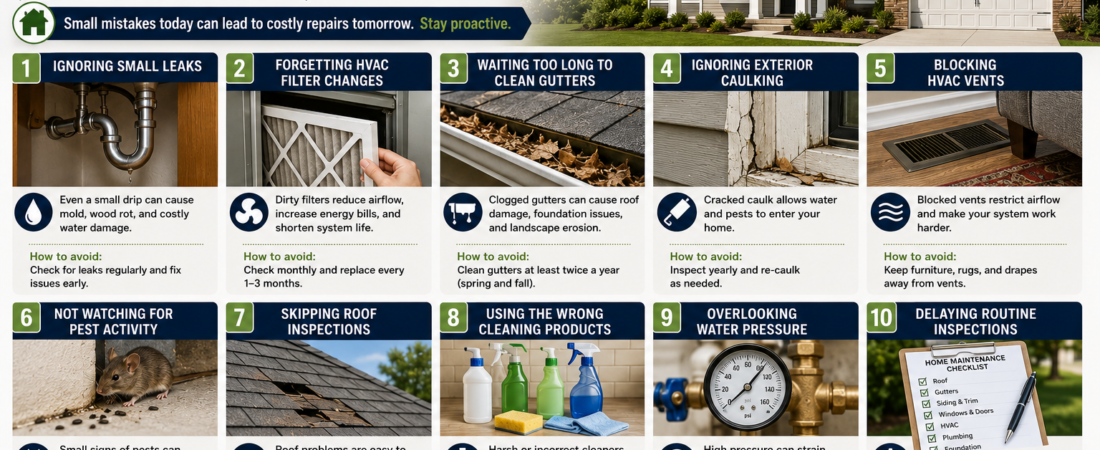
Owning a home comes with ongoing responsibilities, but many expensive repairs happen because of simple maintenance mistakes that go unnoticed for months—or even years.
Fortunately, understanding these common oversights can help homeowners protect their investment and avoid unnecessary expenses.
Ignoring Small Leaks
A slow drip beneath a sink or a tiny roof leak may not seem urgent, but water damage often spreads far beyond the original source.
Over time, moisture can damage drywall, flooring, insulation, and wood framing.
Regularly checking for leaks can help catch problems before repairs become much larger.
Forgetting HVAC Filter Changes
Air filters help protect your heating and cooling system from dust and debris.
When filters become clogged:
- Airflow decreases.
- Energy bills may rise.
- Equipment works harder.
- Indoor air quality can suffer.
Checking filters throughout the year helps keep the system operating efficiently.
Waiting Too Long to Clean Gutters
Leaves and debris prevent gutters from directing water away from your home.
Overflowing gutters can contribute to:
- Foundation issues
- Roof damage
- Fascia deterioration
- Landscape erosion
Routine cleaning helps reduce these risks.
Ignoring Exterior Caulking
Caulk naturally wears out over time.
Cracked or missing caulk around windows, doors, and exterior trim allows moisture to enter areas where it shouldn’t.
Replacing deteriorated caulking is one of the simplest ways to help prevent water intrusion.
Blocking HVAC Vents
Furniture, rugs, or curtains placed over supply vents restrict airflow.
Poor airflow forces heating and cooling equipment to work harder while creating uneven temperatures throughout the home.
Keeping vents clear improves comfort and system performance.
Not Watching for Pest Activity
Small signs of pests are often overlooked until an infestation develops.
Watch for:
- Droppings
- Wood damage
- Mud tubes
- Chewed materials
- Unusual insect activity
Early detection typically makes treatment much easier.
Skipping Roof Inspections
Many homeowners never look at their roof until water appears inside.
After major storms, it’s a good idea to perform a visual inspection from the ground for:
- Missing shingles
- Bent flashing
- Fallen branches
- Visible debris
Identifying damage early can help prevent leaks.
Using the Wrong Cleaning Products
Certain household cleaners can damage natural stone, hardwood flooring, stainless steel, or specialty finishes.
Always use products intended for the surface you’re cleaning and follow manufacturer recommendations.
Overlooking Water Pressure
Excessively high water pressure places additional stress on plumbing fixtures, pipes, and appliances.
If water pressure suddenly changes or seems unusually strong, it may be worth investigating before problems develop.
Delaying Routine Inspections
Many homeowners only inspect their home after something breaks.
A simple walk around your property every few months can help identify:
- Loose siding
- Cracked caulk
- Roof concerns
- Drainage problems
- Exterior wear
Small observations today often prevent larger repairs tomorrow.
A Preventative Mindset Saves Money
Home maintenance isn’t about fixing everything immediately—it’s about identifying small concerns before they become expensive emergencies.
Developing regular inspection habits can reduce unexpected repair costs and extend the life of many parts of your home.
Final Thoughts
No home is completely maintenance-free, but avoiding common mistakes goes a long way toward protecting your investment. Staying proactive with inspections, seasonal upkeep, and routine maintenance can help homeowners enjoy fewer surprises, lower long-term costs, and greater peace of mind for years to come.