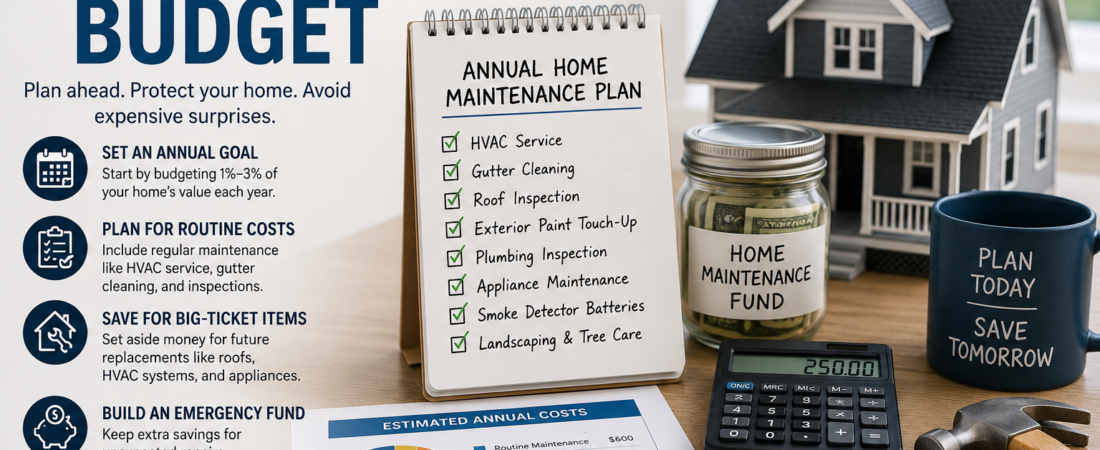
Owning a home means planning for more than just a monthly mortgage payment. Every house requires regular maintenance, occasional repairs, and eventually the replacement of major systems like roofing, HVAC equipment, or water heaters.
Many homeowners are caught off guard when unexpected repair bills appear. Creating a home maintenance budget can help you prepare for these expenses while protecting both your home and your finances.
Why Every Home Needs a Maintenance Budget
Unlike rent, homeownership comes with ongoing responsibilities that never completely disappear.
Roofs age, appliances wear out, plumbing fixtures eventually leak, and heating and cooling systems require regular servicing. Setting money aside throughout the year makes these expenses far less stressful when they occur.
Planning ahead also allows homeowners to address small issues before they become major repairs.
Understanding Routine vs. Unexpected Costs
Home maintenance expenses generally fall into two categories.
Routine Maintenance
These are predictable expenses that occur every year or season, including:
- HVAC filter replacements
- Gutter cleaning
- Lawn equipment maintenance
- Pest control
- Exterior caulking inspections
- Smoke detector batteries
- Pressure washing
- Air conditioning tune-ups
These costs are usually smaller but happen regularly.
Major Repairs and Replacements
Every home also experiences larger expenses over time.
Examples include:
- Roof replacement
- HVAC system replacement
- Water heater replacement
- Foundation repairs
- Exterior painting
- New flooring
- Appliance replacement
While these projects don’t happen every year, they can represent significant costs when they do.
Factors That Affect Your Budget
No two homes require the same maintenance budget.
Several factors influence annual costs, including:
- Home age
- Square footage
- Local climate
- Construction materials
- Landscaping
- Previous maintenance history
Older homes often require more frequent repairs, while newer homes may need fewer major projects during their first several years.
Build an Emergency Repair Fund
Even with excellent maintenance, unexpected repairs can happen.
Storm damage, plumbing failures, or appliance breakdowns may occur without warning.
Having a dedicated emergency repair fund can reduce financial stress and allow important repairs to be completed promptly.
Keep Maintenance Records
Tracking completed maintenance provides several benefits.
A maintenance log can help you:
- Remember service dates
- Track replacement schedules
- Monitor recurring problems
- Support warranty claims
- Increase buyer confidence if you sell your home
Keeping organized records also makes future budgeting more accurate.
Don’t Wait Until Something Fails
One of the biggest budgeting mistakes homeowners make is waiting until equipment stops working.
Replacing worn components before complete failure often provides more flexibility, avoids emergency service costs, and helps prevent additional property damage.
Preventive maintenance usually costs much less than emergency repairs.
Review Your Budget Every Year
Home maintenance needs change over time.
As systems age, replacement costs become more likely. Inflation, labor costs, and material prices also affect future repair expenses.
Reviewing your maintenance budget annually helps ensure it continues to meet your home’s changing needs.
Final Thoughts
A home maintenance budget isn’t about expecting problems—it’s about preparing for them.
Setting aside money throughout the year allows homeowners to stay ahead of routine maintenance, respond quickly to unexpected repairs, and protect one of their largest financial investments. A little planning today can prevent major financial surprises tomorrow.