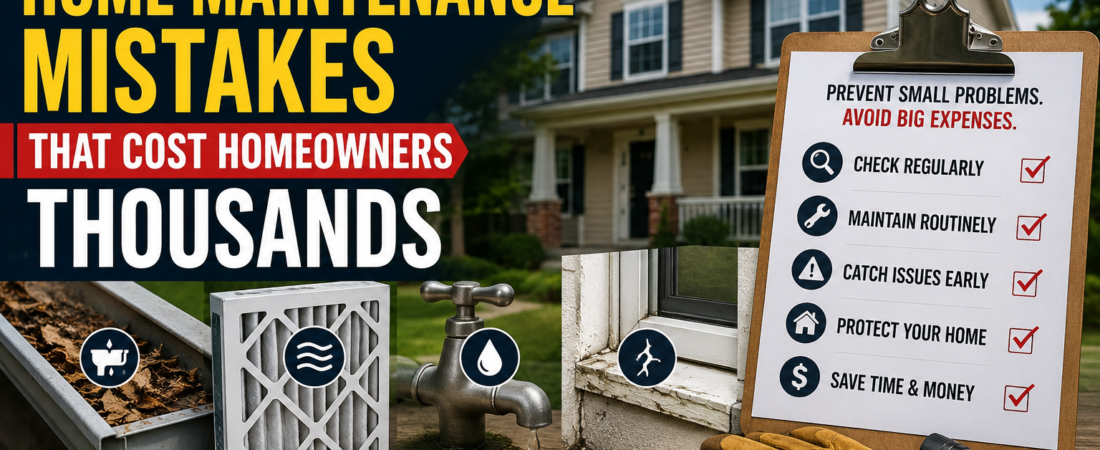
Owning a home comes with ongoing responsibilities that go far beyond mowing the lawn or keeping the house clean. Many expensive repairs begin as small maintenance issues that could have been prevented with regular inspections and routine care. Unfortunately, homeowners often don’t notice these problems until they become major expenses.
Understanding the most common maintenance mistakes can help you protect your investment, improve your home’s efficiency, and avoid costly surprises in the future.
Ignoring Small Water Leaks
One of the most expensive mistakes homeowners make is overlooking small plumbing leaks.
A dripping faucet or slow leak beneath a sink may seem insignificant, but over time even minor leaks can cause water damage, mold growth, wood rot, and higher water bills. Hidden leaks inside walls or beneath flooring can become especially costly before they’re discovered.
Regularly checking under sinks, around toilets, and near water heaters can help catch problems early.
Forgetting to Replace HVAC Filters
Your heating and cooling system works harder when air filters become clogged with dust and debris.
Dirty filters reduce airflow, increase energy consumption, and place unnecessary strain on your HVAC equipment. Over time, this can shorten the lifespan of the system and lead to expensive repairs or early replacement.
Replacing filters on the schedule recommended by the manufacturer is one of the simplest maintenance tasks homeowners can perform.
Neglecting the Roof
Many homeowners only think about their roof after a leak appears inside the house.
Missing shingles, damaged flashing, clogged valleys, and storm damage can allow moisture to enter the home long before visible signs appear indoors.
Having the roof inspected periodically—especially after severe weather—can identify issues before they require major repairs.
Allowing Gutters to Overflow
Gutters play an important role in directing rainwater away from your home.
When gutters become clogged with leaves and debris, overflowing water can damage roofing materials, siding, landscaping, foundations, and even basements or crawl spaces.
Keeping gutters clear helps protect multiple parts of your home from unnecessary water damage.
Ignoring Exterior Caulking
The small beads of caulk around windows, doors, and exterior trim gradually wear out from sun exposure and changing temperatures.
Cracked or missing caulk allows moisture and outside air to enter the home, reducing energy efficiency while increasing the risk of water damage.
Regular inspections of exterior sealants can help maintain both comfort and structural protection.
Delaying Appliance Maintenance
Major household appliances often provide warning signs before they fail.
Dryer vents that become clogged, refrigerator coils covered in dust, or water heaters showing signs of corrosion may continue operating for months before experiencing serious problems.
Routine maintenance helps appliances operate more efficiently and often extends their useful life.
Ignoring Foundation Warning Signs
Small foundation issues rarely improve on their own.
Cracks in walls, sticking doors, uneven floors, or widening gaps around windows may indicate movement that deserves further evaluation.
Addressing foundation concerns early can prevent more extensive structural repairs later.
Skipping Smoke and Carbon Monoxide Detector Testing
Life safety devices require regular attention.
Dead batteries, expired detectors, or malfunctioning units may leave a home unprotected during an emergency.
Testing detectors regularly and replacing aging units according to manufacturer recommendations helps ensure they function when needed most.
Overlooking Tree Maintenance
Trees provide shade and improve curb appeal, but neglected branches can become hazardous.
Limbs hanging over roofs or power lines may break during storms, causing damage to homes, vehicles, or utility lines.
Periodic trimming also reduces the buildup of leaves that contribute to clogged gutters.
Waiting Until Something Breaks
Perhaps the biggest maintenance mistake is adopting a “fix it when it breaks” mindset.
Preventive maintenance is almost always less expensive than emergency repairs. Creating a routine inspection schedule allows homeowners to identify small problems before they become major projects.
Simple seasonal inspections can save thousands of dollars over the life of a home.
Final Thoughts
Home maintenance doesn’t require constant repairs—it requires consistent attention.
By inspecting your home regularly and addressing small issues before they grow, you can reduce repair costs, improve energy efficiency, and help preserve your property’s long-term value. A proactive approach not only protects your investment but also provides greater peace of mind throughout the year.