Your roof protects your home every day from rain, wind, hail, sunlight, and changing temperatures. Because it is constantly exposed to the elements, even a well-built roof experiences wear over time.
Many roofing problems begin as small issues that are difficult to notice from the ground. Regular roof inspections can help identify these concerns early, giving homeowners the opportunity to address problems before they become more costly.
Understanding when to have your roof inspected is an important part of long-term home maintenance.
Why Roof Inspections Matter
A roof inspection is designed to evaluate the overall condition of your roofing system.
Professional inspections may identify:
- Damaged shingles
- Loose flashing
- Signs of storm damage
- Roof ventilation concerns
- Gutter problems
- Areas where moisture may enter
Finding these issues early can help prevent larger repairs in the future.
How Often Should a Roof Be Inspected?
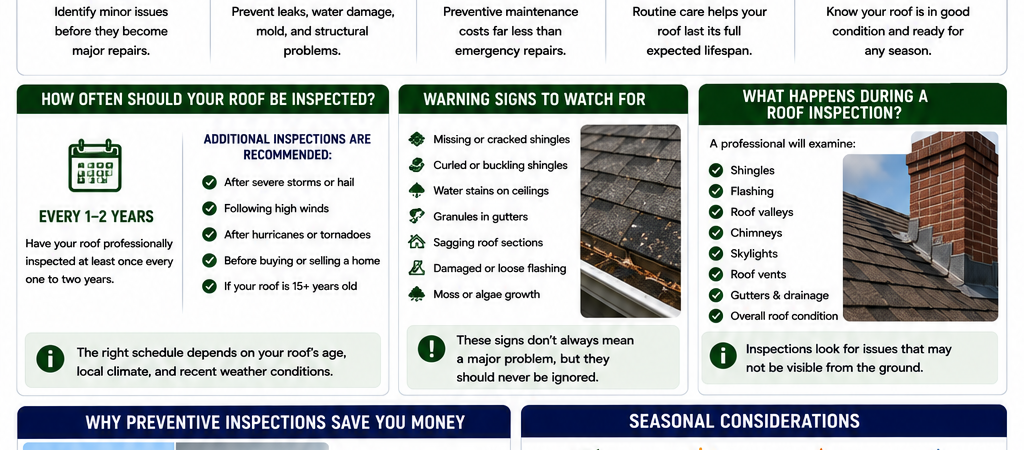
Many roofing professionals recommend having a roof inspected about once every one to two years, even if no obvious problems are present.
Additional inspections may be appropriate:
- After severe hailstorms
- Following high-wind events
- After hurricanes or tornadoes
- Before buying or selling a home
- If your roof is more than 15 years old
The right schedule depends on your roof’s age, local climate, and recent weather conditions.
Warning Signs That Shouldn’t Be Ignored
Homeowners should consider an inspection if they notice:
- Missing shingles
- Curled shingles
- Ceiling water stains
- Granules collecting in gutters
- Sagging roof sections
- Visible flashing damage
- Moss or algae growth
These signs don’t always indicate major damage, but they deserve attention.
What Happens During a Roof Inspection?
A roofing professional may examine:
- Shingles
- Flashing
- Roof valleys
- Chimneys
- Skylights
- Roof vents
- Gutters
- Drainage
- Overall roof condition
The goal is to identify concerns that may not be visible from the ground.
Why Preventive Inspections Save Money
Small roofing issues often become larger when left unaddressed.
Routine inspections may help homeowners:
- Detect problems earlier
- Reduce the likelihood of leaks
- Extend roof lifespan
- Plan for future maintenance
- Avoid unexpected repair expenses
Preventive maintenance is often less expensive than emergency repairs.
Seasonal Considerations
Many homeowners choose to schedule inspections:
- In the spring after winter weather
- In the fall before colder temperatures arrive
- After major storms
- Before beginning large home improvement projects
Regular evaluations can help ensure the roof is prepared for changing seasons.
Frequently Asked Questions
Can I inspect my own roof?
Homeowners can often perform a visual inspection from the ground using binoculars, but walking on a roof can be dangerous. Professional inspections provide a more thorough evaluation and are generally the safest option.
Should a new roof still be inspected?
Yes. Even newer roofs can benefit from periodic inspections, especially after severe weather events.
Do roof inspections help extend roof life?
Routine inspections can identify developing issues early, allowing maintenance or repairs before damage becomes more extensive.
Final Thoughts
Your roof is one of the most valuable protective systems in your home. Scheduling routine inspections and paying attention to early warning signs can help identify small problems before they become costly repairs.
Whether your roof is brand new or approaching the end of its lifespan, regular inspections provide valuable insight into its condition and help homeowners make informed maintenance decisions that protect their investment.