When homeowners think about their roof, they often focus on shingles, gutters, or storm damage. However, one of the most important parts of a healthy roofing system is something that’s largely hidden from view—roof ventilation.
A properly ventilated attic helps control heat and moisture throughout the year, which can improve your roof’s performance and contribute to the overall health of your home.
Understanding why roof ventilation matters can help homeowners recognize the value of a balanced roofing system.
What Is Roof Ventilation?
Roof ventilation is a system that allows air to circulate through the attic.
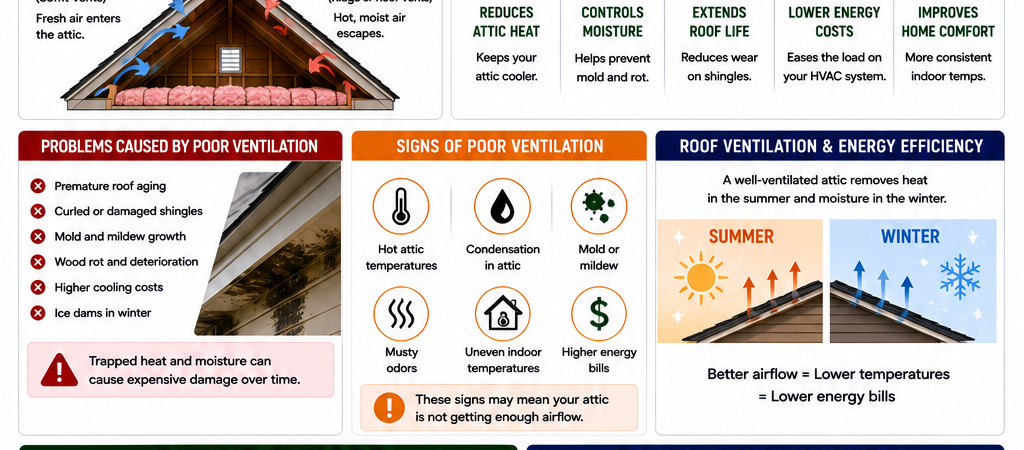
Fresh air enters through intake vents, while warm, moist air exits through exhaust vents.
This continuous airflow helps reduce excess heat and moisture buildup beneath the roof.
Why Is Roof Ventilation Important?
Proper ventilation helps support several parts of your home.
Benefits may include:
- Reduced attic heat
- Better moisture control
- Improved roof longevity
- Lower risk of mold growth
- More consistent indoor temperatures
- Better overall energy efficiency
Ventilation works together with insulation to help maintain a healthy attic environment.
Problems Caused by Poor Ventilation
Without adequate airflow, heat and moisture can build up inside the attic.
Over time, this may contribute to:
- Premature roof aging
- Curled shingles
- Mold and mildew growth
- Wood deterioration
- Higher cooling costs
- Ice dams in colder climates
These problems often develop gradually and may not be immediately noticeable.
Common Signs of Poor Roof Ventilation
Homeowners may notice:
- Excessively hot attic temperatures
- Musty odors
- Condensation on attic surfaces
- Mold growth
- Uneven indoor temperatures
- Higher energy bills
While these signs don’t always point to ventilation issues, they can indicate that further evaluation is needed.
Roof Ventilation and Energy Efficiency
During warmer months, attic temperatures can rise significantly.
Proper ventilation helps remove trapped heat, reducing the workload placed on your home’s cooling system.
Although ventilation alone won’t solve every energy issue, it is an important part of an energy-efficient home.
When Should a Roof Be Evaluated?
Consider a professional evaluation if:
- Your attic feels unusually hot year-round.
- You notice recurring moisture or condensation.
- Your roof is being replaced.
- You observe mold in the attic.
- Energy costs continue to increase without another explanation.
A roofing professional can assess whether the ventilation system is functioning as intended.
Frequently Asked Questions
Does every home have roof ventilation?
Most modern homes include some form of attic ventilation, although the design and effectiveness vary depending on the home’s age and construction.
Can poor ventilation shorten a roof’s lifespan?
Yes. Excess heat and moisture may accelerate the aging of roofing materials over time.
Is ventilation only important during summer?
No. Proper ventilation helps regulate moisture throughout the year, making it beneficial during every season.
Final Thoughts
Roof ventilation is one of the least visible yet most important components of a healthy roofing system. By promoting airflow and helping control heat and moisture, it supports the long-term performance of both the roof and the home itself.
Understanding the purpose of roof ventilation and recognizing the signs of poor airflow can help homeowners make informed decisions about maintaining a safe, efficient, and durable home.