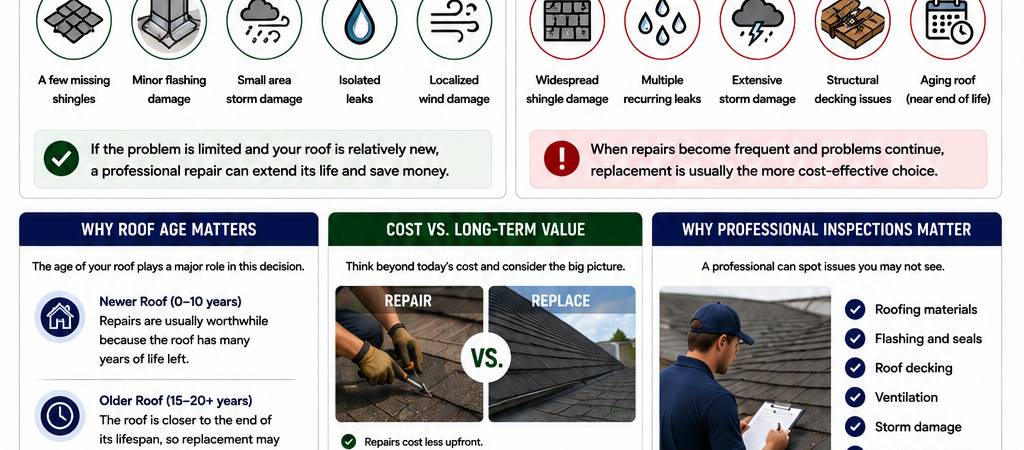
Few home improvement decisions are as significant as determining whether a roof should be repaired or completely replaced. While a small repair may be enough in some situations, other cases involve widespread wear or damage that makes replacement the more practical long-term solution.
Understanding the factors that influence this decision can help homeowners make informed choices and better prepare for future roofing expenses.
When a Roof Repair May Be Enough
Not every roofing issue requires a full replacement.
Repairs may be appropriate when damage is limited to a small area, especially if the roof is still relatively new and otherwise in good condition.
Examples may include:
- A few missing shingles
- Minor flashing damage
- Small storm-related damage
- Localized leaks
- Isolated wind damage
A professional inspection can help determine whether the issue is truly limited or part of a larger problem.
When Roof Replacement May Be Recommended
Replacement is more commonly considered when a roof has reached the end of its expected lifespan or has experienced extensive deterioration.
Factors that may influence this recommendation include:
- Widespread shingle damage
- Multiple recurring leaks
- Extensive storm damage
- Significant structural concerns
- Aging roofing materials
- Frequent repair history
Every roof is unique, and replacement decisions depend on the overall condition rather than one single issue.
Why Roof Age Matters
The age of your roof is often one of the most important considerations.
For example:
- A roof that is only a few years old may benefit from targeted repairs.
- A roof nearing the end of its expected lifespan may not justify repeated repairs.
Knowing when the roof was installed can provide valuable context during a professional evaluation.
Cost vs. Long-Term Value
Although repairs usually cost less upfront, repeated repairs over several years can sometimes exceed the value of replacing an aging roof.
Homeowners often consider:
- Current roof condition
- Expected remaining lifespan
- Frequency of repairs
- Future maintenance costs
- Overall property value
Thinking beyond the immediate expense can help with long-term planning.
Why Professional Inspections Are Important
A roofing professional can evaluate areas that are difficult or unsafe for homeowners to inspect.
An inspection may assess:
- Roofing materials
- Flashing
- Roof decking
- Ventilation
- Storm damage
- Signs of hidden moisture
This information helps homeowners better understand the condition of the entire roofing system.
Questions to Ask Before Making a Decision
Before deciding whether to repair or replace a roof, consider:
- How old is the roof?
- Has it leaked before?
- Has it experienced recent storm damage?
- Are repairs becoming more frequent?
- Has a professional inspection identified larger concerns?
The answers to these questions can help guide the next steps.
Frequently Asked Questions
Is replacing a roof always better than repairing it?
No. Many roofing problems can be successfully repaired, particularly when the roof is relatively new and the damage is limited.
Can repeated repairs become more expensive over time?
Yes. Frequent repairs on an aging roof may eventually cost more than replacing the roof altogether.
Does homeowners insurance pay for roof replacement?
Insurance coverage depends on the cause of the damage and the specific terms of the policy. Sudden storm damage may be covered, while normal aging and wear are generally not.
Final Thoughts
Choosing between repairing or replacing a roof isn’t always straightforward. The right decision depends on the roof’s age, condition, extent of the damage, and long-term goals for the home.
A professional inspection can provide valuable information and help homeowners understand their options before making one of the most important investments in protecting their property.