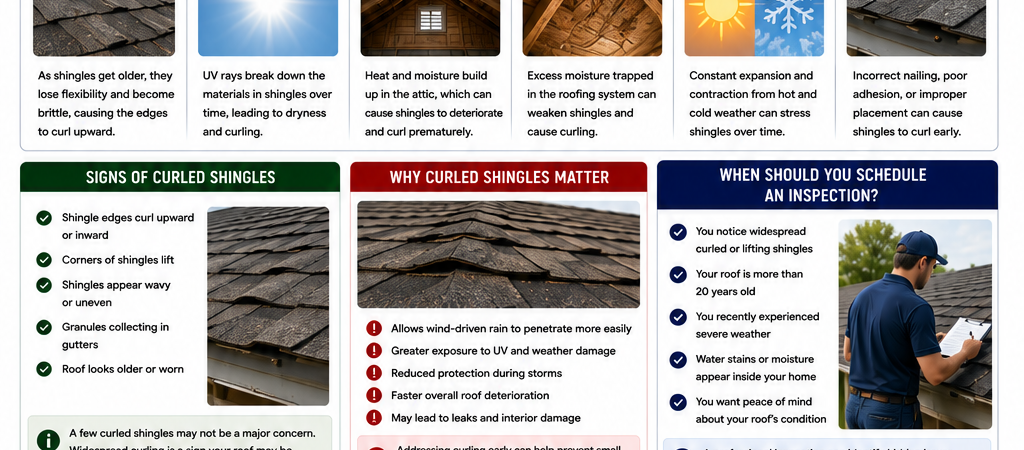
Roof shingles are designed to protect your home from the elements for many years. As they age, however, they may begin to curl, lift, or warp. While curled shingles don’t always mean immediate roof replacement is necessary, they are often a sign that the roof should be evaluated.
Understanding why shingles curl can help homeowners recognize early warning signs and make informed decisions about roof maintenance.
What Does It Mean When Shingles Curl?
Curled shingles no longer lie flat against the roof surface.
Instead, their edges or corners begin to lift upward or bend.
This can reduce the roof’s ability to shed water efficiently and may leave roofing materials more vulnerable to weather exposure.
Common Causes of Curled Shingles
Several factors can contribute to curling over time, including:
- Natural aging
- Prolonged sun exposure
- Poor attic ventilation
- Moisture buildup
- Temperature fluctuations
- Improper installation
In many cases, multiple factors work together to shorten a roof’s lifespan.
Aging Roofing Materials
As asphalt shingles grow older, the materials gradually lose flexibility.
Years of exposure to sunlight, rain, wind, and changing temperatures can cause shingles to become brittle and begin curling.
This is one of the most common signs that a roof is nearing the end of its expected service life.
Poor Attic Ventilation
Proper attic ventilation helps regulate heat and moisture beneath the roof.
Without adequate airflow, excessive heat can build up in the attic, accelerating the aging of roofing materials.
Moisture trapped inside the attic can also contribute to premature roof deterioration.
Weather and Climate
Roofs experience constant exposure to changing weather conditions.
Over time, repeated cycles of:
- Hot summers
- Cold winters
- Heavy rain
- High winds
- Snow and ice
can place stress on roofing materials and contribute to curling.
Why Curled Shingles Matter
Curled shingles may allow:
- Wind-driven rain to penetrate more easily
- Greater exposure to UV damage
- Reduced protection against storms
- Faster overall roof deterioration
Although a few curled shingles may not immediately cause leaks, widespread curling often indicates the roof should be professionally evaluated.
When Should You Schedule an Inspection?
Consider scheduling a roof inspection if:
- You notice widespread curling.
- Several shingles are lifting.
- Your roof is more than 20 years old.
- You recently experienced severe weather.
- Water stains appear inside your home.
A professional inspection can help determine whether maintenance, repairs, or replacement may be appropriate.
Frequently Asked Questions
Are curled shingles always a sign of roof failure?
Not always. A few curled shingles may simply reflect normal aging, while widespread curling often suggests the roof is approaching the end of its service life.
Can curled shingles lead to leaks?
They can. As shingles lift away from the roof surface, they may become less effective at directing water away from the home.
Should curled shingles be ignored?
No. Even if no leaks are currently present, curled shingles are an important warning sign that deserves attention.
Final Thoughts
Curled shingles are one of the most recognizable signs of roof aging. While they don’t always require immediate replacement, they often indicate that roofing materials are becoming less effective at protecting your home.
Understanding what causes shingles to curl and recognizing the warning signs can help homeowners take action before minor roofing concerns develop into more costly problems.