Hailstorms are one of the most common causes of roof damage across many parts of the United States. While large hailstones can leave visible dents and cracked shingles, smaller hail may still damage a roof in ways that aren’t immediately noticeable.
Because some hail damage develops beneath the surface of roofing materials, homeowners may not realize their roof has been affected until problems appear months later.
Understanding how hail impacts a roof can help homeowners recognize when a professional inspection may be worthwhile.
How Hail Affects a Roof
When hail strikes a roof, the impact can weaken roofing materials even if no obvious holes or missing shingles are visible.
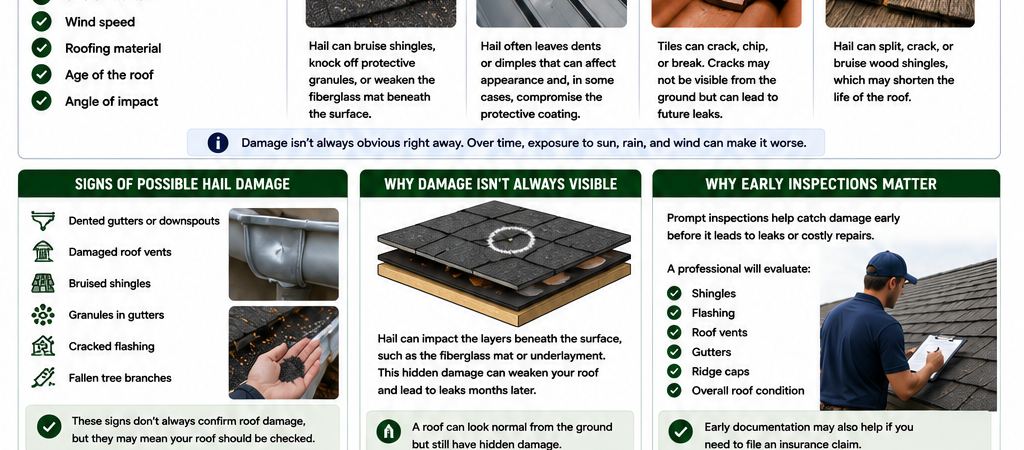
The amount of damage depends on several factors, including:
- Size of the hail
- Wind speed
- Roofing material
- Age of the roof
- Angle of impact
Even a well-maintained roof may experience damage during a severe hailstorm.
Signs of Possible Hail Damage
After a storm, homeowners may notice:
- Dented gutters or downspouts
- Damaged roof vents
- Bruised shingles
- Granules collecting in gutters
- Cracked flashing
- Fallen tree branches
These signs don’t always confirm roof damage, but they may indicate the roof should be evaluated.
Why Damage Isn’t Always Visible
Some forms of hail damage affect the layers beneath the surface of roofing materials.
For example, a shingle may appear intact while its protective structure has been weakened.
Over time, repeated exposure to rain, sunlight, and changing temperatures can worsen this hidden damage.
Different Roofing Materials Respond Differently
Roofing materials react to hail in different ways.
For example:
- Asphalt shingles may lose protective granules.
- Metal roofs may develop dents.
- Clay or concrete tiles may crack.
- Wood shingles may split after repeated impacts.
The extent of the damage depends on the severity of the storm and the condition of the roof before the event.
Why Early Inspections Matter
Prompt inspections after severe weather can help identify damage before it leads to leaks or other costly issues.
A roofing professional may evaluate:
- Shingles
- Flashing
- Roof vents
- Gutters
- Ridge caps
- Overall roof condition
Early documentation may also be helpful if insurance questions arise after a covered storm.
When Should You Schedule an Inspection?
Consider a professional inspection if:
- Large hail fell in your area.
- Nearby homes sustained roof damage.
- You notice dents on gutters or metal surfaces.
- Your roof is older.
- You observe any signs of interior moisture after the storm.
Even if everything appears normal from the ground, hidden damage may still exist.
Frequently Asked Questions
Does every hailstorm damage a roof?
No. The amount of damage depends on the size of the hail, wind conditions, roofing material, and the roof’s overall condition.
Can hail damage shorten a roof’s lifespan?
Yes. Repeated hail impacts can gradually reduce the protective qualities of roofing materials, potentially shortening their expected service life.
Should I have my roof inspected after a major hailstorm?
Many homeowners choose to schedule a professional inspection after severe hail, particularly if nearby properties experienced damage or the storm produced large hailstones.
Final Thoughts
Hail damage isn’t always easy to recognize, especially from the ground. While some storms leave obvious signs, others may weaken roofing materials without creating immediate leaks or visible damage.
Understanding how hail affects different roofing systems and recognizing the warning signs can help homeowners make informed decisions about inspections and long-term roof maintenance after severe weather.