Many homeowners assume that if their roof looks fine from the ground, it must be in good condition. However, roof leaks can sometimes develop long before obvious damage becomes visible.
Small openings, aging materials, or hidden flashing issues may allow water to enter the home without leaving clear signs on the exterior. Understanding how this happens can help homeowners recognize problems early and avoid more extensive damage.
Why Hidden Roof Leaks Occur
Not every roof leak begins with missing shingles or storm damage.
Water can enter through small openings that are difficult to see without a close inspection.
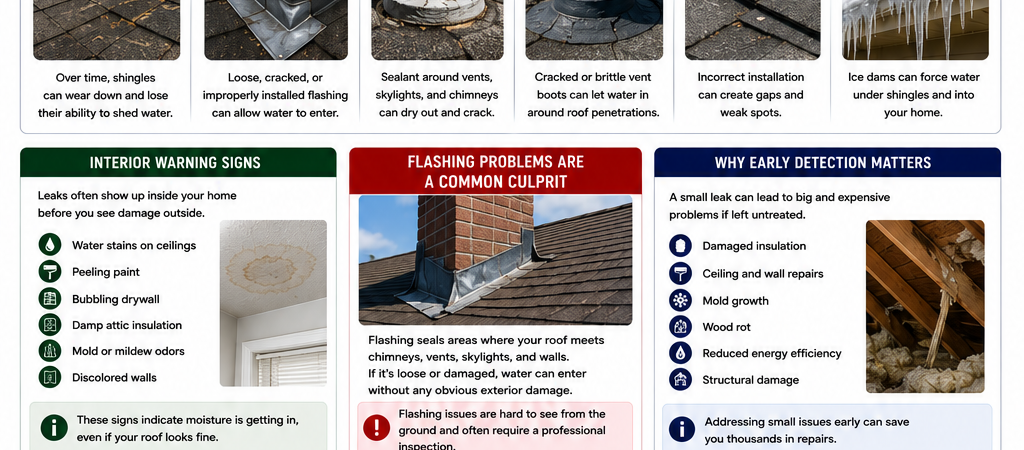
Common hidden causes include:
- Aging roofing materials
- Damaged flashing
- Worn sealants
- Cracked vent boots
- Improper roof installation
- Ice dams in colder climates
These issues may allow moisture to enter gradually over time.
Interior Warning Signs
Even if the roof appears normal from outside, your home may show signs of a leak indoors.
Watch for:
- Water stains on ceilings
- Peeling paint
- Bubbling drywall
- Damp attic insulation
- Mold or mildew odors
- Discolored walls
These signs often appear before the source of the leak is obvious.
Flashing Problems
Roof flashing helps seal areas where the roof meets chimneys, vents, skylights, and walls.
If flashing becomes loose, damaged, or improperly sealed, water can enter even when shingles appear to be in good condition.
Because flashing issues are often difficult to spot from the ground, professional inspections can be valuable.
Weather Can Expose Small Weaknesses
Heavy rain, wind-driven storms, snow, and ice can force water into tiny openings that normally go unnoticed.
Repeated exposure to harsh weather may gradually worsen minor roofing issues over time.
Why Early Detection Matters
A small roof leak can eventually affect much more than the roof itself.
Potential consequences include:
- Damaged insulation
- Ceiling repairs
- Mold growth
- Wood rot
- Reduced energy efficiency
- Structural damage
Addressing concerns early may help reduce repair costs and limit interior damage.
When Should You Schedule a Roof Inspection?
A professional roof inspection may be appropriate if:
- You notice water stains indoors.
- Your attic smells damp or musty.
- Your roof is more than 15–20 years old.
- Your home recently experienced severe weather.
- You suspect moisture but cannot identify the source.
An inspection can often identify hidden issues before they become larger problems.
Frequently Asked Questions
Can a roof leak only when it rains hard?
Yes. Some roofing issues only allow water to enter during heavy or wind-driven rain, making leaks difficult to identify.
Is every ceiling stain caused by a roof leak?
No. Plumbing leaks, HVAC condensation, and other moisture sources can also cause ceiling stains. A professional inspection can help determine the source.
Can a small leak become a major problem?
Yes. Even a slow leak can cause significant damage if moisture is allowed to accumulate over time.
Final Thoughts
A roof doesn’t have to show obvious damage to develop a leak. Small openings around flashing, vents, or aging roofing materials may allow water into the home long before missing shingles or other visible problems appear.
Understanding the warning signs of hidden roof leaks and responding quickly to signs of moisture can help homeowners protect their property and avoid more costly repairs in the future.