Your roof is exposed to the elements every day, protecting your home from rain, wind, hail, sunlight, and changing temperatures. Over time, even a well-built roof can begin showing signs of wear.
Recognizing roof damage early can help homeowners address potential issues before they lead to more expensive repairs or interior water damage.
Why Roof Damage Shouldn’t Be Ignored
Small roofing problems rarely stay small.
Moisture that enters through a damaged roof can affect:
- Attic insulation
- Drywall
- Ceilings
- Flooring
- Structural framing
- Electrical systems
Early detection often reduces the likelihood of more extensive damage.
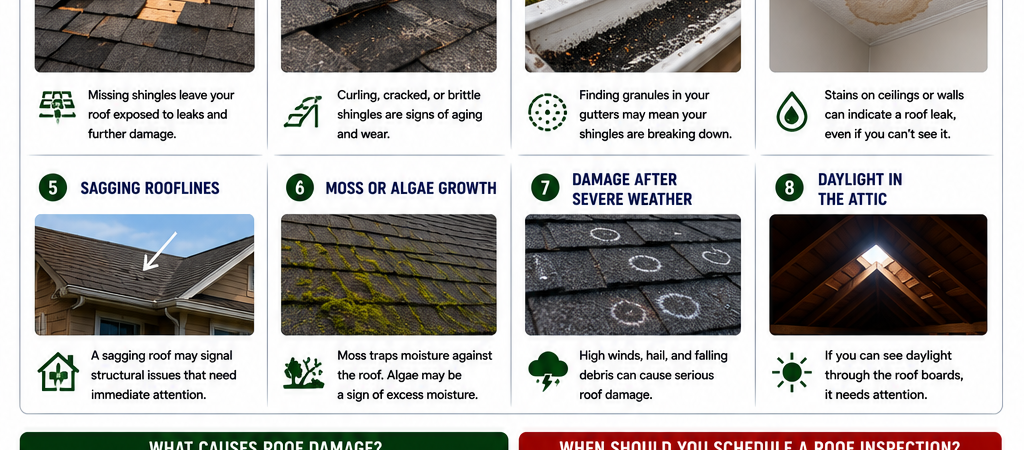
Missing Shingles
One of the easiest warning signs to spot is missing shingles.
Strong winds, severe storms, and aging materials can all cause shingles to loosen or detach.
Missing shingles leave the roof more vulnerable to water intrusion.
Curling or Cracked Shingles
As roofing materials age, shingles may begin to curl, crack, or become brittle.
These changes often indicate that the roof is approaching the end of its expected lifespan.
Granules in Gutters
Asphalt shingles are coated with protective granules.
Finding excessive amounts of these granules in gutters or downspouts may indicate that shingles are wearing down and losing their protective surface.
Water Stains Inside the Home
Roof damage isn’t always visible from outside.
Signs inside the home may include:
- Ceiling stains
- Water spots on walls
- Damp attic insulation
- Peeling paint
- Mold or mildew growth
These symptoms should be investigated promptly.
Sagging Rooflines
A roof should appear straight and level.
Visible sagging may indicate underlying structural issues that require immediate professional evaluation.
Moss and Algae Growth
In shaded or humid environments, moss and algae may grow on roofing materials.
While algae is often a cosmetic issue, heavy moss growth can trap moisture against the roof surface, potentially contributing to long-term deterioration.
Damage After Severe Weather
Following major storms, homeowners should watch for:
- Missing shingles
- Lifted flashing
- Fallen tree limbs
- Visible debris
- Hail impacts
Even if no leaks are immediately visible, storm damage may still be present.
When Should You Schedule a Roof Inspection?
A professional inspection may be appropriate if:
- You notice visible roof damage.
- Water stains appear indoors.
- A major storm recently passed through your area.
- Your roof is approaching the end of its expected lifespan.
- You’re buying or selling a home.
Regular inspections can help identify concerns before they become more costly.
Frequently Asked Questions
Can roof damage exist without a leak?
Yes. A roof may sustain damage long before water reaches the interior of the home.
Should I inspect my roof after every storm?
Many homeowners choose to visually inspect their property after severe weather and schedule a professional inspection if they notice signs of damage.
Does every missing shingle mean I need a new roof?
Not necessarily. The appropriate solution depends on the roof’s age, condition, and the extent of the damage.
Final Thoughts
Roof damage often develops gradually, making early warning signs easy to overlook. Paying attention to missing shingles, curling materials, interior water stains, and other visible changes can help homeowners identify problems before they become major repairs.
If you suspect roof damage or your home has recently experienced severe weather, a professional inspection can provide valuable information about your roof’s condition and any maintenance or repairs that may be needed.