Most homeowners rarely think about their electrical system until something stops working. However, regular electrical inspections can help identify potential problems before they become expensive repairs or safety hazards.
While a modern electrical system is designed to last for many years, components naturally age over time. Understanding when an inspection may be appropriate can help homeowners keep their homes safe and operating efficiently.
What Is an Electrical Inspection?
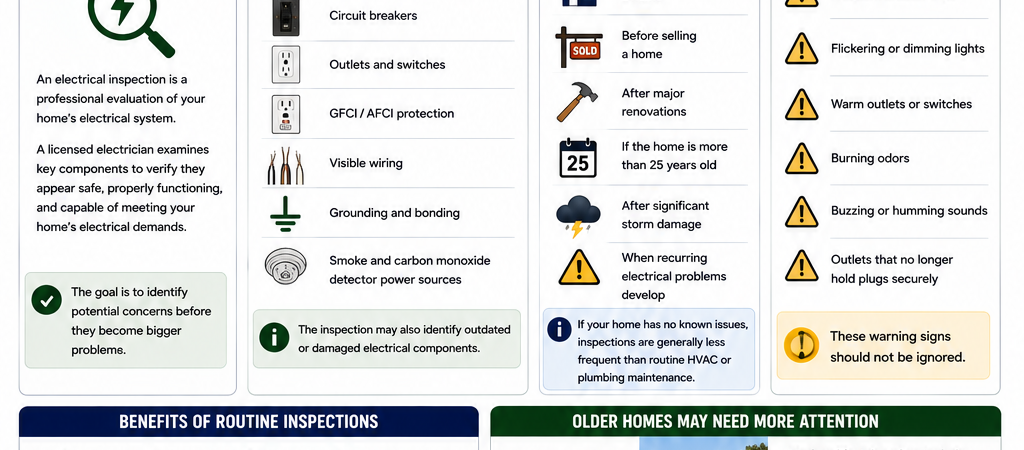
An electrical inspection is a professional evaluation of your home’s electrical system.
A licensed electrician examines key components to verify they appear safe, properly functioning, and capable of meeting the home’s electrical demands.
The goal is to identify potential concerns before they develop into larger problems.
What Does an Electrician Inspect?
Although every inspection is different, it commonly includes:
- The electrical panel
- Circuit breakers
- Outlets and switches
- GFCI and AFCI protection
- Visible wiring
- Grounding and bonding
- Smoke and carbon monoxide detector power sources
The inspection may also identify outdated or damaged electrical components.
How Often Should a Home Be Inspected?
The frequency depends on several factors.
Many homeowners consider an inspection:
- When purchasing a home
- Before selling a home
- After major renovations
- If the home is more than 25 years old
- After significant storm damage
- When recurring electrical problems develop
If your home has no known issues, inspections are generally less frequent than routine HVAC or plumbing maintenance.
Signs You Should Schedule an Inspection
Consider having your electrical system evaluated if you notice:
- Frequent breaker trips
- Flickering lights
- Warm outlets or switches
- Burning odors
- Buzzing sounds
- Outlets that no longer hold plugs securely
These warning signs should not be ignored.
Benefits of Routine Inspections
Regular inspections can provide several advantages:
- Improved electrical safety
- Early identification of worn components
- Greater confidence in older electrical systems
- Better preparation for future electrical upgrades
- Peace of mind for homeowners
Finding small issues early can often prevent larger problems later.
Older Homes May Need More Attention
Homes built decades ago may have electrical systems that were designed for much lower power demands than today’s households require.
Modern lifestyles often include:
- Home offices
- Large entertainment systems
- Electric vehicle chargers
- Smart home technology
- High-efficiency appliances
An inspection can help determine whether an older system is keeping up with current needs.
Frequently Asked Questions
Is an electrical inspection required every year?
Most homes do not require annual electrical inspections. The appropriate timing depends on the home’s age, condition, and whether any electrical concerns have developed.
Can an inspection prevent electrical problems?
While no inspection can predict every future issue, routine evaluations may identify worn or damaged components before they become more serious.
Is an inspection worthwhile before buying a home?
Many buyers choose to include an electrical inspection as part of the home-buying process to better understand the condition of the property’s electrical system.
Final Thoughts
Your home’s electrical system works behind the scenes every day, making it easy to overlook. Regular inspections can help identify aging components, improve safety, and provide confidence that your electrical system is operating as intended.
If you notice warning signs such as flickering lights, warm outlets, frequent breaker trips, or burning odors, scheduling a professional inspection is one of the best steps you can take to protect both your home and your family.