Most homeowners don’t think much about their electrical outlets until something seems unusual. If you’ve ever touched an outlet and noticed that it feels warm, you may wonder whether it’s normal or a sign of a more serious problem.
While a slight amount of warmth can sometimes occur during normal use, an outlet that becomes noticeably hot, discolored, or develops a burning smell should never be ignored.
Understanding the possible causes can help you recognize when it’s time to seek professional assistance.
Is It Normal for an Outlet to Feel Warm?
In some situations, a small amount of warmth is normal.
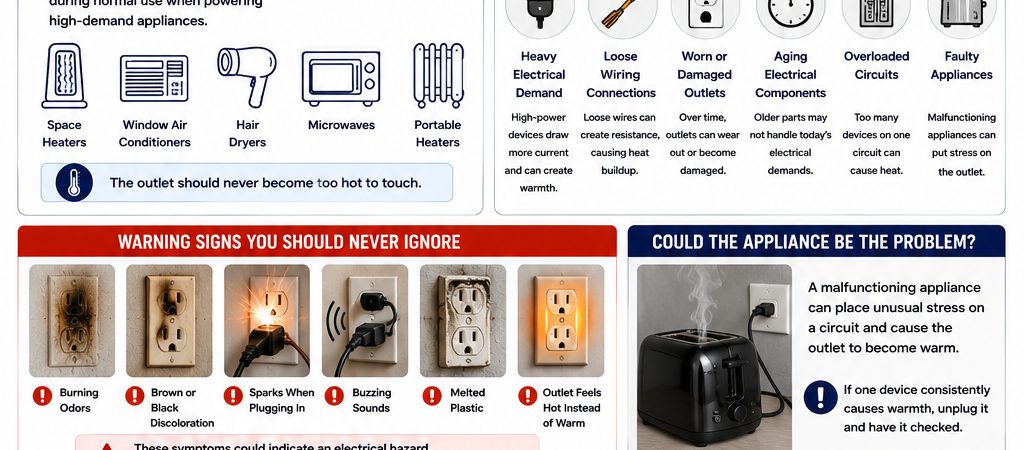
For example, an outlet may become slightly warm when powering devices that draw a significant amount of electricity, such as:
- Space heaters
- Window air conditioners
- Hair dryers
- Microwaves
- Portable heaters
The outlet should never become too hot to touch.
Common Causes of a Warm Outlet
Several conditions may cause an outlet to feel warmer than usual.
These include:
- Heavy electrical demand
- Loose wiring connections
- Worn or damaged outlets
- Aging electrical components
- Overloaded circuits
- Faulty appliances
Determining the exact cause often requires a professional inspection.
Warning Signs You Should Never Ignore
A warm outlet may require immediate attention if you notice:
- Burning odors
- Brown or black discoloration
- Sparks when plugging in a device
- Buzzing sounds
- Melted plastic
- The outlet feels hot instead of warm
These symptoms could indicate an electrical hazard.
Could the Appliance Be the Problem?
Sometimes the outlet isn’t the source of the issue.
A malfunctioning appliance can place unusual stress on an electrical circuit.
If one specific device consistently causes the outlet to become warm, discontinue using that appliance until it has been evaluated.
Older Homes May Require Additional Attention
Homes built several decades ago may have electrical systems that were not designed for today’s power demands.
Modern households often use:
- Large televisions
- Gaming systems
- Home office equipment
- High-efficiency appliances
- Smart home devices
- Electric vehicle chargers
As electrical usage increases, older wiring and outlets may require upgrades.
When Should You Call an Electrician?
Contact a licensed electrician if:
- An outlet feels hot.
- You smell burning.
- The outlet is discolored.
- A breaker trips repeatedly.
- You hear buzzing or crackling.
- The outlet no longer holds plugs securely.
Electrical issues can become serious if left unresolved.
Tips for Electrical Safety
Homeowners can improve electrical safety by:
- Avoiding overloaded outlets.
- Using appliances according to manufacturer recommendations.
- Replacing damaged cords.
- Keeping outlets dry.
- Scheduling electrical inspections for older homes.
Simple preventive measures can help reduce the likelihood of future problems.
Frequently Asked Questions
Is a warm outlet always dangerous?
Not necessarily. A slight amount of warmth during heavy electrical use may be normal, but an outlet that becomes hot, smells like burning, or shows visible damage should be inspected immediately.
Can overloaded outlets become warm?
Yes. Plugging too many high-power devices into one outlet or circuit can generate excess heat.
Should I stop using a hot outlet?
Yes. If an outlet becomes hot or shows signs of damage, discontinue use and have it evaluated by a licensed electrician.
Final Thoughts
A warm outlet isn’t always a reason to panic, but it should never be ignored. While some warmth can occur during normal operation, excessive heat, burning odors, discoloration, or buzzing sounds may indicate an electrical problem that requires prompt attention.
Understanding these warning signs can help homeowners recognize potential safety concerns early and know when it’s appropriate to contact a licensed electrician.