Electrical safety is an important part of homeownership, especially in areas where water and electricity may come into contact. One of the most effective safety devices found in modern homes is the Ground Fault Circuit Interrupter, commonly known as a GFCI outlet.
While many homeowners recognize the TEST and RESET buttons on these outlets, fewer understand how they work or why they’re so important.
What Does GFCI Stand For?
GFCI stands for Ground Fault Circuit Interrupter.
Its purpose is to monitor the flow of electricity and quickly shut off power if it detects that electricity is taking an unintended path, such as through water or a person.
This rapid response helps reduce the risk of serious electrical shock.
How Does a GFCI Outlet Work?
Under normal conditions, electricity flows out through the hot wire and returns through the neutral wire.
A GFCI constantly compares these two currents.
If it detects even a small imbalance, it disconnects power almost instantly.
This protection is especially valuable in damp or wet environments.
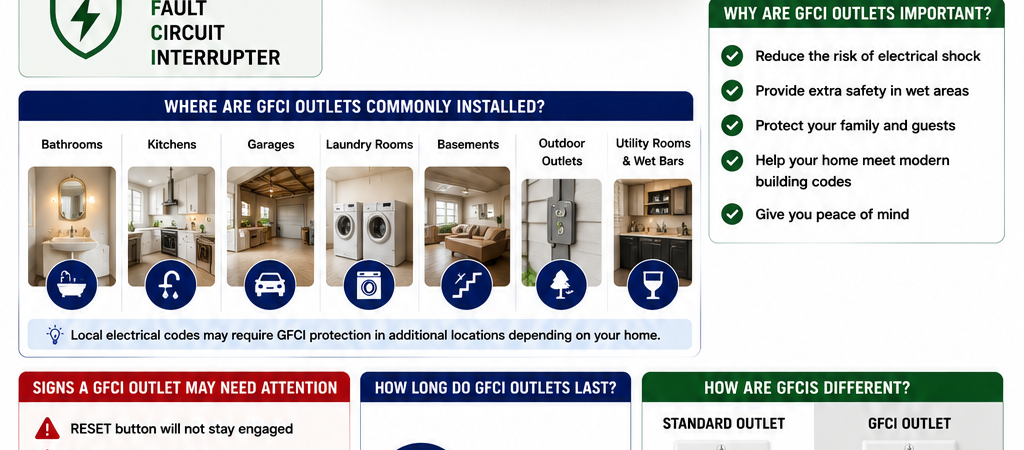
Where Are GFCI Outlets Commonly Installed?
Most modern homes have GFCI protection in areas where moisture is present.
These locations often include:
- Bathrooms
- Kitchens
- Garages
- Laundry rooms
- Basements
- Outdoor outlets
- Utility rooms
- Near wet bars
Local electrical codes may require GFCI protection in additional locations depending on the home’s design and age.
Why Are GFCI Outlets Important?
GFCI outlets provide an extra layer of protection beyond a standard circuit breaker.
Benefits include:
- Reduced risk of electrical shock
- Improved safety in wet areas
- Protection for family members and guests
- Compliance with modern building codes
- Added peace of mind for homeowners
Although no safety device can eliminate every risk, GFCIs are considered one of the most effective protections available for residential electrical systems.
Common Signs a GFCI Outlet May Need Attention
Like any electrical device, GFCI outlets can wear out over time.
Possible warning signs include:
- The RESET button will not stay engaged.
- The outlet trips repeatedly.
- The outlet no longer supplies power after being reset.
- Visible cracks or physical damage.
- Discoloration or signs of overheating.
If you notice these symptoms, the outlet should be evaluated by a qualified electrician.
How Long Do GFCI Outlets Last?
Most GFCI outlets have an expected service life of approximately 10 to 15 years, although this can vary depending on usage and environmental conditions.
Older outlets may not provide the same level of protection as newer models.
How Are GFCIs Different From Standard Outlets?
A standard outlet simply provides electricity to connected devices.
A GFCI outlet actively monitors electrical current and disconnects power when it detects a potentially dangerous ground fault.
This additional protection makes GFCIs especially valuable in locations where water is present.
Frequently Asked Questions
Do all homes have GFCI outlets?
Older homes may have fewer GFCI outlets than newer homes because electrical code requirements have changed over time.
Can a GFCI outlet protect more than one outlet?
Yes. In many homes, one GFCI outlet protects additional outlets connected to the same circuit.
Should GFCI outlets be tested?
Manufacturers generally recommend testing GFCI outlets periodically using the built-in TEST and RESET buttons to help verify they are operating properly.
Final Thoughts
GFCI outlets play an important role in improving electrical safety throughout the home. By quickly interrupting power when they detect a ground fault, they help reduce the risk of electrical shock in areas where water and electricity may come into contact.
Understanding where GFCI outlets are installed, what they do, and the warning signs of a failing outlet can help homeowners make informed decisions about maintaining a safe electrical system.