A circuit breaker is designed to protect your home’s electrical system by shutting off power when it detects a problem. While an occasional trip may not be a cause for concern, a breaker that trips repeatedly usually indicates an underlying electrical issue that should not be ignored.
Understanding why a breaker trips can help you identify simple problems and know when it’s time to call a licensed electrician.
What Does a Circuit Breaker Do?
Circuit breakers protect your home from electrical overloads, short circuits, and ground faults.
When too much electrical current flows through a circuit, the breaker automatically shuts off power to help prevent overheating and reduce the risk of electrical fires.
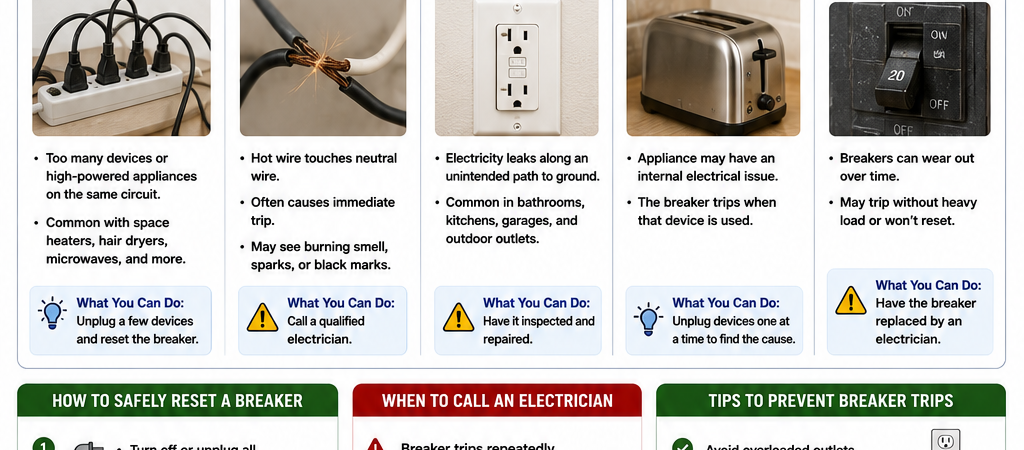
1. Overloaded Circuit
The most common reason a breaker trips is because too many devices are using the same circuit.
Examples include:
- Space heaters
- Hair dryers
- Microwaves
- Portable air conditioners
- Vacuum cleaners
Running several high-powered appliances at once can exceed the circuit’s capacity.
What You Can Do
Unplug a few devices and reset the breaker.
2. Short Circuit
A short circuit occurs when a hot wire comes into contact with a neutral wire.
Signs may include:
- Breaker trips immediately
- Burning smell
- Black marks around outlets
- Sparking
Short circuits should be inspected by a qualified electrician.
3. Ground Fault
Ground faults occur when electricity takes an unintended path to the ground.
These are especially common in:
- Bathrooms
- Kitchens
- Garages
- Outdoor outlets
Ground faults can create a shock hazard and should be repaired promptly.
4. Faulty Appliance
Sometimes the breaker is working correctly because one appliance has developed an internal electrical problem.
Try unplugging all devices on the circuit.
Reconnect them one at a time until the breaker trips again.
The last appliance plugged in may be the source of the problem.
5. Worn or Faulty Breaker
Although uncommon, circuit breakers can wear out after many years of use.
Signs include:
- Breaker feels loose
- Breaker won’t reset
- Trips without a noticeable load
- Breaker feels unusually warm
Breaker replacement should be performed by a licensed electrician.
How to Safely Reset a Breaker
If the cause appears minor:
- Turn off or unplug connected devices.
- Locate the electrical panel.
- Move the breaker fully to the OFF position.
- Switch it firmly back to ON.
- Restore power gradually.
If the breaker immediately trips again, do not continue resetting it.
When Should You Call an Electrician?
Contact a licensed electrician if:
- The breaker trips repeatedly.
- You smell burning odors.
- Outlets are warm or discolored.
- You hear buzzing sounds.
- The breaker won’t reset.
- You suspect a short circuit.
Electrical problems should never be ignored because they can become serious safety hazards.
Tips to Prevent Breaker Trips
Reduce the chance of future problems by:
- Avoiding overloaded outlets.
- Spreading high-power appliances across different circuits.
- Replacing damaged extension cords.
- Scheduling electrical inspections in older homes.
- Never replacing a breaker with a larger one unless recommended by a qualified electrician.
Frequently Asked Questions
Is it safe to keep resetting a breaker?
No. If a breaker trips repeatedly, it is signaling a problem that should be identified before restoring power.
Why does my breaker only trip when I use one appliance?
The appliance itself may have an internal electrical fault or draw more power than the circuit can safely handle.
Can a bad breaker cause repeated trips?
Yes. Although less common than overloaded circuits, breakers can wear out and eventually require replacement.
Final Thoughts
A tripping circuit breaker is your home’s way of protecting you from potentially dangerous electrical problems. While an overloaded circuit is often easy to correct, repeated trips, burning smells, or signs of damaged wiring should always be taken seriously.
If you’re unsure why a breaker continues to trip, it’s safest to have the electrical system inspected by a licensed electrician before using the circuit again.