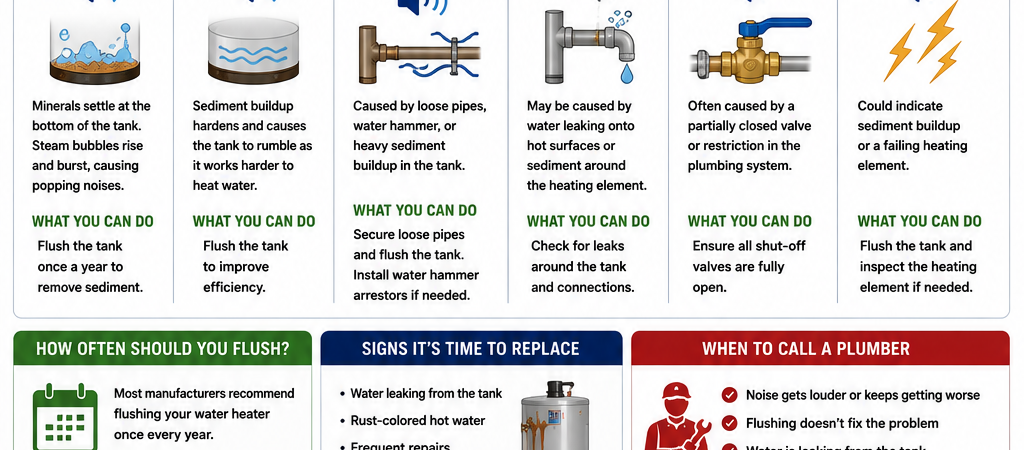
Hearing strange noises coming from your water heater can be alarming, but many sounds have simple explanations. Popping, rumbling, banging, or hissing noises are often caused by sediment buildup, expanding metal, or normal operation. However, some sounds can indicate a more serious problem that should be addressed before it leads to costly repairs.
Understanding what your water heater is trying to tell you can help you decide whether a simple maintenance task is enough or if it’s time to call a plumber.
Common Water Heater Noises
Different sounds usually point to different issues.
The most common noises include:
- Popping
- Rumbling
- Banging
- Hissing
- Whistling
- Crackling
Let’s look at what each one means.
1. Popping Sounds
Popping is the most common water heater noise.
Over time, minerals from hard water settle to the bottom of the tank. As the burner heats the water, steam bubbles become trapped beneath the sediment and burst through it, creating popping sounds.
What You Can Do
Flush the water heater tank once each year to remove sediment buildup.
2. Rumbling
A rumbling sound usually means sediment has accumulated inside the tank.
As the sediment hardens, the water heater has to work harder to heat the water.
Ignoring the problem can reduce efficiency and shorten the life of the unit.
3. Banging or Knocking
Loud banging noises may be caused by:
- Loose plumbing pipes
- Water hammer
- Heavy sediment buildup
If the noise occurs only when water is turned off quickly, you may have a water hammer issue that requires additional plumbing support.
4. Hissing
A hissing sound may indicate:
- Water leaking onto hot surfaces
- A partially closed valve
- Sediment buildup around the heating element
Inspect the area around the water heater for visible leaks.
5. Whistling
Whistling often occurs when water is forced through a partially closed valve or a restriction in the plumbing system.
Check nearby shut-off valves to ensure they are fully open.
When Should You Flush Your Water Heater?
Most manufacturers recommend flushing a traditional tank water heater once every year.
If you have hard water, flushing the tank every six months may help reduce mineral buildup and improve efficiency.
Signs It’s Time to Replace Your Water Heater
Consider replacement if you notice:
- Water leaking from the tank
- Rust-colored hot water
- Frequent repairs
- Water heater older than 10–12 years
- Increasing energy bills
A leaking tank usually cannot be repaired and often requires replacement.
When Should You Call a Plumber?
Contact a plumber if:
- The noise becomes significantly louder.
- Flushing the tank doesn’t solve the problem.
- Water is leaking from the tank.
- You smell gas around a gas water heater.
- The pressure relief valve is leaking continuously.
Prompt repairs can prevent more expensive damage.
Tips to Keep Your Water Heater Quiet
Routine maintenance goes a long way toward preventing unusual noises.
Helpful tips include:
- Flush the tank annually.
- Inspect the pressure relief valve.
- Replace the anode rod when needed.
- Keep the thermostat set to approximately 120°F.
- Schedule professional maintenance if you notice unusual performance.
Frequently Asked Questions
Is it normal for a water heater to make noise?
Some quiet humming or occasional ticking is normal. Loud popping, banging, or rumbling usually indicates sediment buildup or another issue.
Can sediment damage my water heater?
Yes. Heavy sediment buildup can reduce efficiency, increase energy bills, and shorten the life of your water heater.
How often should I flush my water heater?
Most homeowners should flush their tank water heater once a year. Homes with hard water may benefit from more frequent flushing.
Final Thoughts
Strange noises from your water heater are often an early warning sign that maintenance is needed. In many cases, flushing the tank can solve the problem and improve efficiency.
However, if your water heater is leaking, making loud noises after maintenance, or nearing the end of its lifespan, it may be time to consult a licensed plumber about repair or replacement options.
Regular maintenance can help keep your water heater running efficiently and quietly for many years.