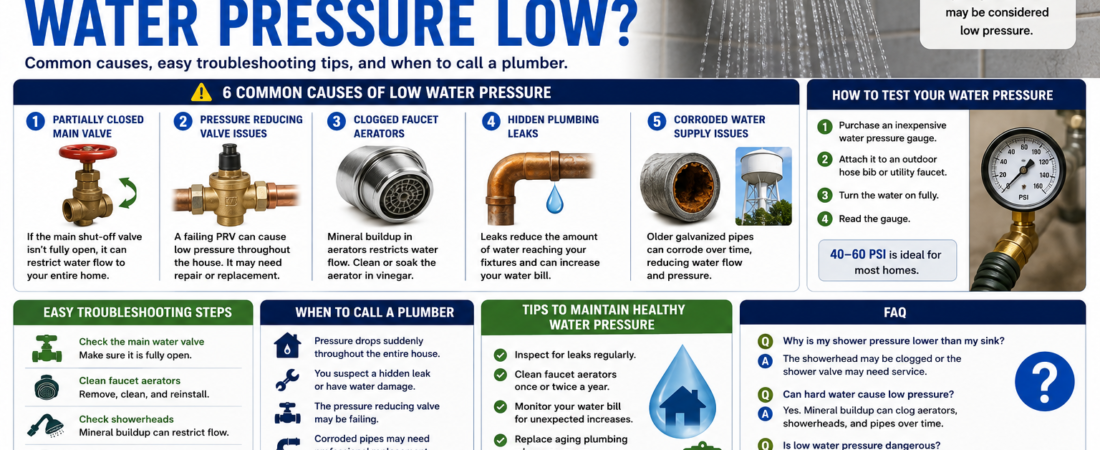
Low water pressure can make everyday tasks frustrating, from taking a shower to washing dishes. While the problem is sometimes caused by your local water supply, it’s often the result of an issue inside your home’s plumbing system.
The good news is that many water pressure problems are easy to identify, and some can even be fixed without professional help.
What Is Considered Low Water Pressure?
Most homes operate with water pressure between 40 and 60 PSI (pounds per square inch).
If your home’s water pressure falls well below this range, you may notice:
- Weak shower pressure
- Slow-filling sinks or tubs
- Washing machines taking longer to fill
- Poor sprinkler performance
1. Partially Closed Main Water Valve
One of the first things to check is your home’s main water shut-off valve.
If it isn’t fully open, it can restrict water flow throughout the entire house.
What You Can Do
Locate the main shut-off valve and make sure it’s completely open.
2. Pressure Reducing Valve Problems
Many homes have a pressure reducing valve (PRV) installed where the main water line enters the house.
If this valve begins to fail, it may reduce water pressure throughout the home.
Signs include:
- Sudden drop in pressure
- Pressure changes throughout the day
- Low pressure at every fixture
A faulty PRV usually needs replacement by a plumber.
3. Clogged Faucet Aerators
Mineral deposits can collect inside faucet aerators over time.
This is especially common in areas with hard water.
What You Can Do
- Unscrew the aerator.
- Rinse away debris.
- Soak it in white vinegar if mineral buildup is present.
- Reinstall and test the faucet.
4. Hidden Plumbing Leaks
Leaks reduce the amount of water reaching your fixtures.
Signs of a hidden leak include:
- Higher water bills
- Damp walls or floors
- Mold growth
- Sounds of running water when nothing is turned on
Leaks should be repaired promptly to prevent water damage.
5. Corroded Pipes
Older galvanized steel pipes can develop corrosion inside the pipe walls.
This reduces the pipe’s diameter and restricts water flow.
Homes built several decades ago are more likely to experience this issue.
6. Municipal Water Supply Issues
Sometimes the problem isn’t inside your home.
Your local water utility may temporarily reduce pressure because of:
- Water main repairs
- High neighborhood demand
- Emergency maintenance
Checking with neighbors can help determine whether the issue is affecting multiple homes.
How to Test Your Water Pressure
A water pressure gauge is an inexpensive tool available at most hardware stores.
Simply attach it to an outdoor hose bib or utility faucet to measure your home’s pressure.
A reading between 40 and 60 PSI is considered normal for most homes.
When Should You Call a Plumber?
Contact a licensed plumber if:
- Pressure suddenly drops throughout the entire house.
- You suspect a hidden leak.
- The pressure reducing valve may be failing.
- Corroded pipes need replacement.
- Cleaning faucet aerators doesn’t improve pressure.
Professional diagnosis can prevent more expensive plumbing problems later.
Tips to Maintain Healthy Water Pressure
Keep your plumbing system in good condition by:
- Inspecting for leaks regularly.
- Cleaning faucet aerators once or twice a year.
- Monitoring your water bill for unexpected increases.
- Replacing aging plumbing when necessary.
- Scheduling professional inspections if pressure changes suddenly.
Frequently Asked Questions
Why is my shower pressure lower than my sink?
The showerhead may be clogged with mineral deposits, or the shower valve may need service.
Can hard water cause low pressure?
Yes. Mineral buildup can clog faucet aerators, showerheads, and even plumbing pipes over time.
Is low water pressure dangerous?
Low pressure itself usually isn’t dangerous, but it can indicate plumbing leaks, failing valves, or aging pipes that should be inspected.
Final Thoughts
Low water pressure can have several causes, ranging from a partially closed shut-off valve to aging plumbing or hidden leaks. Fortunately, many issues are simple to diagnose, and some can be fixed with basic maintenance.
If the problem affects your entire home or continues after basic troubleshooting, contacting a qualified plumber can help restore proper water pressure and prevent future plumbing issues.